200%
output increase – TKF


Protect critical delivery commitments and generate more value from shared specialist capacity.
Epicflow is multi-project management software for manufacturing companies with resource-constrained environments. Built on Theory of Constraints principles, it connects shared specialist capacity, delivery forecasts, and commercial consequences so PMO leaders and COOs can compare portfolio decisions and turn the chosen plan into daily work.
Best suited for ETO, NPD, capital equipment, aerospace, defense, and similar manufacturers managing mission-critical projects through shared specialist teams.


Maximize portfolio value
by comparing project sequences based on business impact per constrained resource hour.

Prevent production bottlenecks
before they affect schedules by forecasting future resource constraints.

Increase throughput and on-time delivery
by directing existing engineering capacity to work that supports agreed portfolio priorities.

Protect customer commitments and commercial value
by connecting resource-aware delivery forecasts to contractual and financial exposure.
200%
output increase – TKF
18% → 80%
on-time delivery – KPN

10%
more work with the same people –
UK defense company

Complex manufacturing projects compete for the same engineers, test specialists, and other constrained teams. Their plans may be separate, but their delivery commitments depend on the same limited capacity.
Epicflow manages these projects as one system: identify the shared constraint, forecast feasible delivery dates, compare the consequences of alternative decisions, and guide execution with the chosen plan.
Generate more value from the capacity you already have.
Epicflow helps manufacturers prioritize and sequence projects based on business value and the specialist capacity required to deliver them. This keeps scarce engineering and production capacity focused on the work that creates the most portfolio value, increasing throughput and delivery performance without adding headcount.
Test new work and recovery options against the capacity and commitments you already have.
Epicflow lets PMO leaders compare the impact of new projects, resequencing, specialist reallocation, and additional capacity across the portfolio. See the delivery and commercial trade-offs before committing, and choose the intervention that best protects critical projects and contractual commitments.
Increase output by protecting constrained resources from overload.
Instead of maximizing utilization everywhere, Epicflow forecasts future demand and capacity to identify overload before it slows delivery. This helps teams balance workloads, reduce queues, and maintain a steady flow of work through the system.
Connect delivery risk to the consequences for customer commitments and project value.
Analyze forecast delivery dates alongside predicted bonus/penalty and project financials. This helps PMO leaders and COOs evaluate what is at stake before deciding which recovery action deserves scarce capacity.

Epicflow helped German metal manufacturer Arnold AG discover previously hidden capacity, enabling the company to increase throughput and deliver additional projects without additional labour costs.
Resource constraints are among top causes of portfolio delivery delays
In a survey of 50 European defense manufacturing companies, resource constraints (16%) were identified as the second most common driver of delivery disruption, highlighting the impact of shared specialist capacity across concurrent programs.
Download the research findings — supported by expert insights from Ben Rawson


Used by the Dutch Ministry of Defence, which sets the bar for security and reliability that manufacturing environments can count on.

The platform is penetration tested regularly by one of our UK defense clients as part of that client’s own Ministry of Defense approval process.

Epicflow is registered on JOSCAR, the Joint Supply Chain Accreditation Register used by UK defense and aerospace buyers to pre-qualify suppliers.

Hosted on ISO 27001-certified infrastructure.

Full EU data protection compliance with data processing agreements and EU data residency — essential for European manufacturing operations.

Site-level, team-level, and project-level permissions. Control exactly who sees which projects, resources, and production data across every plant and department.
Keep your project data on your own premises while Epicflow runs as a cloud service. In use with defense organizations in several European countries.
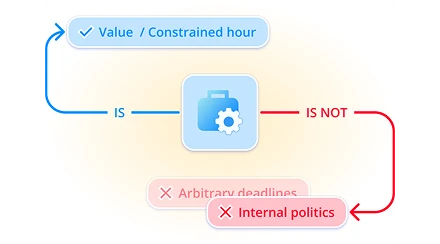
Manufacturing portfolios constantly compete for the same constrained engineering and production capacity.
Epicflow’s AI Portfolio Optimizer (EPO) evaluates projects based on value per constrained resource hour and proposes alternative portfolio scenarios. Return on Remaining Investment (RRI) adds another perspective: how much value a project can still deliver compared with the investment still required to complete it. Management compares the trade-offs and selects the preferred plan, taking program criticality and delivery commitments into account rather than treating profit as the only priority.
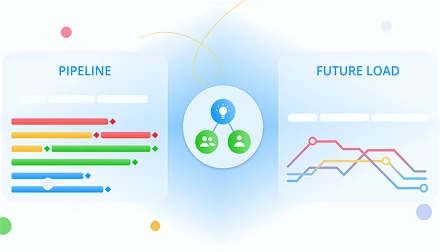
System overload often builds gradually as multiple projects accumulate demand on shared resources.
Epicflow’s Future Load Graph visualizes future demand against available capacity for the resource groups represented in your plan. It helps teams identify which groups face overload and which tasks contribute to it, so leaders can rebalance portfolio demand before delays spread across projects sharing the same specialists.
Historical Load Graph complements the forecast with past load, capacity, and output data, helping teams review estimation and capacity assumptions against actual performance.
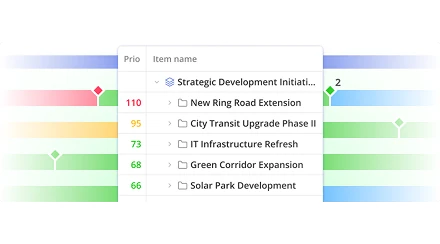
As priorities shift and new orders enter the system, portfolio feasibility can quickly break down. Epicflow’s Prediction forecasts project and milestone dates from the modeled workload, dependencies, and shared resource availability. Use those dates to check delivery commitments while EPO supports the separate decision about which portfolio sequence to adopt.
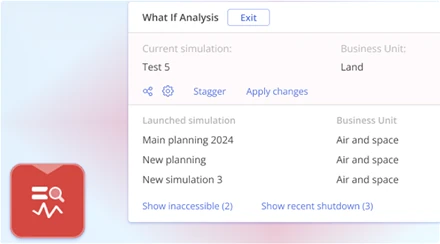
Every major decision like accepting a new order, shifting a production deadline, or reallocating a specialist team, affects shared capacity across the portfolio.
Epicflow What-if Analysis enables leaders to simulate these decisions before execution, showing their full impact on shared capacity, delivery dates, and competing projects. This ensures that portfolio decisions are made with full visibility of system-wide consequences.
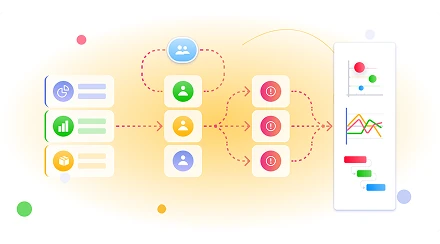
Manufacturing portfolios compete for shared engineers, specialist teams, and equipment represented in the project plan.
Epicflow brings human and non-human resources into a unified planning model to compare project demand with available capacity across facilities and departments. It supports project-level coordination; material planning, inventory control, and shop-floor execution remain with ERP/MRP/MES systems.
In ETO, NPI, and capital-equipment portfolios, a resource bottleneck can put a customer commitment at risk, delay an invoiceable milestone, and erode project value. Epicflow manufacturing project management software connects resource-aware delivery forecasts with commercial exposure and expected payment timing, so leaders can compare interventions through the same plan that guides execution.
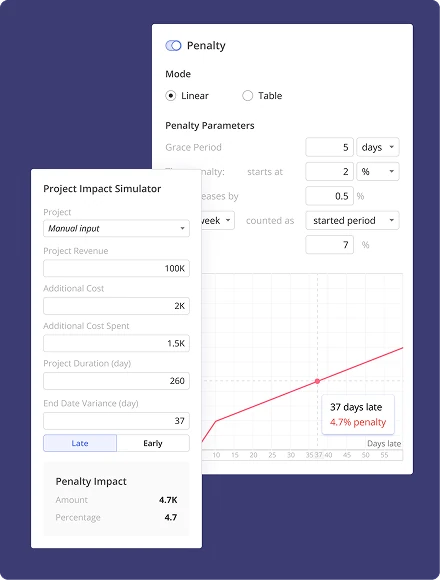
u003cpu003eSet bonus and penalty rules with grace periods, linear or threshold-based calculations, rates, and caps, and test them in the Project Impact Simulator before applying.u003c/pu003eu003cpu003eEpicflow compares your contractual position at the current due date with the predicted exposure at the resource-aware forecast date, helping teams act before a predicted penalty becomes real.u003c/pu003e
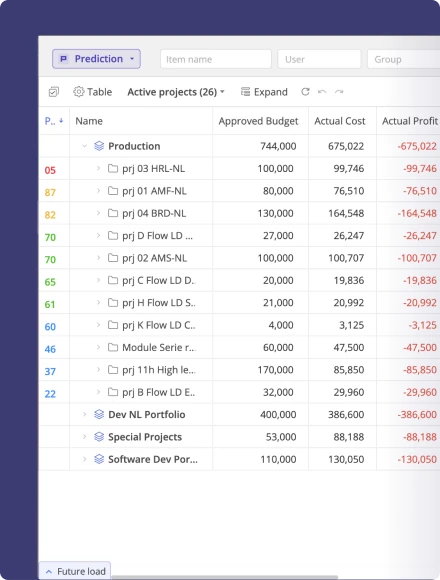
u003cpu003eTrack budget, cost, revenue, and predicted profit next to delivery status of every ETO, NPI, and capital-equipment project in the Pipeline. Predicted Profit adds an early schedule-linked profitability signal based on costs recorded to date.u003c/pu003eu003cpu003eThis allows manufacturing leaders to compare commercial exposure without losing resource and schedule context.u003c/pu003e
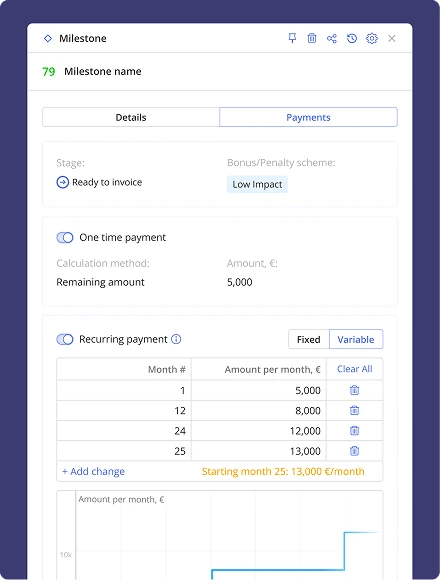
u003cpu003eLink payments to milestones: Invoice Forecast shows when work is expected to become invoiceable; Cash Flow adds configured payment terms to forecast when money is expected. Changes to the resource-constrained schedule update that outlook, so sequencing and resourcing decisions can be assessed before committing.u003c/pu003eu003cpu003eThese are forecasts, not bank balances or confirmed receipts. Invoicing, collections, and payment records remain with your financial systems.u003c/pu003e
u003cpu003eReview commercial exposure alongside relevant phases, dates, and constraints in the configurable Pipeline 2.0 view. Adjust phase deadlines and task constraints or connections directly on the multi-project Gantt while keeping the wider portfolio in view.u003c/pu003eu003cpu003eCompare potential resourcing changes in What-if before changing the live plan. Management can weigh resequencing, specialist reallocation, or additional capacity against their effects on other commitments, then use the selected schedule to guide daily work.u003c/pu003e
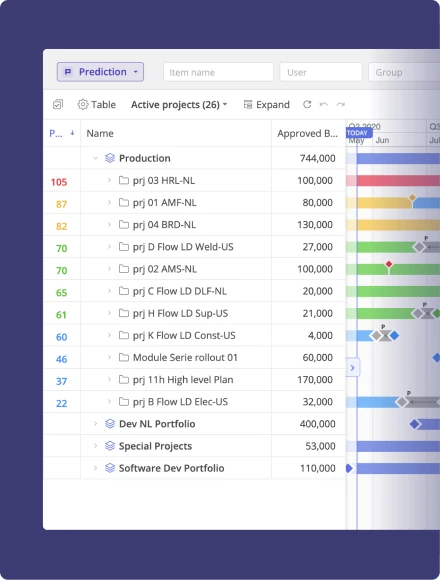
Deloitte projects that the manufacturing workforce challenge is expected to intensify – the industry could require 3.8 million additional workers by 2033, with up to 1.9 million roles at risk of remaining unfilled
See how Epicflow manufacturing project management software helps identify a shared constraint, test a new order or recovery scenario, and turn the chosen plan into execution priorities.
The choice depends on your organization’s specific needs
| Criterion | Epicflow | ERP / MES | Task management tools |
|---|---|---|---|
| Core job | Orchestrate shared specialist across the portfolio | Process materials, orders, costs, and shop-floor execution | Track tasks and assignees within a single project |
| Constraint it manages | Finite specialist capacity across programs | Machines, inventory, bill of materials | Deadlines and assignments |
| Answers it gives | How should work move through scarce specialist capacity? | Do we have the stock, capacity, and cost to fulfil this order? | What is done, and what is overdue? |
| Where it breaks down | Requires ERP/MES for inventory, shop-floor, and financial processes | Blind to cross-project resource conflicts | Collapse under multi-project complexity |
Project-based manufacturing software delivers the greatest value in environments where multiple projects compete for the same engineering and specialist resources. Unlike ERP, MRP, or MES systems, which focus on materials, production, and operational execution, this category focuses on managing the human capacity that determines how quickly projects can move from concept to delivery.
Epicflow manufacturing project management software for enterprises is particularly well suited for:

Engineer-to-Order (ETO) and Make-to-Order (MTO) manufacturers

New Product Development (NPD) and R&D-intensive organizations

Capital equipment and industrial machinery builders

Aerospace, defense, and complex assembly manufacturers

Manufacturers running dozens or hundreds of interdependent projects through shared specialist pools
Epicflow manufacturing scheduling software complements ERP, MRP, MES, and project management systems by acting as the portfolio orchestration layer above them, not replacing them.
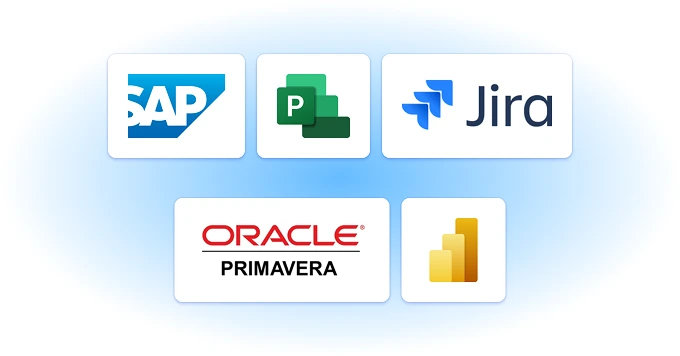
Ready-made integrations are available for Microsoft Project (MS Project), Jira, and Oracle Primavera. Epicflow also supports integration with SAP; the connection scope and required data flows should be confirmed for your environment.
Other ERP/MES and legacy-system connections can be scoped as custom integrations. Agree the systems and data flows with your IT team so project teams can retain their existing tools while Epicflow supports portfolio-level capacity and delivery decisions.
Discover how Epicflow manufacturing process management software helps organizations improve delivery performance, increase throughput, and optimize resource utilization, with proven results in manufacturing environments and beyond
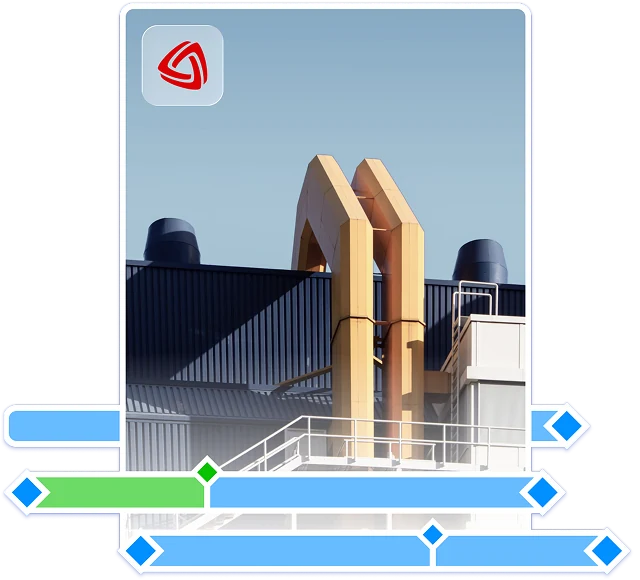
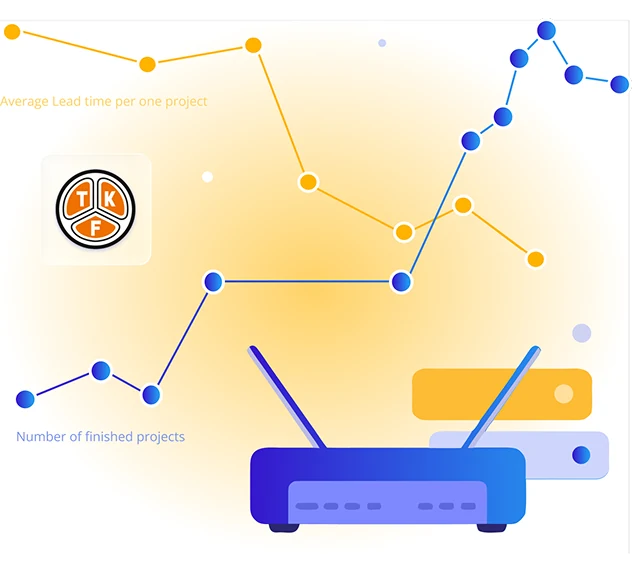

Explore how Epicflow manufacturing project management platform adapts to different industries where multiple projects compete for shared resources and organizations strive to maximize throughput and delivery reliability
Which delivery commitments are most exposed to shared-resource constraints? Explore how Epicflow machinery project management software helps you compare recovery options, assess the consequences across your portfolio, and guide teams with the selected plan.
Manufacturing project management software helps industrial organizations coordinate project work across teams, resources, and facilities. In engineering-intensive environments, it addresses competition for shared specialists, cross-project dependencies, and capacity-constrained delivery dates. It complements production systems rather than replacing material planning or shop-floor execution
u003cpu003eManufacturers need project management software to plan, coordinate, and deliver multiple concurrent projects while making efficient use of limited engineering and specialist resources. Unlike general task management tools, manufacturing project management software helps teams manage cross-project dependencies, resource constraints, changing priorities, and delivery schedules in complex production and engineering environments.u003c/pu003eu003cpu003eFor organizations managing custom products or large project portfolios, manufacturing project planning and scheduling software creates realistic schedules based on available capacity, helping reduce bottlenecks and improve delivery performance under resource constraints.u003c/pu003e
u003cpu003eERP and MRP systems manage materials, inventory, and financial transactions, while manufacturing project management tools manage the work itself: who does what, when, and in what sequence across every active project. The two are complementary, not competing. Epicflow is manufacturing project management software with ERP / MES integration options scoped to your systems and required data flows.u003c/pu003e
u003cpu003eTraditional project management focuses on a single project in isolation. Manufacturing project management addresses the complexity of running tens or hundreds of concurrent projects that compete for the same engineers, test specialists, and other shared resources.u003c/pu003eu003cpu003eIn manufacturing, the critical challenge is cross-project resource allocation: a delay on one project creates a cascade across all others. Portfolio management software for manufacturing companies models this interdependency explicitly, rather than treating each project as a standalone plan.u003c/pu003e
u003cpu003eProject portfolio management helps manufacturers prioritize and coordinate multiple projects based on business value and available resources. Rather than optimizing projects individually, it enables organizations to manage the entire project portfolio, balancing demand against finite engineering capacity.u003c/pu003eu003cpu003eWith project portfolio management software, manufacturers can identify resource bottlenecks earlier, evaluate the impact of new projects before committing to them, allocate specialists to the highest-priority work, and improve delivery predictability across the organization.u003c/pu003e
u003cpu003eThe best project management software for manufacturing depends on your production environment: for engineer-to-order (ETO) and complex multi-project manufacturers, Epicflow is purpose-built to handle high volumes of concurrent projects with shared resource pools.u003c/pu003eu003cpu003eMake-to-stock manufacturers with simple, repeating production runs may be well served by standard ERP scheduling. But where projects are unique, deadlines are tight, and resources are shared across dozens of concurrent workstreams, a dedicated project management software for manufacturing operations like Epicflow delivers measurably better outcomes.u003c/pu003e
u003cpu003eEssential features of project management software for manufacturing industry include multi-project resource management, manufacturing capacity planning, critical path and critical chain scheduling, real-time workload visibility, bottleneck detection, and integration with ERP and MES systems.u003c/pu003eu003cpu003eFor regulated and defense-adjacent manufacturers, security credentials matter as much as functionality: look for role-based access control, flexible deployment options (cloud, on-premises, or private instance), GDPR compliance, and ISO 27001-certified data centres.u003c/pu003e
u003cpu003eEpicflow manufacturing project management software combines constraint-based planning and dynamic task priorities with its AI Portfolio Optimizer (EPO). EPO proposes portfolio alternatives based on value per constrained resource hour; management decides which plan to adopt.u003c/pu003eu003cpu003ePrediction forecasts delivery dates, while What-if Analysis tests the effects of changes before execution. Resource recommendations and semi-automatic allocation support managers’ decisions, and task priorities guide teams toward work that supports the agreed portfolio plan.u003c/pu003e
u003cpu003eEpicflow manufacturing planning and scheduling software gives managers a portfolio-wide view of modeled resource demand and available capacity, showing where overload builds and where resource changes could support throughput.u003c/pu003eu003cpu003eUse this context to reduce overload at the constraints and coordinate work across shared teams. The aim is more reliable delivery and higher system throughput, not maximum utilization of every resource at once.u003c/pu003e
u003cpu003eManufacturers reduce project bottlenecks by gaining real-time visibility into where work is queuing, which resources are the constraint, and how upstream decisions are affecting downstream delivery — then acting on that data before delays compound.u003c/pu003eu003cpu003eEpicflow’s pipeline and workload views are designed specifically for this: they surface bottlenecks across the full project portfolio, not just within a single Gantt chart, so managers can resolve constraints at the system level rather than firefighting project by project.u003c/pu003e
Yes. Epicflow has ready-made integrations with Jira, Microsoft Project and Oracle Primavera, and connects to SAP and other ERP or MES systems through its API, data import or a custom integration, so project schedules and resource plans stay in sync without duplicate data entry.
A portfolio-level view is live within weeks, built from the data you already hold. The full rollout, including ERP integration, role configuration and team onboarding, depends on how many systems you connect.

How is the manufacturing landscape going to look like in the near future? In a few words, the trends in…

How can manufacturers ensure the successful delivery of their complex projects under conditions of increasing uncertainty and a lack of…

What are the key characteristics of high-performing companies in the manufacturing sector? First, it’s the adoption of automation technologies (Industry…

In today’s dynamic manufacturing industry, effective production management has become increasingly challenging. However, proper production planning and scheduling is a…

The manufacturing industry faces numerous challenges that can affect the success of manufacturing projects, from supply chain issues to risks…

Resource capacity planning is crucial for project success, and manufacturing projects are no exception. At the same time, it can…
Supported by expert insights from Ben Rawson.


