

Project portfolio and resource management for PMOs
PMO Software for Complex, Resource-Constrained Portfolios
Put a price on every portfolio decision. Epicflow shows what your most overloaded specialist group costs the portfolio each week, so you can show leadership and Finance what a plan earns before you commit people to it.
Project portfolio and resource management software for PMOs running many high-stakes projects on the same scarce specialists.
- Find the resource group that limits the whole portfolio, and what each week of delay there costs.
- Test a new project or a priority change and see what it earns or costs elsewhere before you commit.
- Relieve the bottleneck with the move that saves the most money, not the one that is easiest to defend.
- Maximize the money your scarce specialist capacity earns.
Leave the demo with a number: what your bottleneck costs and which move relieves it first.


Why PMOs Choose Epicflow
Epicflow answers both questions the same way: find the bottleneck, put a price on it, test what changes, then act inside real capacity.
-

Know where the portfolio stops being feasible and what it costs
See where competing projects depend on the same specialists and where demand exceeds what they can deliver, before that overload becomes a missed commitment. Then see what each week of delay costs at the bottleneck.
-

See the portfolio consequence before changing priorities
Test a new project, a changed priority, a different start date, or added capacity. See what it does to every other project's delivery date and to what each project earns.
-

Decide what should move first inside real capacity
Some commitments are fixed. Some specialists can't be doubled. Epicflow compares only the moves you can actually make and ranks them by what they earn.
-

Add the decision layer without replacing every team tool
Teams keep working in Jira, Microsoft Project, or other connected systems. Epicflow adds the portfolio layer above them, where capacity and investment decisions are made, without a platform replacement program.
- Identify the bottleneck
- price the delay
- compare feasible responses
- approve the trade-off
- execute the chosen plan
- reforecast
This is how a PMO moves from reporting status to deciding where scarce capacity earns the most: the shift from PMO to Value Management Office.
See the Financial Consequence of a Delivery Decision
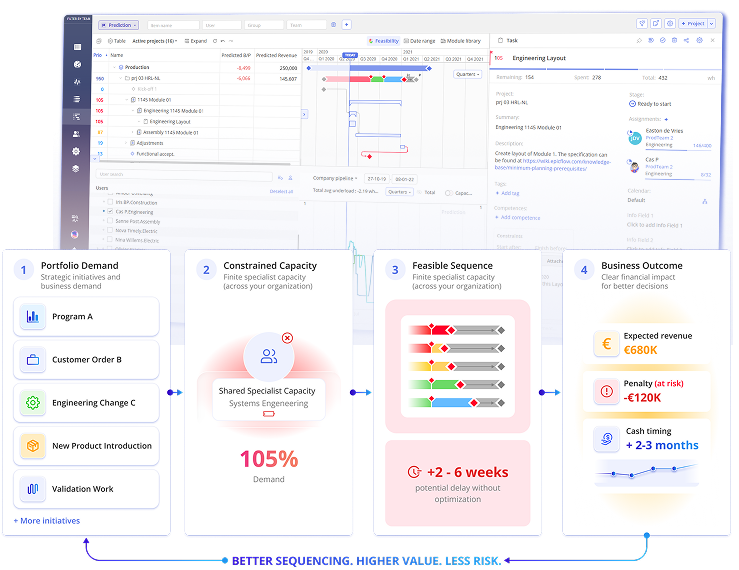
A bottleneck doesn't just move a date. It moves an invoice, a cash receipt, a penalty, and the margin on the project. Epicflow follows each delivery change from the resource-constrained schedule into the numbers Finance reports on.
-
What a week of delay costs
See what a week of delay costs on each piece of work held up at a bottleneck, so you know which delays matter and which do not. If you want the technical name, Stephen Devaux calls this figure drag cost.
-
Invoice timing
See when milestone-linked work is expected to become invoiceable based on the feasible delivery date.
-
Cash timing
Apply configured payment terms to estimate when the related cash is expected. This is a forecast derived from the schedule, not confirmed receipts or a bank balance.
-
Revenue & profit
See how a predicted slip changes each project's revenue and profit, not just its end date.
-
Bonus & penalty exposure
Act on a penalty while it is still a prediction. See which predicted slips put a contract bonus at risk or trigger a penalty.
-
Remaining investment
Is finishing this project still worth what is left to spend? Compare what further specialist time earns here with what it would earn on another project.
One bottleneck, followed all the way through: delivery date, invoice, cash, penalty, margin. Other tools track these separately. Epicflow calculates them together, on a resource-constrained prediction of the whole portfolio.
Epicflow Portfolio Optimizer: Where the Next Specialist Hour Earns the Most
The highest-value project is not always the one that should go first. If it queues for the same specialists as three other projects, starting it first can cost the portfolio more than it earns.
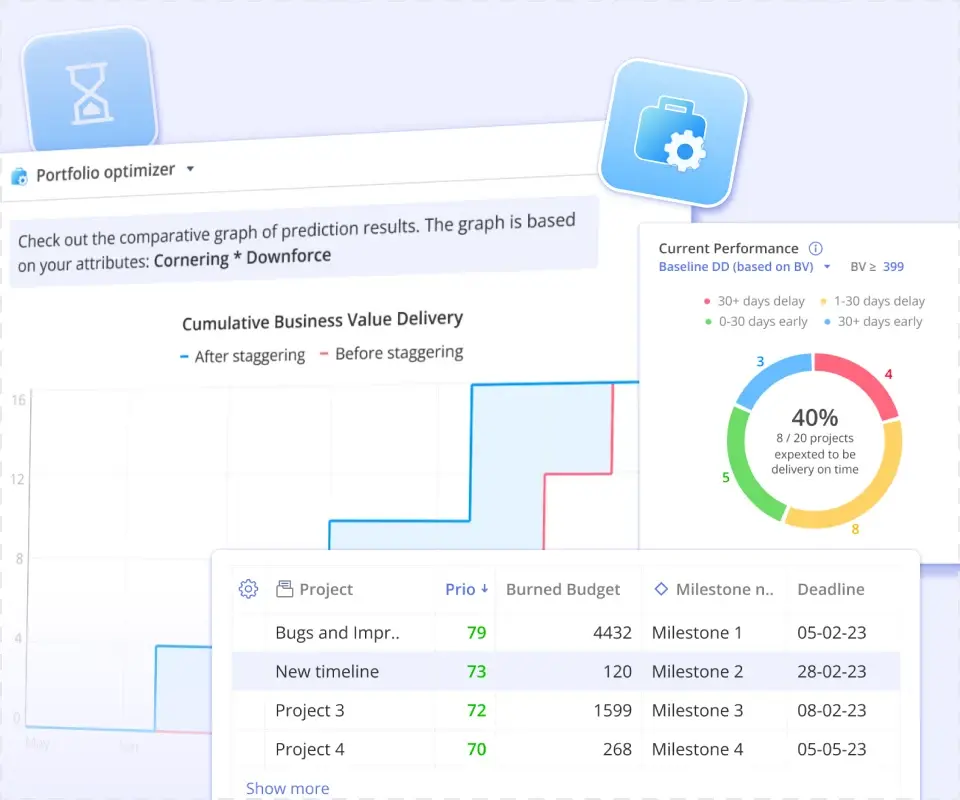
The Epicflow Portfolio Optimizer compares the possible orderings of your portfolio against fixed commitments, the specialists you actually have, and what each project earns.
It answers one question: where should the next hour of your most overloaded specialists go, without putting more important commitments at risk?
-
The Optimizer also shows what the best plan takes: which projects to shift, and who to hire, where and when.
-
AI finds the most valuable plan. You review it in a What-If scenario and decide.
Bring one overloaded specialist group. We'll show you what the Optimizer would move first and what that move is worth.
PMO Software for Multi-Project Resource Management
The wrong work can consume the capacity your most important commitments depend on. Epicflow shows where several projects are queuing for the same scarce capability, what that means for delivery, and which fix you can actually make.
Which resource group is actually limiting delivery, and which projects are creating the demand?
When an engineering or specialist group is overloaded, Epicflow traces the overload to the projects creating it and shows what the queue costs each of them. You see the pressure across the portfolio, not one person’s task list.
Before you commit, see what the whole portfolio would earn if the missing capacity were there. Then act on the specific gap: resequence, move particular tasks off the bottleneck, or outsource just that work. When capacity cannot grow, move the projects that cost least to move. That is not always the newest one.

Where could AI create more capacity for your most overloaded specialists?
Most AI makes everyone a little faster, and nothing finishes sooner. The gain only reaches delivery dates when AI capacity goes to the work the portfolio is waiting on.
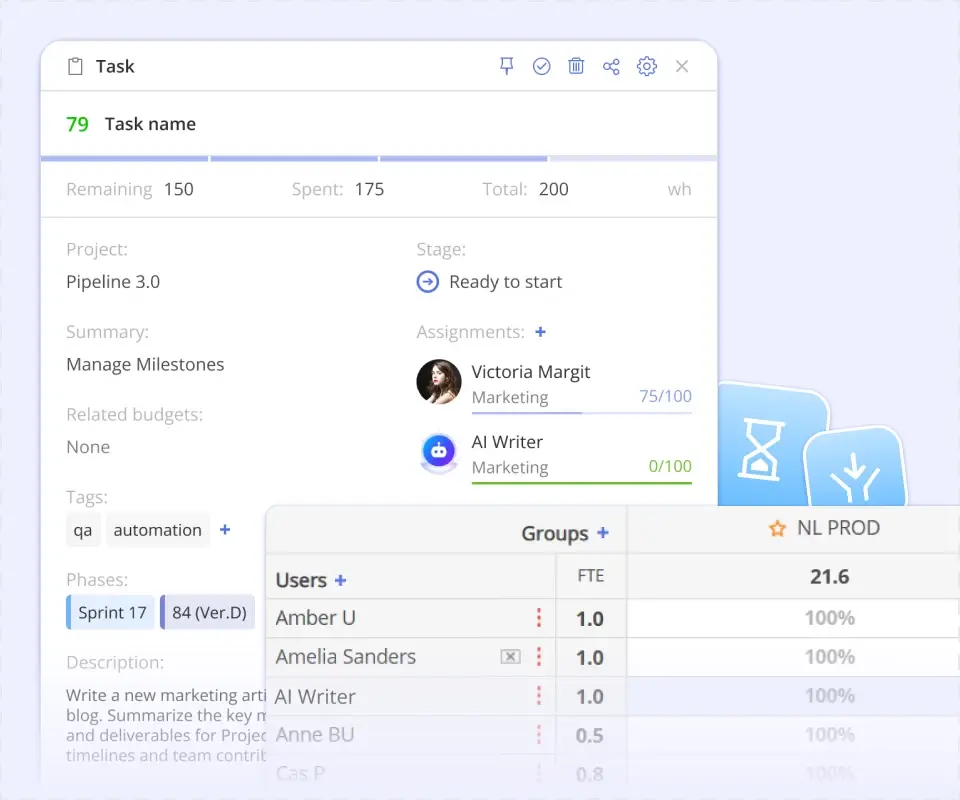
Some repeatable work can go to an AI resource, which lowers the demand on your specialists. Epicflow weighs AI capacity relief alongside resequencing, outsourcing, and hiring.
Give an AI resource work only where three tests pass: something is waiting on that work, the wait costs real money, and a machine can do it well enough for a person to sign off.

What happens to the portfolio if you change the plan?
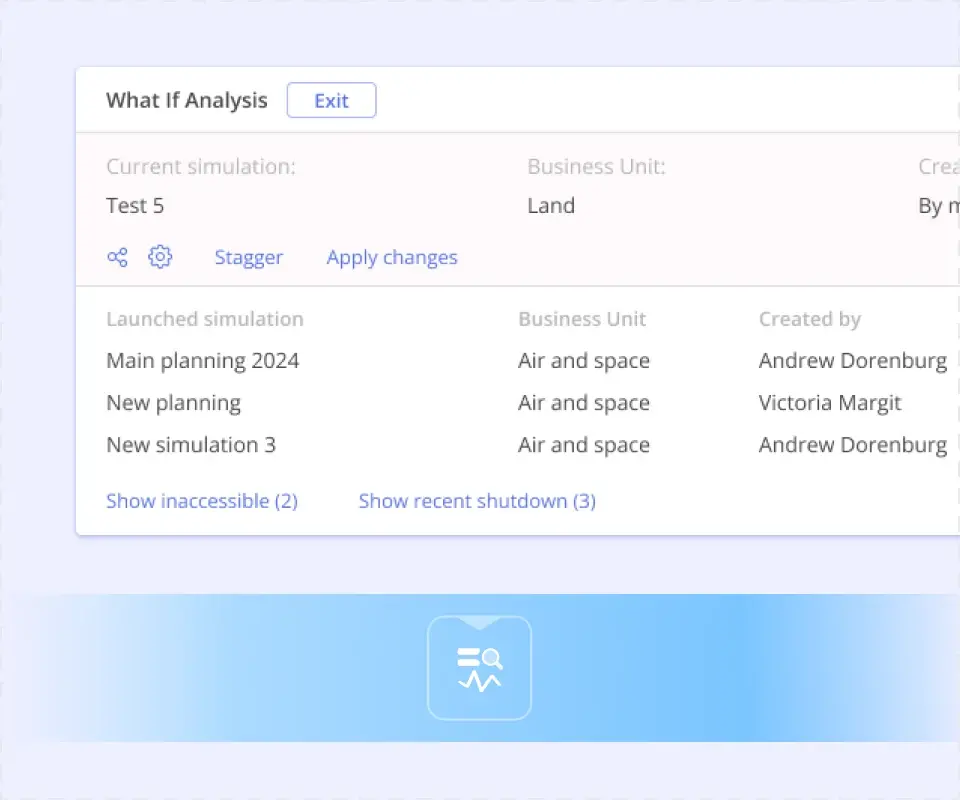
Epicflow’s What-If Analysis lets you test priorities, dates, resource availability, or new demand in a copy of the plan, not the live one.
Compare the alternatives, see what each one earns or costs across the portfolio, and carry the approved scenario into execution. The live plan changes only after the decision is made.

Can you accept another project without jeopardizing the ones already committed?
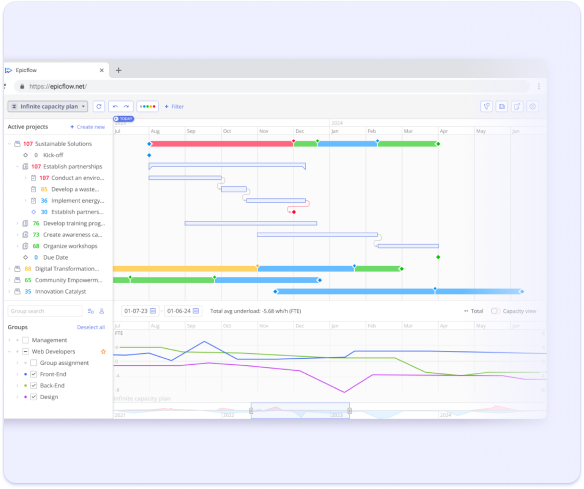
A new project is feasible only if the shared specialists it needs are available when the work must happen, without breaking commitments elsewhere. Epicflow tests that against remaining work, dependencies, priorities, and real resource availability across the portfolio.
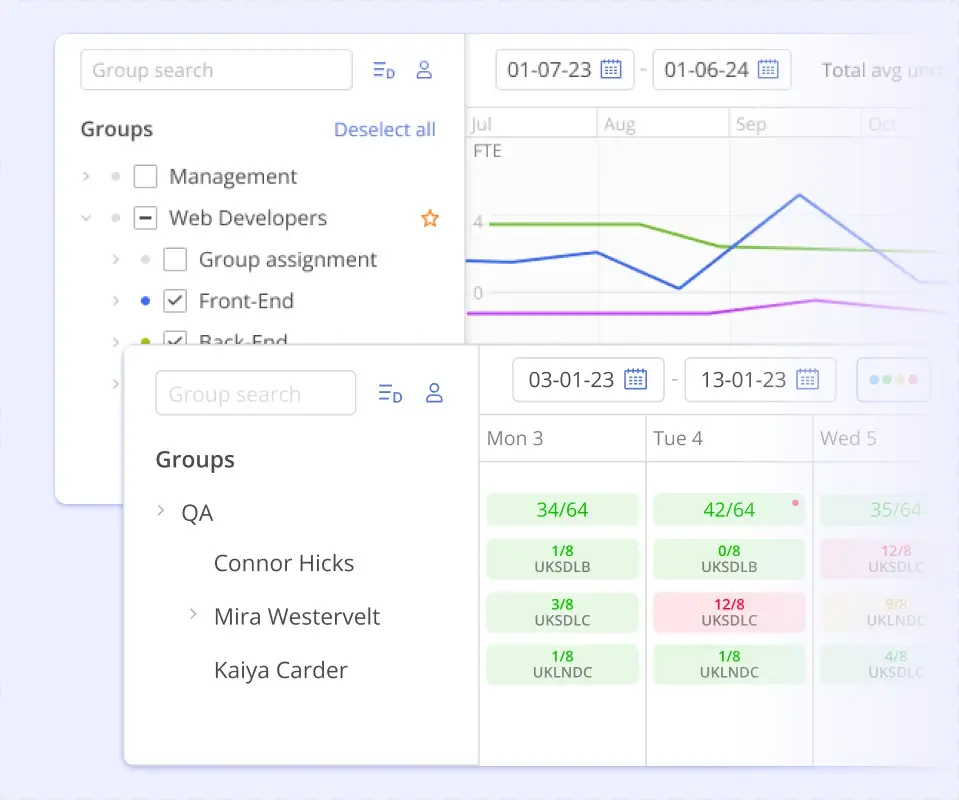
The Future Load Graph shows the coming months’ overload before it becomes a missed milestone. Capacity becomes part of the decision to accept a project, not the explanation for why it slipped.

Are your capacity assumptions realistic based on what has actually happened?
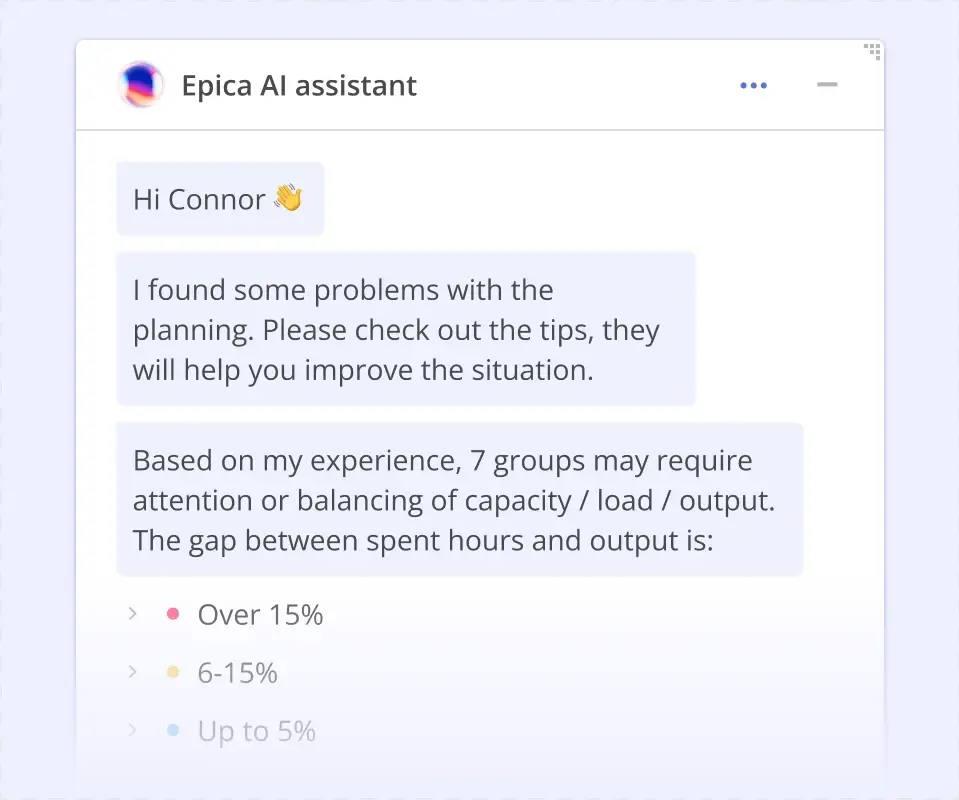
Plans often assume specialists deliver more than they ever have. Epicflow’s Historical Load Graph shows past load, capacity, and output for each resource group, so you can see the gap between what the plan assumes and what the group actually delivers.
Close that gap before it turns into next quarter’s slipped commitments.

Turn Portfolio Decisions into Daily Execution
A scenario is only valuable if the chosen decision changes what the organization actually does.
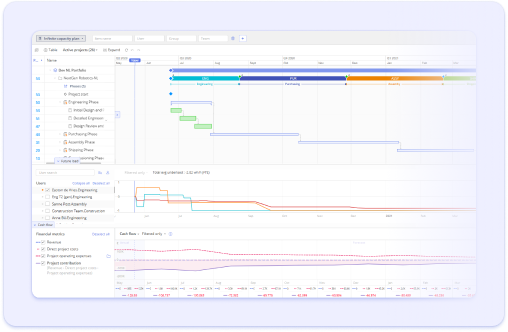
Epicflow’s Pipeline puts schedule, resources, business value, and the money on one view. Managers see which projects and phases a decision touches and carry the approved change into the operating plan.
-
PMO dashboard software reports what already happened.
-
Epicflow carries the decision into the plan teams work from tomorrow.
Spot the bottleneck. Change the plan. Keep delivery moving. When priorities, sequencing, or capacity change, the execution plan changes with them. New progress feeds the next forecast, so the portfolio plan doesn’t go stale between steering meetings.
PMO Software in Action: Engineering-Intensive Portfolios
Epicflow fits portfolios where commitments depend on shared specialists and a slip has a contract price: aerospace, defense, engineering, R&D, and project-based manufacturing.
-
KPN
18% → 80%
due-date performance.
+ lead times cut in half.
-
UK defence department
+10%
revenue, with no investment.
By reorganizing work across existing resources.
-
Dutch Ministry of Defence
Analysis of an initial project batch showed on-time delivery could rise
24% → 77%
with no added headcount.
+ critical programs could finish up to 424 days sooner.
JOSCAR-certified · Hosted on ISO 27001-certified infrastructure · GDPR compliant · Role-based access control · DataGuard: selected sensitive data can stay on premises
Epicflow supports complex delivery environments across industries

The Dutch Ministry of Defence: How Much Sooner Could Critical Programs Finish?
The challenge Competing projects drew on the same constrained resources, and nobody could say how a change in priorities or sequencing would affect delivery elsewhere.
The Epicflow approach Epicflow modeled the portfolio as one system competing for the same finite capacity, not as a set of isolated schedules, and tested alternative priorities and sequencing against it. The same applies wherever engineers, technical reviewers, regulatory specialists, or test teams set the pace for many projects at once.
The value: analysis of an initial batch of projects showed on-time delivery could rise from 24% to 77%, and critical programs could finish up to 424 days sooner, with no added headcount.


Add Portfolio Control Alongside Your Existing Tools
You shouldn’t have to replace the tools teams already use to make better portfolio decisions. Epicflow sits above them as the layer where capacity and priorities are decided.
Developers keep managing day-to-day delivery in Jira while the PMO uses Epicflow to see cross-project demand, where it collides, and what each priority call costs. Documented configurations are also available for Microsoft Project and Oracle Primavera.
Rollout starts with one decision: what stays in your existing tools, what the PMO runs in Epicflow, and what data flows between them.
Evaluate the shared-resource problem before wider rollout
Full implementation typically takes 8 to 12 weeks. You see what the bottleneck costs on your own portfolio before you commit to a wider rollout.
-
01

Pick the projects that share one overloaded resource pool.
-
02
Agree the planning data needed to model it.
-
03
Map current demand against real capacity.
-
04
Price one decision scenario: what it earns and what it costs.
-
05
Then decide what training, integration, and operating changes wider use would take.
Bring us the resource pool everyone is fighting over.
See What Your Portfolio Can Deliver
Bring the projects competing for it, the commitments you cannot miss, and the planning tools you use today. We’ll show you where the bottleneck sits, what it costs, and which feasible move earns the most.
The number to take to Finance: what that bottleneck is costing the portfolio, and which move relieves it first.
PMO Software FAQs
What is PMO software?
Project management office software is software used by project management offices to govern and optimize multiple projects across an organization. It helps manage portfolio priorities, resources, dependencies, budgets, risks, and reporting. PMO software often overlaps with project portfolio management software (PPM), as both support portfolio-level planning and decision making. The difference is usually in focus: PMO software emphasizes governance and operational control, while PPM focuses on portfolio selection, prioritization, and management. Enterprise project portfolio management software (EPPM) extends these capabilities for large-scale organizations, while strategic portfolio management (SPM) emphasizes strategy execution, investment decisions, and business value.
What does PMO software do?
PMO software is a broad term for the tools used by a project management office to prioritize portfolios, manage shared resources, standardize governance, and monitor delivery. Many PMOs use project portfolio management software.
PMO software tools help organizations make better portfolio decisions by supporting project intake, prioritization, resource capacity planning, allocation, dependency management, scenario analysis, risk management, reporting, and governance. Epicflow specializes in portfolio sequencing, shared-resource capacity, bottleneck analysis, and operational decision support, while integrating with existing execution and enterprise systems.
How is PMO software different from project management software?
Project management software typically helps teams plan and execute individual projects, manage tasks, and track progress. PMO tools operate at the portfolio level, helping organizations manage multiple projects, shared resources, priorities, dependencies, and strategic alignment. Many organizations use both: project management teams execute work in project management tools, while PMOs use portfolio software to make cross-project decisions.
What features should PMO software have?
Effective PMO software should support portfolio intake and prioritization, resource capacity forecasting, bottleneck detection, scenario planning, dependency management, value-based decision making, dashboards, governance, integration, security, and proven results in similar environments. For organizations managing shared specialist resources, predictive capacity analysis and portfolio trade-off modeling are especially important. For contract-based portfolios, it should also connect predicted delivery dates with monetary budgets, configured bonuses or penalties, revenue, and profit signals so leaders can prioritize exceptions by business consequence.
What is the best PMO software?
The best PMO software depends on your organization’s operating model, portfolio complexity, resource constraints, and decision-making needs. For example, for PMOs coordinating projects, resources, and priorities across regions, finding the best software for managing PMOs across regions means looking beyond project tracking to shared-capacity planning, what each priority decision costs, and consistent decision-making.
Epicflow is a PMO software tool for multi-project resource management, which makes it a strong fit for organizations managing complex portfolios where scarce specialists are shared across multiple projects. It helps PMOs forecast capacity, identify bottlenecks, and sequence work based on business value and real resource constraints.
How to choose the best PMO software?
The best PMO software depends on your portfolio complexity, resource constraints, governance needs, existing tools, and business goals. If your primary need is reporting, PMO dashboard software may be sufficient. Organizations managing multiple projects with shared specialists should look beyond dashboards and reporting and choose a platform that helps you understand resource constraints, evaluate trade-offs, and improve delivery outcomes.
| Criterion | Question to Ask | What Epicflow Helps You Achieve |
|---|---|---|
| Portfolio decisions | Can the system show which work to start, pause, or resequence when capacity is limited? | Rank start, pause, and resequence moves by what each one earns |
| Capacity forecasting | Can it forecast demand and overload across active and proposed projects? | See which commitments a future overload will break, months ahead |
| Bottleneck diagnosis | Can it identify the resource groups and tasks creating constraints? | Trace a delay to the overloaded group causing it and see what that queue costs |
| Scenario analysis | Can the PMO test changes without altering the live plan? | Price each option before the live plan changes |
| Value and financial logic | How does the platform connect priorities, value, cost of delay, budgets, or benefits to finite capacity? | Follow a slip into invoice timing, cash, bonus or penalty, and margin |
| Integration | Can teams keep working in Jira, Microsoft Project, Primavera, ERP/HRM, or other systems? | Keep Jira and Microsoft Project, and add the decision layer above them |
| Implementation and adoption | What data is required, how is the model calibrated, and who needs to change their workflow? | Start from existing project and resource data. Full implementation typically takes 8 to 12 weeks |
| Proof and security | Are there relevant case studies, security controls, and enterprise references? | KPN raised due-date performance from 18% to 80%. JOSCAR-certified, hosted on ISO 27001-certified infrastructure |
Is Jira a PMO tool?
Jira is a powerful platform for project execution, issue tracking, and agile team workflows, but it is not automatically a complete PMO dashboard software or PPM platform. Many organizations combine Jira with portfolio, resource management, governance, and forecasting capabilities. Epicflow complements Jira by adding portfolio-level capacity intelligence and decision support.
How much does PMO software cost?
PMO software pricing depends on factors such as the number of users, portfolio size, required capabilities, integrations, data migration needs, deployment model, support requirements, and implementation scope. The right investment depends on the complexity of your portfolio and the business value of improving delivery decisions.
See Epicflow pricing
Does PMO software work for enterprise-wide portfolios?
Yes. Enterprise PMO software can support large and complex portfolios when it provides portfolio hierarchy, cross-project resource management, permissions, governance, integrations, security, and scalability. Epicflow is designed for enterprise environments where multiple projects compete for shared specialist capacity and where delivery depends on making better portfolio decisions.
Does Epicflow integrate with Jira and Microsoft Project?
Yes. Epicflow integrates with Jira and Microsoft Project, along with other enterprise systems through available integration and API-based options. Rather than replacing execution tools, Epicflow works as a portfolio and resource intelligence layer that combines existing project data with capacity analysis, bottleneck detection, and portfolio optimization.
How can PMO software support the shift from a PMO to a Value Management Office?
PMO software supports this shift when it goes beyond governance and reporting to show how finite capacity should be invested. It should expose constraints, connect priorities with business value and cost-of-delay signals, test capacity-feasible scenarios, and translate the chosen direction into resource actions. Epicflow combines those elements through a resource-constrained prediction of the whole portfolio, prioritization by business value, and the resource moves that follow.