Top Risk Management Trends for 2026: Emerging Technologies and Strategic Insights
 Mykhailo Kulakov
.
March 27, 2026
.
Project Portfolio Management
.
27 mins READ
Mykhailo Kulakov
.
March 27, 2026
.
Project Portfolio Management
.
27 mins READ

Risk management in 2026 is becoming more complex and taking on a more strategic and interconnected nature. Along with the new challenges, new risk management solutions arise that greatly improve the field but require a strategic approach to their implementation.
In this article, we’ll explore the most important risk management trends in 2026, ways in which you can follow these trends, and take a look at other important points for a modern risk manager.
Key takeaways:
- The main risk management trends are increased complexity and interconnectedness of risk profiles, the need for unified risk management, fraud prevention, and implementation of automation and analytical tech.
- The modern CRO should invest in increasing the understanding of new risks, adopting new technologies, and building skills to use them effectively.
- The future of risk management in the digital era lies in building a holistic understanding of risk profiles and implementing AI-first analytical systems with humans in the loop.
Key Risk Management Trends for 2026
Let’s first take a closer look at the most important future trends and global issues in risk management in 2026.
Complex external risks
This decade is and will continue to be full of growingly complex external business risks. Political conflicts, policy changes, economic downturns, and climate change all influence cross-border matters. These risks often lead to reduced economic activity and supply chain disruption, which is bound to influence many companies globally, in small or in large ways.
Managing these risks is going to be a major challenge for C-level executives as they’re hard to predict.
How to follow this trend
To negate the negative effects of modern risk profile complexity, risk managers need to analyze the likelihood of different risks occurring and the potential severity of the impact. Scientific literature review by Terje Aven shows that fault tree analysis, event tree analysis, and Bayesian networks are the most effective approaches to analyzing that[1].
Project risk managers should create risk registers for the projects they lead and create contingency plans for different risk scenarios.
Interconnected risks
One of the new trends in risk management is finding connections between risks and treating them as a holistic continuum instead of a series of disconnected factors. The reason behind this is that the complexity of modern risks creates a situation where one risk being realized can lead to a multitude of others in a domino effect. For instance, political tensions can lead to a change in regulatory profiles, which will lead to supply chain disruptions in some industries.
Modern enterprises need to account for that in their risk profile calculations.
How to follow this trend
To understand the potential cascading impact of different risks, enterprises should run simulations that take connections between risks into account.
Unified regulatory risk management
The regulatory frameworks in 2026 remain volatile and hard to predict. The sheer amount of sanctions and tariffs together with the increasingly complicated ownership structures of the modern enterprises make it difficult to avoid compliance risks.
How to follow this trend
The future of enterprise risk management lies in effective handling of that intricate web of regulatory bodies and policies with AI-based tools that can help risk managers to find the correct path forward.
Real-time monitoring
Modern risk profiles often have shorter timelines, which calls for quicker pace of monitoring. This especially applies to monitoring fraudulent activity. For instance, in the financial sector, fraudulent accounts can run for months with low-level threat activity and defraud the company before it can catch it.
Monitoring activity in real time and catching the small potential threats allows organizations to prevent the threat before it has the chance to have a greater impact.
How to follow this trend
In practical terms, the majority of companies will not be developing their own real-time data monitoring solutions. To follow this trend, you’ll need to invest in a tool or platform that can have those sorts of capabilities. Before doing that, you might need to review your current data storage solutions and ensure they’re capable of supporting real-time data.
Automation
The role of a risk manager in 2026 has become a lot wider. CROs need to account for extremely complex external and internal risks in the company and tie all of those into a unified system. The thing that allows them to do this is automating large parts of their work like:
- Risk detection.
- Early risk assessment.
- Taking actions to mitigate known risks.
How to follow this trend
Risk managers should use existing tools and implement AI to automate mundane tasks that require little to no human oversight to be able to focus on the strategic areas of the risk management process.
AI & tech adoption
41% of CROs expect to spend more than half of their budget on the adoption of new technologies that allow them to streamline and automate most processes from real-time risk tracking to regulatory compliance. To succeed in modern risk mitigation, you will have to invest in AI-based solutions as well.
How to follow this trend
Investigate different ways your organization can implement tools and AI systems to improve risk management workflows. Proceed with ones that can provide the largest improvements fast.
Fraud prevention
AI fraud prevention is one of the latest trends in risk management. 46 out of 50 CROs say cybersecurity risks are on the rise. Not only the previously present security concerns still pose a threat, there are new threats tied to AI. The current level of AI technology allows for realistic generation of documents and even live deepfake video feeds that allow malicious actors to create fake identities and defraud both individuals and corporations.
How to follow this trend
The new approach to fraud prevention will include active steps towards recognizing AI-based fraud:
- Keep up to date with current threats.
- Invest in employee training.
- Establish stricter phishing prevention rules.
- Integrate new threats into the existing risk detection systems.
Emerging Technologies in Risk Management
At the core of risk management in 2026 is technology that can be used for data storage and analytics. Here’s a brief review of the latest trends in risk management software.
Artificial intelligence and machine learning
The most important technology in risk management in 2026 is AI. Not just because it’s incredibly efficient at what it does, but due to the simplicity of implementation. Unlike, say, implementing IoT at your organization that might require purchasing and installing thousands of units of equipment, the most basic AI implementation only requires some training and connection to data.
More advanced implementations can require setting up internal data infrastructure, which may be more costly.
Another benefit of using AI is its versatility. AI and machine learning technologies can be applied to most areas of business, from cybersecurity monitoring to external risk analytics. They improve risk management through automating routine tasks, improving analytics, and allowing for real-time risk detection systems.
Blockchain
Blockchain technology offers a secure and transparent way to track transactions and confirm identities. It’s a solution that multiple companies are investing in to decrease compliance risks and tracking supply chain performance.
Blockchain improves risk management through providing new ways to do KYC/AML procedures and reducing human error in compliance with smart contracts.
Internet of Things
IoT technology mostly is useful for the manufacturing industry and industries that deal with logistics. It allows to gather multiple data points, from warehouse temperature to supply availability, faster and to integrate them in the data analytics software. This lets organizations have more control over the data they possess and mitigate logistical risks.
Cloud computing
Cloud services is mainly a trend relevant in data management implementations. Using cloud systems instead of on-site infrastructure allows companies to improve risk management through developing scalable data storage solutions and centralizing data for further analytics.
Practical Steps for Businesses to Adapt to New Risk Management Trends
Following risk management industry trends in 2026 requires learning more about emerging trends in risk management, new challenges, and changing your approach to risk management with the implementation of new tech. Here are a few concrete steps.
Integrate risk management with the whole organization
The current challenges in risk management cannot be effectively solved as a side function of another role at large organizations. Consider creating a risk management office or introducing risk management as one of the major functions of your organization’s portfolio management office. Integrate it with the rest of the organization to have a full view of internal risks and the ability to influence the organization to respond to external ones.
Learn about new risks
The first thing you need to succeed in risk management in 2026 is to learn more about the new risks. Familiarize yourself with the regulatory landscape, the cybersecurity challenges, and the external risks that influence risk profiles.
There is also the need to learn about industry-specific risks. For instance, aerospace industry risks and manufacturing industry risks will overlap in a lot of ways, but will have important differences. Especially when it comes to operational project risk management.
Investigate the supply chain
Dig deeper into external risks to find issues that might influence your business. Look at how your supply chain and the demand for your products or services may be affected in different regions of the world by said risks.
Adopt new tech
Adopt new technologies that make risk management easier. This includes business analytics tools, scenario planning software, and AI tools.
Build technical skills
Since AI and technology is going to play an increasingly important role in risk management, building technical skills as a risk manager is going to be critically important.
Develop proactive responses
Instead of handling problems reactively, develop proactive responses to them. Plan ahead, create forecast-based contingency plans for possible risks, and implement them where necessary.
Deal with operations risks faster
Risk management in 2026 requires a stronger focus on external risk management. You can free up your company’s resources to pursue that by optimizing operational risk management. Use PPM scenario planning software to find potential operational disruptions and prevent them before they start manifesting problems.
Case Studies: Successful Risk Management Strategies
Let’s take a closer look at two cases of implementing Epicflow, a portfolio management tool with a focus on resource-oriented risk management.
Operational risk management in a manufacturing company
Arnold AG is a German manufacturing company that was struggling with assessing operational risks of taking on new projects. This was due to the company being unaware of its real resource constraints. As a result of this uncertainty, it was unable to take on additional projects and missed revenue potential.
After using Epicflow to help with understanding operational risks, they were able to gather data on their resource capabilities, have a full grasp of the risks involved in starting new projects, and build a portfolio with an acceptable level of risk. This led to the company being able to take on more projects while keeping the risk profile optimal.
Single source of truth for a defense company
A UK-based defense company was struggling with managing resources distributed across the whole country. The uncertainty and the inability to address it led to resource shortages, reduced productivity, considerable delays, and loss in sales.
This defense company turned to Epicflow for help and together they were able to create a single source of truth for the entire company. Centralizing performance data on one platform allowed the company to have clarity on the resources they have and their usage. This led to increasing the productivity of one of the departments by 10% without any other investments.
Future Outlook: What’s Next for Risk Management?
Risk management is undergoing several changes currently, but the overall framework is not going to be altered significantly. Here are the main areas that are going to change.
Predictive risk management
The increased requirements for risk management speed and quality leave no room for taking decisions weeks after a risk has started influencing an organization. Monitoring the data stream in real time and finding potential risks before they have the chance to become problems is going to be a major part of risk management in 2026.
External risk simulations
The complex nature of external risks leads modern organizations to run multiple risk simulations to understand the severity and chances of different risks. Smaller companies might not have the budget to do this, but large enterprises are going to dedicate more efforts to clarifying external risk profiles and making strategic decisions based on them.
Holistic approach to risk management
A siloed understanding of risk management is going to be left behind. In 2026 and moving forward, risk is going to be understood as a complex interconnected web. Financial risks, external risks, and operational risks are going to be understood and analyzed as elements of a single system.
Humans-in-the-loop approach
The introduction of AI systems into risk monitoring, risk assessment, and risk management is going to make this infrastructure evolve into one that requires only slight human supervision. The new norm will be the human-in-the-loop approach where a risk manager is overseeing the AI system and uses their knowledge to confirm or override decisions made by AI.
How Epicflow Supports Risk Management Trends
Using advanced tools, especially AI-based ones, can move your risk management to a new level. Let’s look at how Epicflow, a project portfolio management tool with strong resource and risk management capabilities, can help you with operational risk management.
Operational risk identification
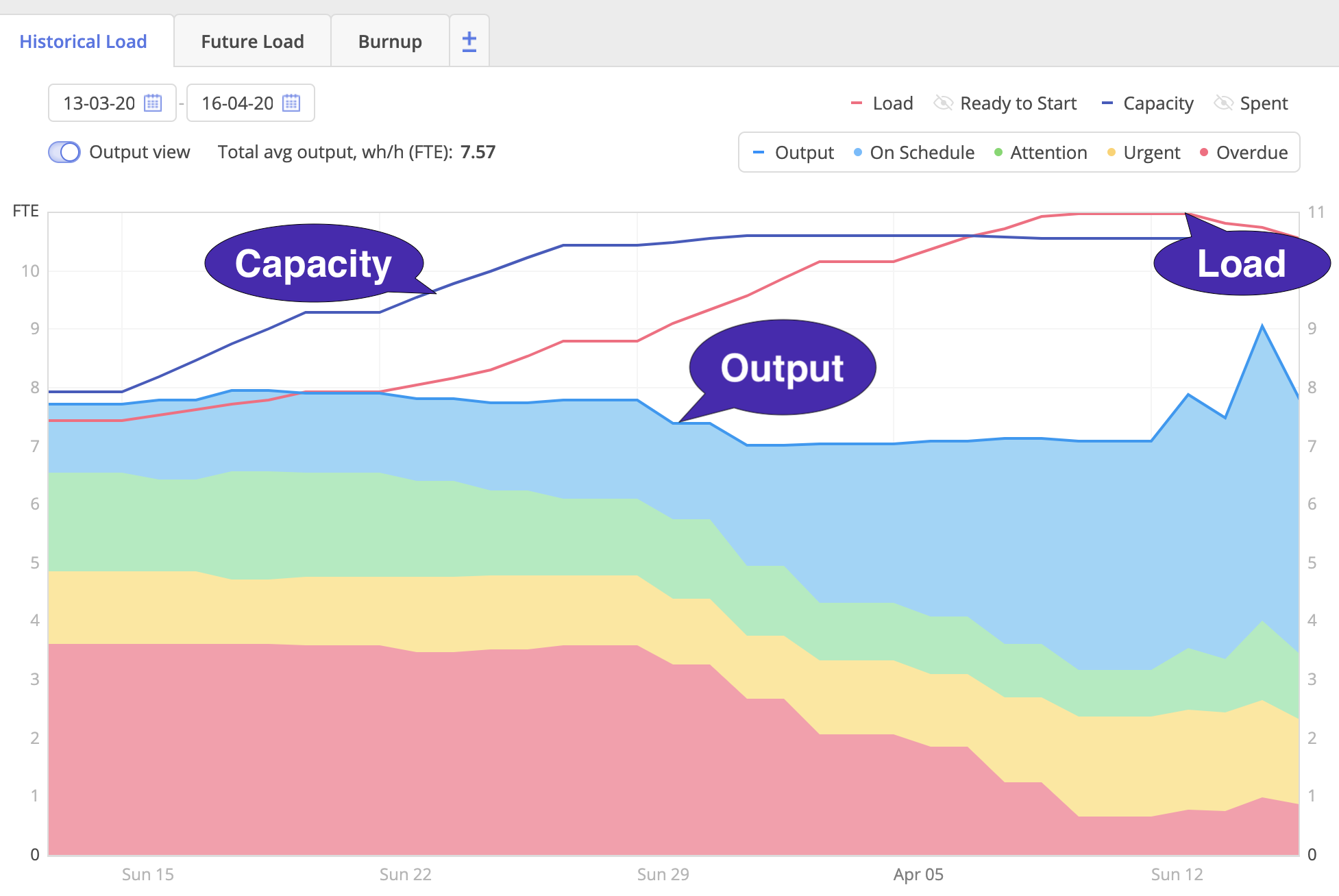
To find operational risks, like bottlenecks created due to resource overload, with Epicflow, you can use capacity planning software to find instances of resource overload. They represent operational risks that will negatively impact project due date performance if not addressed in time.
Operational risk management
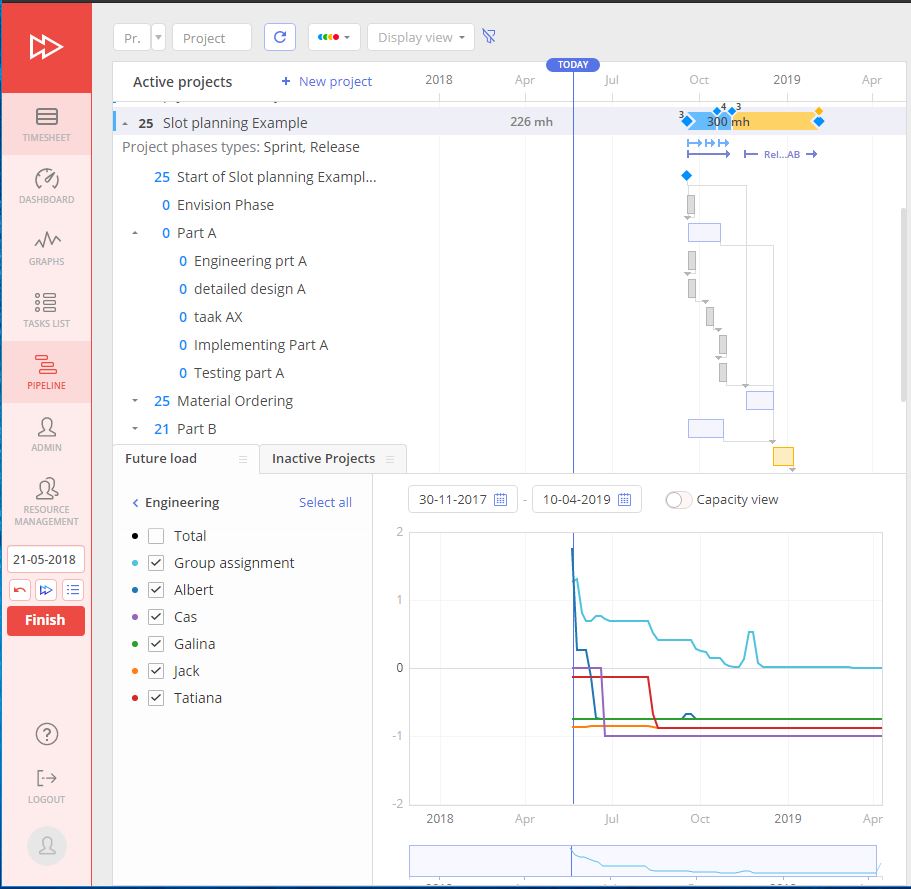
To address those risks, use Epicflow scenario planning software to simulate different ways you can change the portfolio to eliminate delays in delivery of the most important projects.
Another option is to use Epicflow Portfolio Optimizer, EPO. This AI-driven tool will analyze your organization’s portfolio with real-world resource constraints and project priority in mind, and create a scenario optimal for business value delivery.
Book a call with our team to learn more about how Epicflow can help your organization in managing operational and resource-related risks.
Final Thoughts
Risk management is changing. The new risks are more complex and interconnected, but new technologies provide multiple solutions for handling them and excelling with differing risk profiles. CROs and risk managers should work on familiarizing themselves with modern risk profiles, building tech skills in their teams, finding new ways of implementing tech to automate workflows and analyze data.
References
- Terje Aven, Risk assessment and risk management: Review of recent advances on their foundation, European Journal of Operational Research, Volume 253, Issue 1, 2016, Pages 1-13, ISSN 0377-2217, https://doi.org/10.1016/j.ejor.2015.12.023. (https://www.sciencedirect.com/science/article/pii/S0377221715011479)
Frequently Asked Questions
Why is risk management important for businesses today?
Risk management is now more important than ever because of the complexity of external risks that all organizations should account for being added to traditional operational risks. Proper risk management allows organizations to identify, assess, and mitigate risks before they affect organizational performance negatively.
What are the current trends in risk management?
The current risk management trends include the increased complexity and interconnectedness of risks as well as the use of advanced scenario planning, predictive risk management, automation of routine tasks, and using AI-based software to build holistic human-in-the-loop workflows. The future of enterprise risk management is in external risk analytics.
What is the future of risk management technology?
The future trends in risk management technology applications lie in building scalable cloud-based storage solutions and integrating them with AI-based analytical implementations.
What are the 5 T's of risk management?
The five T’s of risk management are:
- Tolerate. Accept the risks and go on.
- Treat. Take proactive steps to manage the risk.
- Transfer. Avoid the risk by transferring it, for instance, by using insurance risk management.
- Terminate. Avoid risky activity.
- Take the Opportunity. Invest in activity with a high risk-reward ratio.
What are the 3 C's of risk management?
There are multiple approaches to defining these three C’s. The most popular one is:
- Context. Understanding each type of risk requires context.
- Collaboration. Managing the risks requires cross-department collaboration.
- Communication. Achieving said collaboration is possible through communication across the board.
How are Artificial Intelligence (AI) and Machine Learning (ML) transforming risk management practices?
AI and ML technologies allow risk managers to automate multiple responsibilities and improve data analytics capabilities of their company.
What role does blockchain technology play in enhancing risk management?
Blockchain technology mainly helps organizations with KYC tasks and anti-money laundering compliance in the financial institutions and supply chain risk management.
What industries are adopting new risk management trends?
Risk management trends are adopted by multiple industries. Enterprise risk management trends and emerging practices are most important for sectors with higher risk exposure like financial industry, aerospace, defence, and large manufacturing corporations.