Best Microsoft Project Alternatives in 2026: Tools for Optimizing Delivery and Maximizing Business Value
 Victoria Sokolova
.
May 15, 2026
.
Project Portfolio Management
.
28 mins READ
Victoria Sokolova
.
May 15, 2026
.
Project Portfolio Management
.
28 mins READ

Across industries, organizations face the same reality: an increasing number of parallel projects, limited resources, and constant pressure to deliver faster. Simply replacing Microsoft’s Project Online with a similar scheduling tool will reproduce the same limitations: static plans, overloaded teams, and a lack of understanding what really drives value.
“For organisations moving away from Microsoft Project Online, the real opportunity is not just to choose a new tool. It is to modernise how portfolio decisions are made, and to give the teams making those decisions something better to work with.”
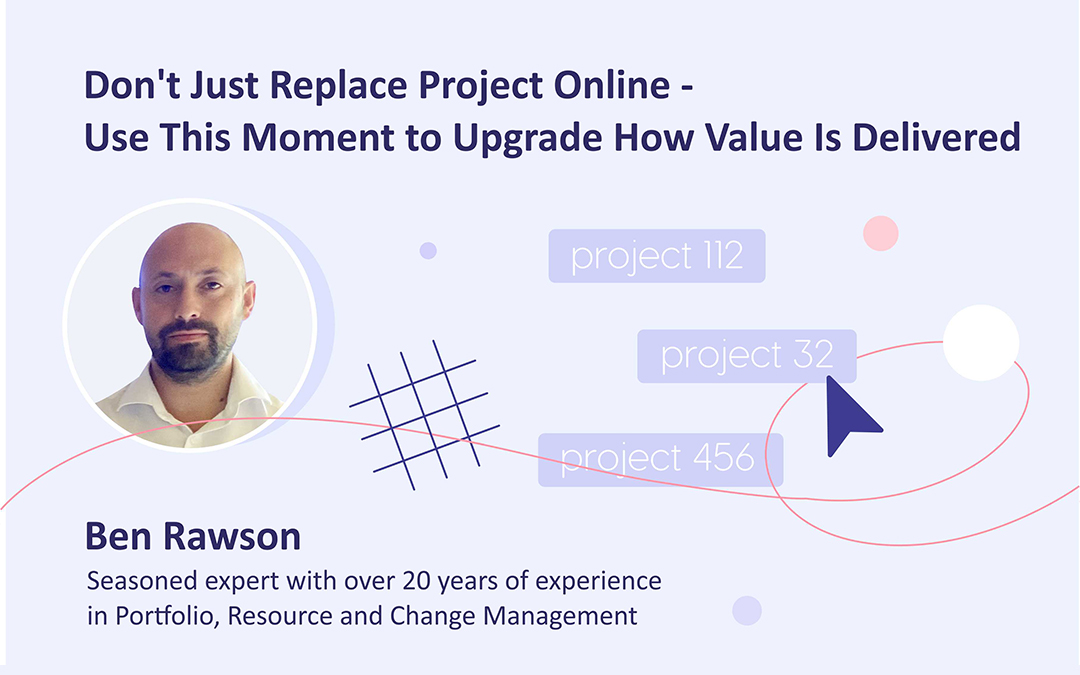
Ben Rawson, project portfolio management expert, implementation partner at Epicflow.
Read more: Don’t Just Replace Project Online – Use This Moment to Upgrade How Value Is Delivered
Selecting MS Project Online Alternatives: Key Reasons to Choose Epicflow
Epicflow is a project portfolio and resource management solution for effective management of multi-project environments with a shared resource pool. It helps organizations fix things that truly limit delivery so that business organizations could move from constant firefighting to predictable execution and maximize business impact and profitability.
1. Portfolio-level visibility for overall control.
MS Project Online functionality is limited for multi-project environments that compete for the same resources, where you need to make decisions, evaluate trade-offs, and coordinate shared resources. Epicflow was developed specifically for these complex environments. It doesn’t treat projects in isolation, but provides a centralized view and control of the entire portfolio with all its components and resources involved.
2. Portfolio optimization for increasing throughput and profitability.
In many organizations, projects are started based on deadlines and available budgets rather than actual capacity. This situation often results in low performance and delays. Epicflow helps optimize portfolio management by aligning project execution with both business value and existing resource constraints. As a result, companies can increase throughput and improve profitability by delivering more value with the same resources.
3. Eliminating hidden bottlenecks for timely project completion.
It often happens that despite busy teams, overall portfolio performance remains low. This happens because of resource overload – a silent enemy of productivity and timely delivery, which remains unnoticed by the majority of organizations, especially the large ones. Epicflow visualizes current and predicts future workload, which helps companies eliminate and prevent bottlenecks, deliver projects on time, and utilize available resources most efficiently.
4. Prediction-based planning for consistent delivery.
Tools like MS Project rely on traditional project plans that are static and can quickly become outdated due to the dynamic nature of multi-project management. Epicflow takes a different approach: it has AI-powered prediction to forecast delivery timelines based on real-time data (capacity, current workload, priorities), which allows organizations to create more reliable and feasible plans and ensure more predictable project delivery.
5. AI-powered scenario analysis for confident decisions.
In MS Project, decision making is often based on static estimates and manual updates, which is not reliable for interdependent multi-project environments. Epicflow enables managers to experiment with scenarios and test changes before implementing them. Whether it’s adding a project, shifting deadlines, or increasing capacity, you can see the impact of changes on the entire project portfolio to improve decision quality and reduce risks. This helps organizations make better investment decisions, eliminate threats, and prioritize projects that maximize ROI.
6. Seamless transition to Epicflow.
Epicflow has native integration with MS Project, which enables smooth migration without disrupting your current workflows or time-consuming manual data transfer. This means that you can start improving delivery performance and deliver value faster, without operational disruption.
To summarize, here’s the table visualizing the comparison between MS Project’s and Epicflow’s portfolio management capabilities.
| Capability | Epicflow | Project Online |
| Portfolio optimization | Optimizes portfolios based on shared resource constraints and flow efficiency |
— |
| Flow-based prioritization (constraint & value-driven) | Prioritizes projects and tasks using constraint-based logic and business value per constrained resource hour |
— |
| Constraint-based capacity planning (cross-project) | Aligns planning with actual resource capacity across the portfolio | Limited to within-project resource leveling |
| Prediction of delivery dates and future risks | Forecasts delivery dates and identifies bottlenecks based on resource constraints and flow dynamics | Static scheduling; no continuous predictive engine |
| Portfolio scenario simulation and impact analysis | Simulates changes in scope, timelines, and resource distribution to evaluate and compare portfolio-wide impact | Manual scenario creation; no integrated portfolio simulation |
| Cross-project bottleneck detection (real-time & predictive) | Detects current and future resource bottlenecks across all projects; helps resolve them |
— |
| Dynamic adaptation to change | Recalculates priorities and forecasts dynamically when inputs change | Manual rescheduling required |
The Epicflow Portfolio Performance Guarantee
Guarantee measurable portfolio gains
within 12 months of go-live
We've measured the impact of Epicflow across more than a decade of deployments in aerospace, defense, manufacturing, and pharmaceutical organizations. We're confident enough in the outcomes to put them in writing.
No other PPM vendor offers this commitment. We can because we've measured it.
resource efficiency
project lead time
in on-time delivery
All achieved without increasing headcount
How the guarantee works:
You commit to an executive sponsor, a named portfolio owner, and the recommended implementation cadence.
In the first 30 days, we establish baseline metrics together — before any configuration begins.
Quarterly performance reviews track progress, with full visibility into the data.
At month 12, we run a formal performance readout against baseline.
Epicflow’s Microsoft PPM Tool Success Stories & Case Studies

Defense Sector:
Optimizing Portfolio Performance
A $1B+ defense program struggled with too many parallel projects, no clear prioritization, and overloaded teams. Despite significant budgets, completing projects on time was a constant challenge. After implementing Epicflow:
- Reducing work in progress and balancing capacity across projects
- Lead times reduced by 30%+
- Due date performance improved by up to 300%
- No increase in headcount required
The key shift: Managing resource constraints instead of just budgets

Pharmaceutical Case:
Scaling Software Delivery
A large US pharmaceutical company struggled with a growing backlog, overloaded development teams, lack of prioritization, and limited visibility into resource capacity. Their workflow didn’t provide insights needed to coordinate projects and teams effectively. After implementing Epicflow:
- The management has visibility into all projects and resources
- Workloads matches to actual capacity, eliminating bottlenecks
- Decisions are made based on predictive insights
- Team output has increased without extra resources
The key shift: Bridging the gap between team execution and executive decision making

A&D Company: Completing More Projects With the Same Resources
A UK defense organization was struggling with missed due dates, overloaded teams, scattered resource pools, and limited real‑time visibility into its project environment. Leadership needed a way to grow the business and deliver more projects, but lacked the data and tools to coordinate distributed teams and make informed decisions. After implementing Epicflow:
- Identifying and eliminating bottlenecks
- Unifying distributed teams under a single view
- Revealing the potential to deliver 10% more work with the same resources
- Improved decision making with real‑time analytics and simulation testing
The key shift: Reorganizing work around actual resource capacity and predictive insights
Other Alternatives for MS Project in 2026
Let’s consider the top alternatives MS Project users can consider for better delivery.
Jira: Best for Agile teams and software development
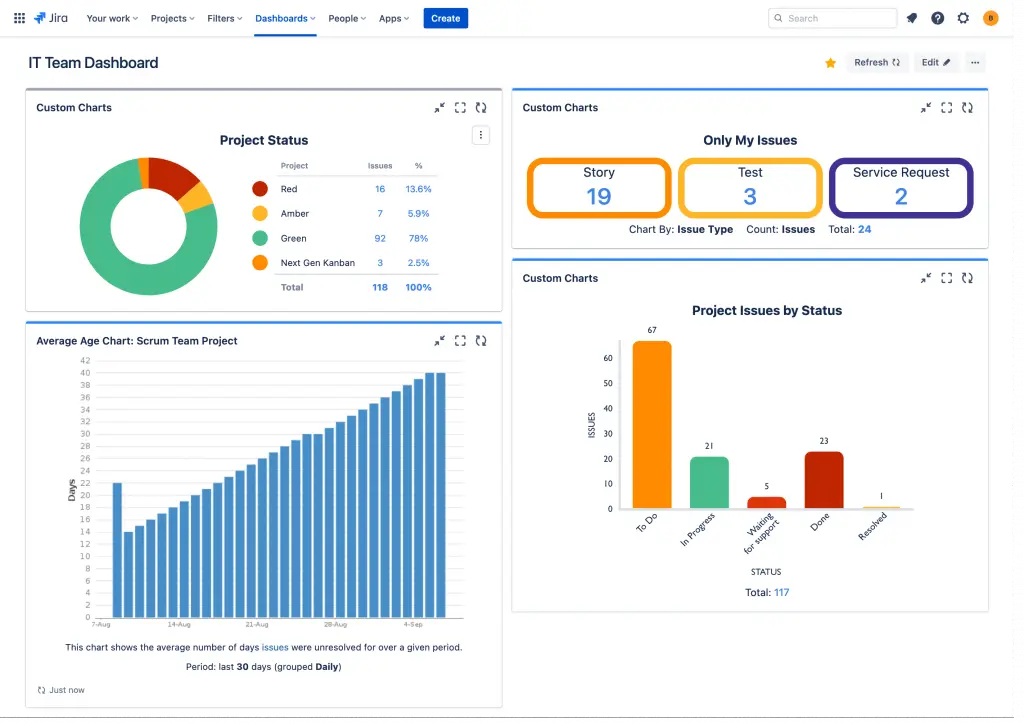
Jira is one of the most widely-known MS alternatives. It’s a popular project management tool for software development environments. It provides issue tracking, sprint planning, and team collaboration features. However, it’s not designed for resource-constrained portfolio environments, and doesn’t have advanced capabilities for portfolio optimization and decision making.
Benefits over MS Project
- Support of Agile workflows
- Team-level visibility and collaboration
Pros
- Flexible and customizable
- Extensive ecosystem and integrations
- Suitability for tech environments
Cons
- Advanced features (capacity planning, analytics) require add-ons
- Limited resource management features, especially cross-project
- No portfolio optimization or bottleneck management
Benefits of integration with Epicflow
- Adding portfolio-level visibility on top of Jira’s team-level execution
- Enabling project prioritization in line with business value and resource capacity
- Identifying resource bottlenecks across projects
- Bridging Agile execution and project portfolio management
Asana: Best for team coordination
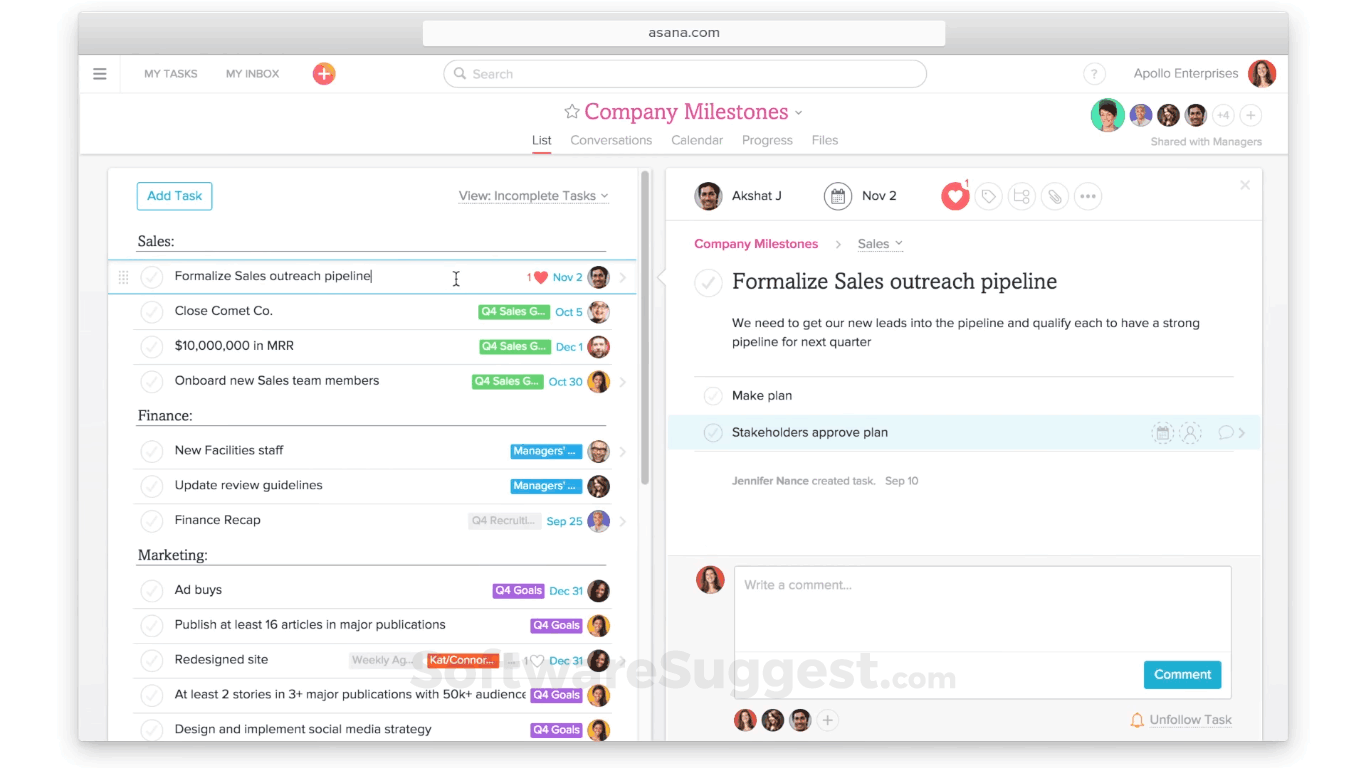
The next on the list of Microsoft Project alternatives is Asana. It is a collaborative work management platform focused on task coordination, visibility, and cross-functional alignment. This Microsoft Project competitor is suitable for marketing, operations, and business teams that need clarity and accountability.
Benefits over MS Project
- Intuitive interface and fast onboarding
- Strong collaboration and communication features
- Suitable for non-technical teams
Pros
- Easy to use and adopt across organization
- Good visibility of tasks, timelines, and responsibilities
- Strong integrations (Slack, Google Workspace, etc.)
Cons
- Limited dependency management
- No advanced resource planning and capacity planning
- Poor support for complex project environments
- No portfolio optimization and predictive analytics
Benefits of integration with Epicflow
- Adding resource capacity planning functionality
- Enabling workload balancing across teams and projects
- Improving delivery predictability
Businessmap: Best for Kanban approach
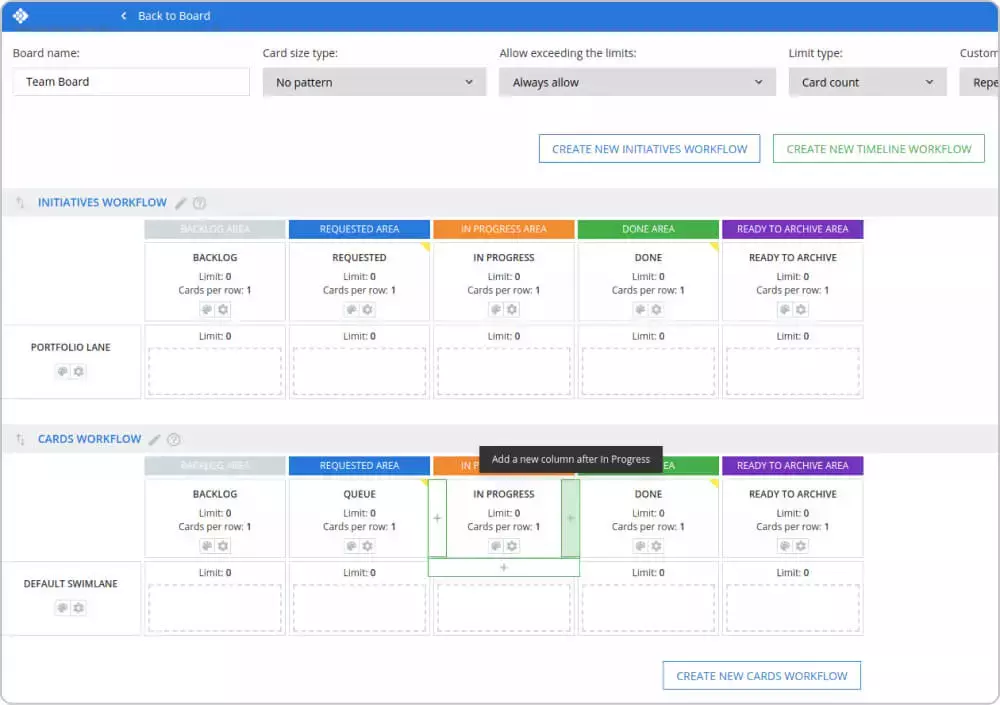
The next alternative to MS Project is Businessmap – a tool that supports Lean and Kanban approaches to managing work. It visualizes workflows, limits work in progress, helps teams improve flow and reduce inefficiencies. However, it doesn’t have resource optimization capabilities and predictive analytics.
Benefits over MS Project
- Better visualization of workflows
- Limiting work in progress for flow optimization
- Supporting consistent project delivery
Pros
- Focus on flow efficiency and bottleneck identification (within workflows)
- Provides opportunities for process optimization
- Good for Kanaban teams
Cons
- Limited predictive capabilities at portfolio level
- No resource optimization across projects
- Not designed for complex resource allocation across projects.
Benefits of integration with Epicflow
- Extending Kanban workflows with portfolio-level resource optimization
- Aligning work in progress with actual capacity
- Providing predictive insights for informed decision making
GanttPRO: Best for simple scheduling
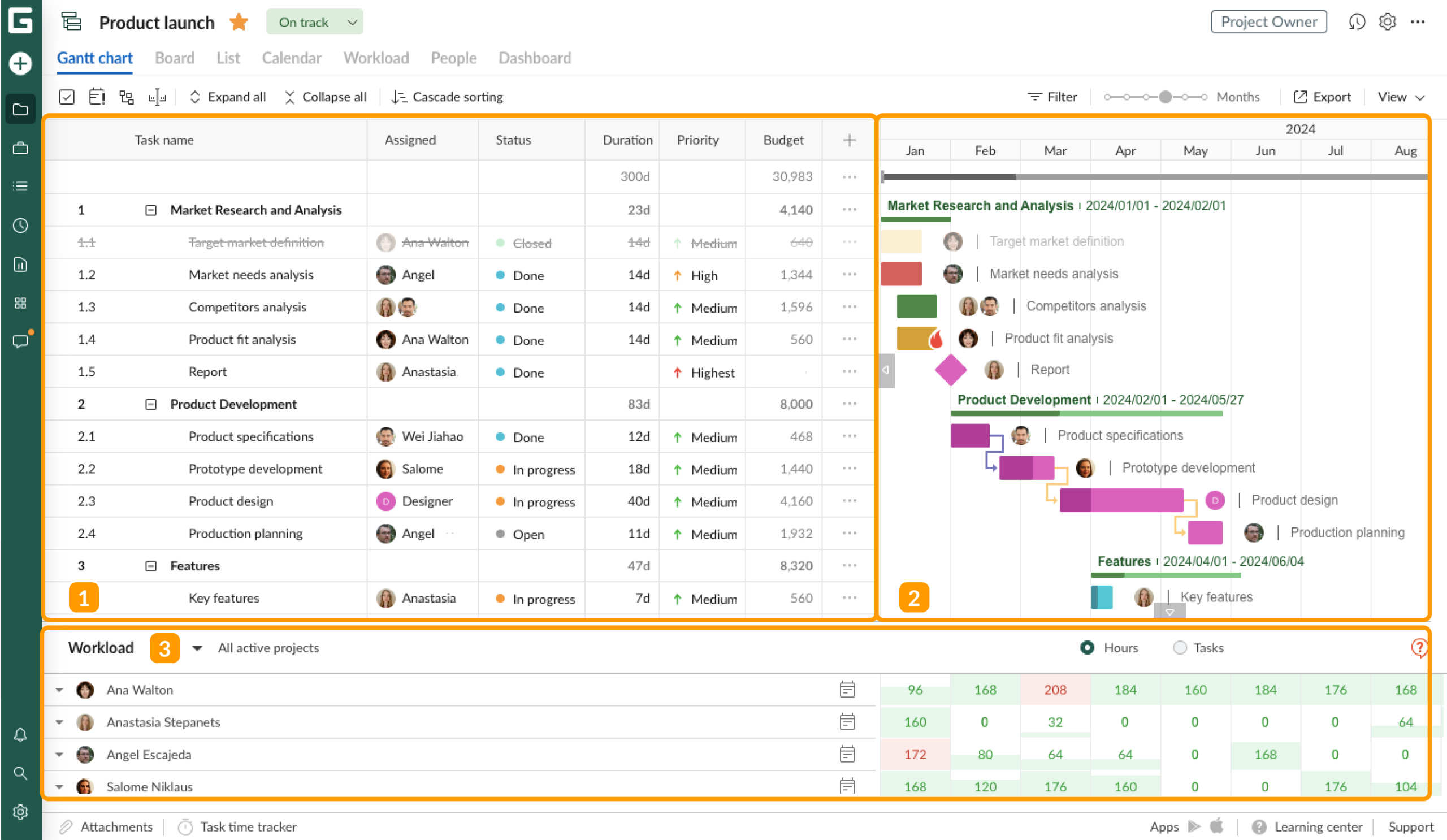
And last but not least MS Project alternative is GanttPRO. It is a modern user-friendly alternative for teams that still prefer Gantt-Chart planning, but want something simpler than MS Project. It’s suitable for smaller teams and less complex project environments, however, it offers the same approach as MS Project – centering around planning without attention to resource constraints and portfolio-level optimization.
Benefits over MS Project
- Ease of use, quick setup
- User-friendly interface
Pros
- Simplicity
- Low learning curve
- Clear visualization of timelines and dependencies
Cons
- Limited multi-project coordination
- No advanced resource management
- Not designed for bottleneck or constraints management
- No portfolio-level optimization or decision support.
Benefits of integration with Epicflow
- Adding a resource management layer
- Enabling multi-project coordination
- Identifying and resolving bottlenecks
- Optimizing execution across projects.
As we see, each of these MS Project alternatives have its own focus, from improving team collaboration to optimization of complex portfolios. So the choice of the tool will largely depend on your organization’s needs, the industry you’re working in, and the complexity of your project environment.
Ready to Move From Traditional Planning to Real Value Delivery?
The retirement of Microsoft’s Project Online means the retirement of traditional approaches that are no longer enough for today’s complexity. So, when looking for an MS Project alternative, the key question should not be “What tool is similar?”, but “Which Microsoft Planner alternative will improve delivery performance in our organization?”
Switching to Epicflow will introduce a different approach, ensuring consistent value delivery under persisting uncertainty, complexity, and resource constraints. This is what you gain with Epicflow:
- Predictable delivery on multiple projects
- Full visibility into resource capacity and bottlenecks
- AI-supported prioritization and forecasting
- Less manual planning and firefighting
- Improving portfolio performance
- Increasing throughput and profitability using the same resources
Contact us to discover how to migrate seamlessly to Epicflow and start optimizing delivery performance in your organization.
Frequently Asked Questions
Which are the best alternatives to MS Project?
Top alternatives include Epicflow, Jira, Asana, Businessmap, and GanttPRO. Each serves different use cases, from Agile execution to portfolio optimization.
Why do companies look for Microsoft Project alternatives?
The first reason is the retirement of Microsoft’s Project Online. The second reason is that companies often face challenges with resource conflicts, poor portfolio visibility, manual planning, and poor performance across multi-project environments.
Are there open source alternatives to MS Project?
Yes, some open-source tools exist, but they typically lack advanced resource management and predictive capabilities required for complex environments.
What are MS Project open source alternatives?
Some open source alternatives to MS Project can be ProjectLibre, GanttProject, OpenProj, MyCollab, OpenProject.
Do people still use MS Project?
Yes, MS Project is still used, but its Project Online will be retired after September 30, 2026.
What features to look for in Microsoft Project alternatives?
The features you’ll look for will depend on your organization’s needs. If you’re managing a project portfolio with limited resources, you’d better look for solutions that provide portfolio-level visibility, resource optimization and management, decision-making support, and forecasting capabilities.
Can MS Project alternatives handle multiple projects at once?
Yes, alternatives to MS Project like Epicflow are especially designed to manage multiple concurrent projects effectively thanks to optimizing resources, improving flow efficiency, and informed decision making.