Top 10 Scenario Planning Tools in 2026: Detailed Guide How to Choose the Right One
 Victoria Sokolova
.
February 9, 2026
.
Project Portfolio Management
.
40 mins READ
Victoria Sokolova
.
February 9, 2026
.
Project Portfolio Management
.
40 mins READ

What if I tell you that in project management, predicting the future isn’t about magic or guesswork? It may sound weird, yet, that’s exactly what modern scenario planning tools can do.
They don’t work as a crystal ball or tarot cards; they use a scientifically and practically proven methodology that helps businesses predict possible outcomes and detect risks before making any strategic decisions.
What tools assist in scenario planning? This article will give you guidance on selecting the right tools and provide you with a list of the most popular ones in the market. Let’s get started.
Key takeaways:
- Scenario planning tools provide organizations with opportunities to simulate “what-if” scenarios, analyze their outcomes, and use these insights in the decision-making process.
- In project portfolio management, scenario planning tools improve adaptability to changes, support more effective decision making, improve predictability, and reduce uncertainty and risks.
- Key scenario planning features include: What-if analysis, scenario simulations, forecasting, data visualization, replanning capability, and integrations with other tools.
- To select the right scenario planning software, you need to define your organization’s decision-making needs as well as analyze features, usability, vendor support, and scalability opportunities.
Scenario Planning Tools Shortlist
To create this shortlist of scenario planning tools, we focused on solutions that are developed for project, resource, and portfolio management. All of the selected tools support data-driven decision making and allow organizations to model portfolios, test resource and budget distribution, and forecast outcomes. We’ve prioritized diverse scenario planning features (what-if analysis, scenario planning, forecasting), portfolio and resource management capabilities as well as outcome visualization (charts, dashboards). So, here’s our shortlist of the best scenario planning software.
- Epicflow: A dynamic resource-centered and AI-powered portfolio management platform that optimizes portfolios, balances resources across multiple projects, and provides diverse scenario planning capabilities to improve flow, optimize resources, and ensure high portfolio performance
- Planview: An enterprise-grade PPM platform with advanced scenario planning and trade-off analysis for strategic decision making.
- Triskell Software: A configurable PPM solution combining scenario planning with strategy alignment, resource management, and financial modeling.
- Projectum xPM: A modern PPM platform with AI-driven insights and scenario simulation capabilities integrated with Microsoft ecosystem.
- Meisterplan: A simple portfolio and resource planning tool designed for quick what-if analysis and high-level scenario comparison.
- Keloo: A resource-focused planning tool with scenario modeling capabilities.
- Clarity PPM (Broadcom): A comprehensive enterprise PPM solution with scenario planning, financial control, and resource optimization capabilities.
- Productive: An all-in-one project and resource management platform combining planning, budgeting, time tracking, and forecasting.
- Mosaic: A planning and resource management platform with project planning, capacity forecasting, and collaborative what-if analysis.
- Plansiware: An enterprise-level project and portfolio management platform that unites strategic planning, resource, financial, and portfolio execution capabilities.
What Is Scenario Planning Software?
Scenario planning is considered as an approach to addressing uncertainty in strategic decision making. [1] Scenario planning tools are software solutions that help organizations explore “What-if” situations and understand how different actions and decisions affect future outcomes. This allows managers to experiment with decisions safely, understand trade-offs, and select the option that maximizes value while minimizing risk.
Tools for scenario planning can be different in their focus: financial scenario planning tools, solutions for portfolio management or supply chain as well as tools for scenario planning in corporate strategy and enterprise management. In this article, we’ll focus on the tools suitable for project portfolio management.
In project and portfolio management and resource-constrained environments, scenario planning software is indispensable. It can be used for the following purposes:
- Testing the impact of various changes to the project environment;
- Forecasting bottlenecks and issues;
- Finding ways to resolve bottlenecks and address issues;
- Contingency planning;
- Testing project prioritization options;
- Forecasting portfolio feasibility with current resource availability.
Therefore, scenario planning tools help test decisions before assigning resources and choose the most realistic course of action in uncertain multi-project environments.
Read more: Best AI Project Management Tools in 2026: Comparison & Features
The Benefits of Scenario Planning Tools
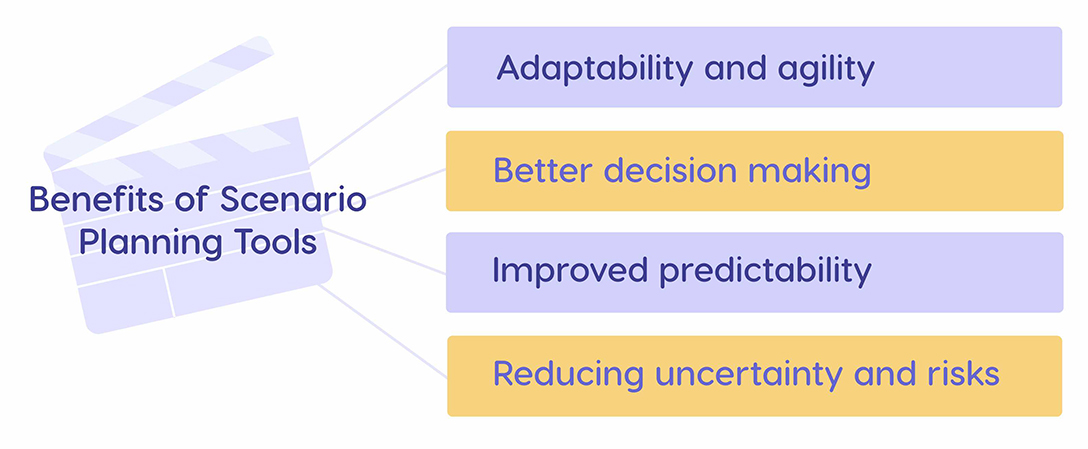
Without scenario planning software, decisions are often based on assumptions or deterministic plans. Scenario planning tools work best for addressing the uncertainty of decision making: they show the consequences of different choices, which is especially relevant for multi-project and project portfolio management, where projects are interdependent and share the same resources.
Here are the main benefits of adopting this kind of software.
Adaptability and agility.
Using scenario planning software allows managers and teams to respond to changes quickly and with minimum risk. In addition, they don’t have to replan work from scratch but only test alternatives and make necessary adjustments.
Better decision making.
The main challenge of decision making is uncertainty as to the consequences of your decisions. But when you can test different scenarios and analyze their outcomes, the chances of making the right choices increase significantly. Scenario modeling cloud-based planning tools also enable better collaboration: managers can easily share scenarios and discuss them, which keeps all decision-makers on the same page and increases the effectiveness of the decision-making process.
Improved predictability.
When you model different future scenarios (e.g., negative and positive), you can evaluate potential risks and opportunities early, making it easier to prepare for changes in advance. This increases predictability of the workflows and outcomes and reduces the possibility of unpleasant surprises.
Reducing uncertainty and risks.
Uncertainty is the lack of required information. Scenario planning software shows the consequences of decisions, which provides you with confidence and necessary data for making the right choice. It also reduces the risk of making poor management decisions that can affect the whole portfolio landscape and handicap value delivery.
For project and portfolio management, these benefits mean more effective project prioritization, improved resource allocation and risk management, as well as achieving high performance and consistent value delivery.
Key Features of Modern Scenario Planning Tools
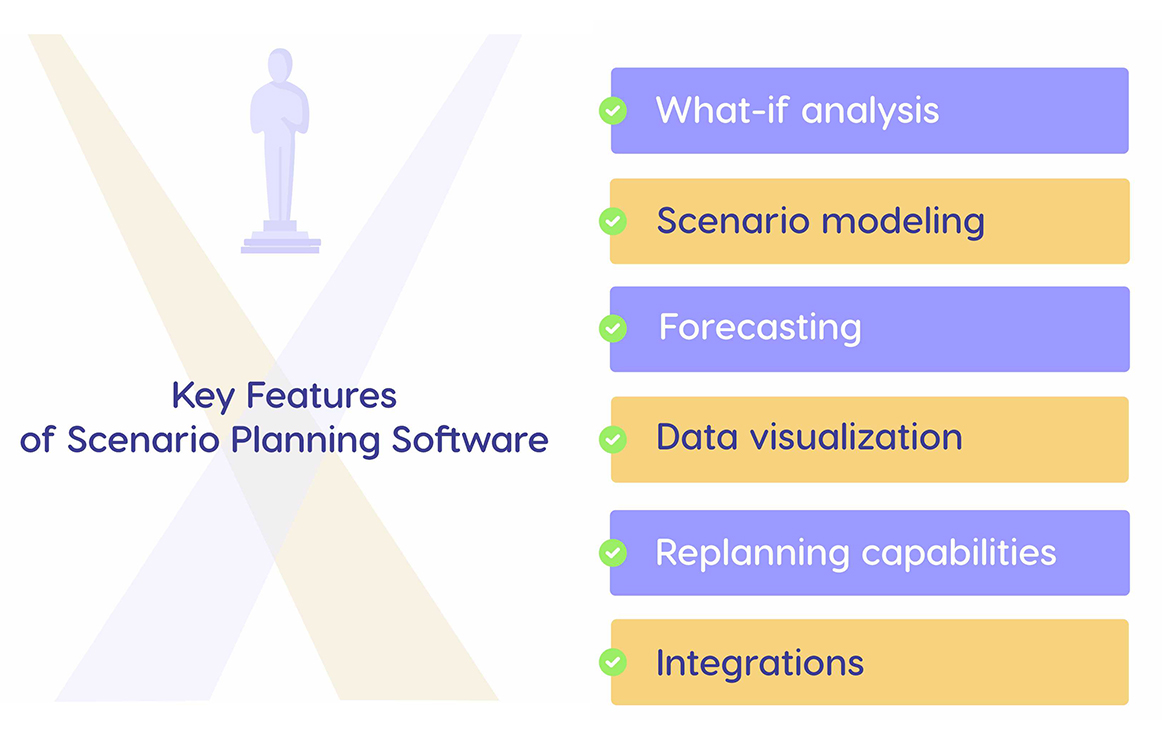
Main scenario planning functions you should pay attention to are as follows.
What-if analysis
This function allows you to test the impact of individual changes on the project or portfolio environment, e.g., adding or removing a project or reallocating resources. It helps decision-makers quickly understand the effect of these changes and choose the most advantageous option.
Scenario modeling
Scenario modeling in the next step: it combines multiple changes into a future scenario. It enables you to simulate different operational scenarios (e.g., portfolio configurations or resource capacity distribution), compare them, and decide which of them combines the balance of value, risk, and feasibility. AI planning tools for scenario modeling use predictive analytics and machine learning to recommend optimal decisions.
Forecasting
Forecasting capabilities use current and historical data to predict future outcomes under different conditions. This includes forecasting resource capacity to identify potential bottlenecks, estimating project delivery timelines, and modeling outcomes.
Data visualization
Strong visualization capabilities present complex simulation results and easy-to-understand format. Tables, charts, heatmaps, and graphs help stakeholders quickly see patterns, risks, bottlenecks, and trade-offs, which makes it easy to interpret or report on the results of real-time simulations.
Replanning capability
Effective scenario planning tools support rapid replanning when assumptions change. Users should be able to quickly update scenarios or reassess outcomes, which allows teams to respond fast to changes, shifting priorities, or unexpected constraints.
Integration with other tools
Integrations with projects and task management tools, ERP systems, and HR databases ensures scenarios are built on accurate, up-to-date data. This improves forecasts’ reliability, reduces manual data handling, and keeps scenario planning aligned with real execution conditions.
These were the key scenario planning capabilities. However, most tools for portfolio scenario planning are a part of portfolio and resource management software that also include features like portfolio visualization and optimization, resource allocation and workload balancing, risk management, performance analysis, and reporting.
Now let’s check out the best scenario planning tools that have the capabilities discussed above.
Top 10 Scenario Planning Tools in 2026
| Tool | Key Features | Best For | Pros |
| Epicflow | AI-driven resource and portfolio management: what-if simulations in a sandbox environment; capacity planning, workload balancing, forecasting, bottleneck detection and mitigation, risk management, portfolio optimization. | Mid-to-large organizations that manage multiple concurrent projects and shared resources across portfolios. | Simplifying complex resource-constrained environments, AI-powered value-based portfolio optimization, strong decision support, optimizing available resources and streamlining workflow across multiple projects. |
| Planview | Portfolio analysis, what-if scenarios, prioritization, resource and financial planning, dashboard and analytics. | Large enterprises and PMOs. | Scenario planning, resource modeling, prioritization. |
| Triskell Software | Scenario planning, what-if analysis, strategic alignment, financial management, dashboards. | Organizations that need a flexible PPM tool. | Highly adaptable to organizational processes. |
| Projectum xPM | AI-driven insights, portfolio visibility, strategic alignment, resource optimization, scenario simulation add-on. | Mid-to-large organizations | AI insights and predictive analytics, integration with Microsoft stack and Power BI. |
| Meisterplan | Drag-and-drop roadmaps, what-if portfolio scenarios, capacity heatmaps, resource impact visualization. | Teams that need visual portfolio planning without enterprise complexity | Easy to use and quick to adopt; suitable for Agile and hybrid portfolios; resource scenario comparison capabilities. |
| Keloo | What-if scenario planning, capacity distribution modeling, forecasting, visualization and analytics, prioritization, roadmaps, project and work planning. | Organizations that need project and portfolio planning platform | Combines portfolio planning with collaboration features. |
| Clarity PPM (Broadcom) | Strategic and operational portfolio management, resource optimization, what-if scenarios, roadmaps, financial and budget planning. | Large enterprises that need comprehensive PPM solutions at multiple levels. | Features covering strategy, resources, finances, and scenarios. |
| Productive | Financial forecasting, utilization forecasting, scenario modeling, task management, time and expense tracking, CRM capabilities. | Professional services, creative and marketing agencies, IT,consultancies. | Uniting project, resource, financial planning in one tool. |
| Mosaic | What-if scenario modeling, real-time forecasting, visual impact analysis, resource and capacity planning, workload heatmaps, utilization tracking, time and budget reporting. | Mid- to large organizations and cross-functional teams. | AI-assisted forecasting, intuitive interface, frequent updates. |
| Planisware | Scenario modeling, What-if analysis, forecasting, demand management, roadmap planning, financial and budget control, resource optimization, project execution tracking, reporting dashboards. | Large enterprises and PMOs. | High scalability, suitable for complex environments, robust reporting. |
Here’s the detailed description of each scenario planning tool.
Epicflow

This list is headed by Epicflow, an advanced portfolio and resource management tool. It aims to overcome the complexity of complex resource-constrained multi-project environments, improve performance and business value. Its functionality has shown their effectiveness in operating dynamic and mission-critical environments with a shared resource pool thanks to its flexibility, robust resource management, prioritization, and decision support. Epicflow’s powerful scenario planning capabilities allows organizations to simulate potential changes at different levels, forecast bottlenecks and model different ways to eliminate them, run AI-suggested scenarios to select the one with the highest potential for value delivery and minimum risks. Its innovative Portfolio Optimizer uses AI to help companies simulate optimum portfolio composition for maximizing portfolio performance with existing resources constraints. As a result, business organizations can reduce guesswork and assumptions in decision making and significantly improve portfolio outcomes.
Best for
Complex, dynamic multi-project environments with resource constraints.
Key scenario planning capabilities
We can divide Epicflow’s scenario planning functionality into three major groups.
- What-if analysis.
You can simulate the effect of changes made to the project environment. What will happen if you add or remove a project / reassign resources / move the due date? Epicflow will show the consequences of every change. This feature is frequently used to find an optimum way to resolve a bottleneck.
- Scenario analysis.
You can use Prediction mode to run scenario simulations in the safe sandbox, compare them, share with stakeholders, and select the most optimal one. For example, this dynamic modeling can help you distribute resources efficiently across all projects of the portfolio or reschedule projects in the portfolio in line with available resources capacity. What is more, this is the component of EPO (Epicflow Portfolio Optimizer): you can run Prediction to find out what composition of projects in the portfolio will deliver maximum business value with existing resources constraints.
- Forecasting.
Epicflow capacity planning tool uses predictive analytics to forecast resource capacity and workloads. This helps managers detect bottlenecks, analyze their causes, and timely prevent them before they negatively affect the whole project environment. Also, you can forecast project and portfolio performance: how many of projects in the portfolio will be delivered on time vs. with a delay as well as model the impact of changes. This gives an opportunity to compare the future effect of the current situation with what can be achieved upon making adjustments. Also, you can understand which improvements exactly are required.
Other features
- Portfolio visibility
- Portfolio optimization
- Resource management: resource allocation, capacity planning, workload balancing, performance analysis
- Project and task prioritization
- Budget management
- Dashboards and reporting
- AI assistant
Industries
Epicflow serves engineering-driven industries, showing remarkable results in telecommunications, defense and aerospace, pharmaceutical, software development, manufacturing, engineering, and government organizations.
Pros and cons
- Pros: AI-powered portfolio optimization based on business value and resource constraints, robust resource management, bottleneck mitigation for seamless flow, strong multi-project management features, AI functionality, flexibility.
- Cons: Can be too complex for individual projects; requires training and onboarding;
Pricing
Starts from €22.5 per user per month, varies depending on the plan.
Planview
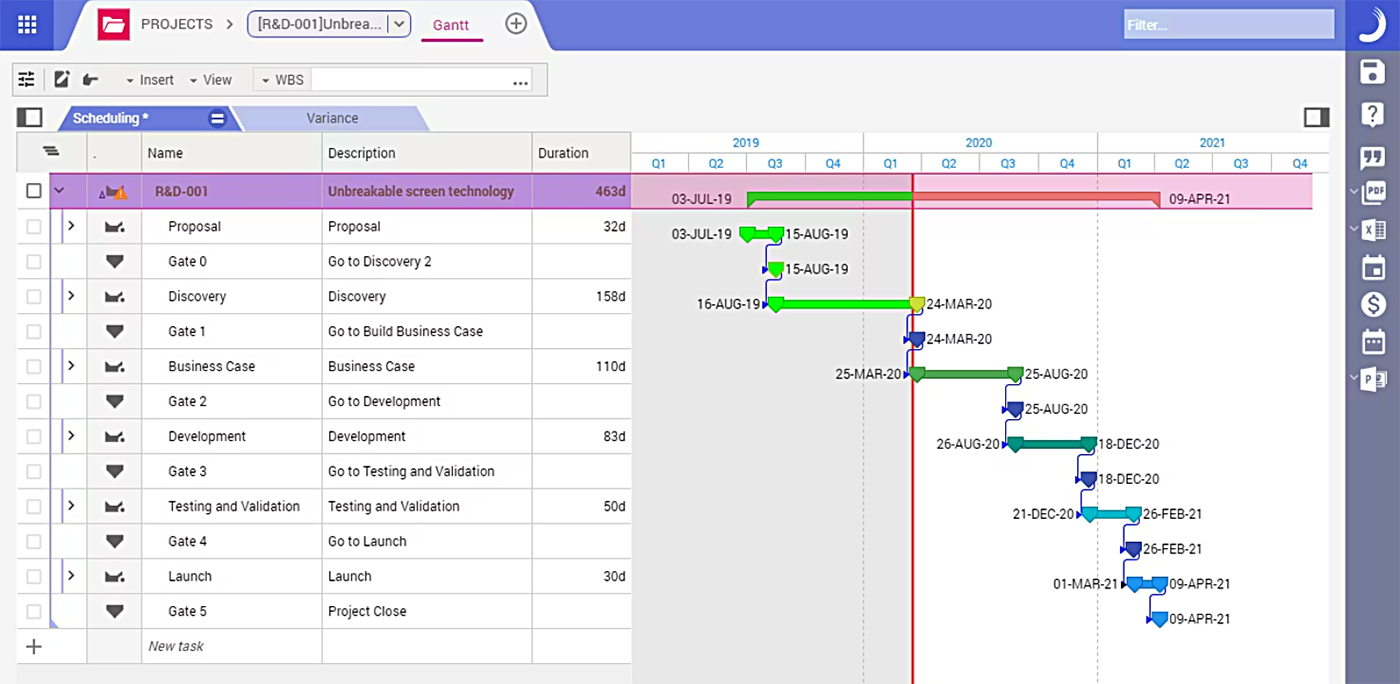
Planview is an enterprise project portfolio management platform that supports strategic portfolio planning, resource management, and what-if analysis. It helps organizations align work with strategic goals, set priorities, optimize capacity, and make data-driven decisions.
Best for
Large enterprises and PMOs that need advanced scenario planning, strategic alignment, and real-time portfolio insights.
Key scenario planning features
- Scenario modeling and comparison
- What-if analysis
- Trade-offs evaluation
Other features
- Advanced analytics
- Demand management
- Resource and capacity planning,
- Financial forecasting
- Dashboards
- Reporting
Industries
IT, financial services, healthcare, manufacturing, organizations with complex portfolios.
Pros and cons
- Pros: Comprehensive scenario planning, informative dashboards, strategic alignment;
- Cons: Complex implementation, steep learning curve, high costs for small teams.
Pricing
No public pricing information.
Triskell Software
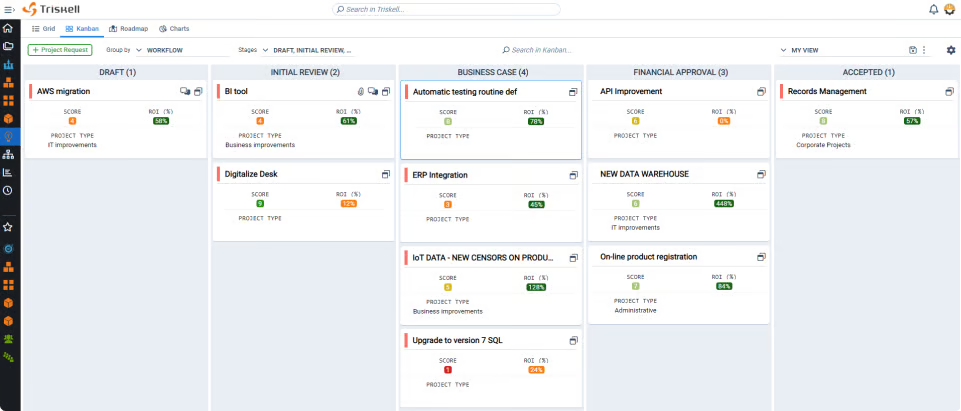
This is a flexible enterprise PPM solution that supports scenario analysis along with agile and hybrid planning. It allows organizations to model different planning scenarios, align projects with strategic goals, and ensure proper resource allocation.
Best for
Organizations looking for configurable PPM with strategic alignment and governance features.
Key scenario planning features
- What-if scenario analysis
- Strategic planning
- Demand and resource planning
- Portfolio forecasting
Other features
- Demand management
- Agile hybrid support
- Roadmap planning
- KPI tracking
- Resource and financial management
Industries
Banking, insurance, pharmaceuticals, and other large enterprises.
Pros and cons
- Pros: Configurable workflows, strategic alignment across projects, core PPM features.
- Cons: UI and integrations and less polished compared to other tools.
Pricing
Starts from €15 per user / month. Free trial available.
Projectum xPM
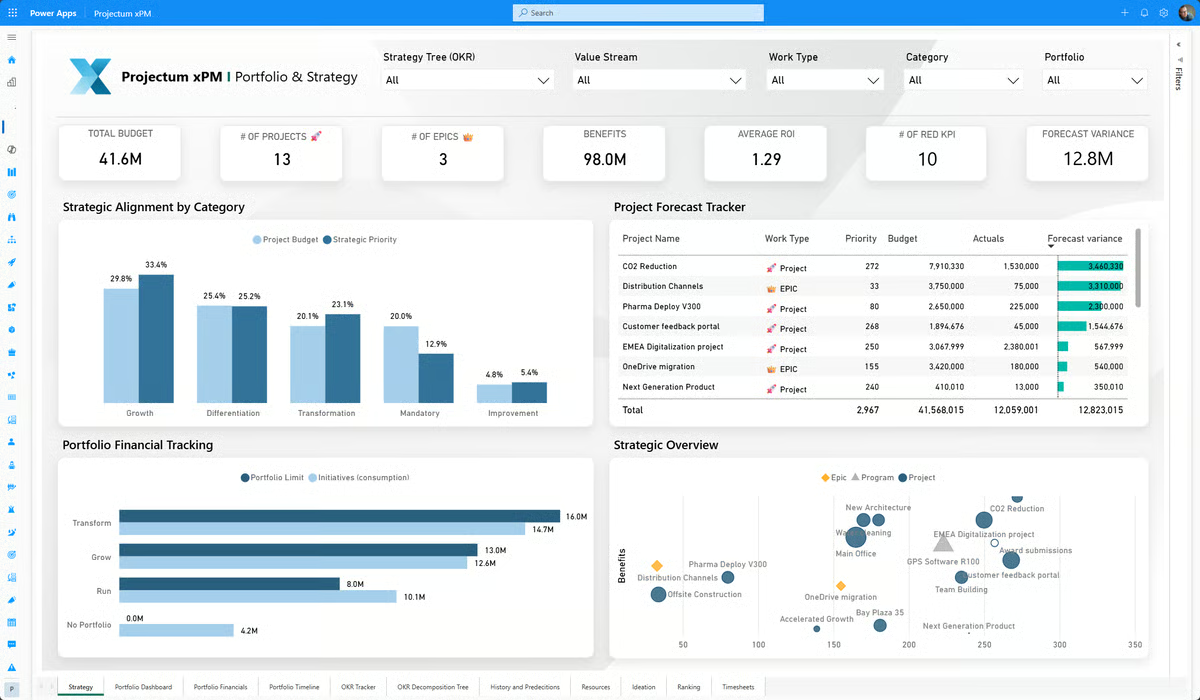
A project portfolio management solution with built-in AI insights and flexible portfolio management capabilities, including scenario planning and performance forecasting. The tool is built on the Microsoft platform and integrates with familiar enterprise tools.. It provides visibility into resources, risks, and portfolio performance.
Best for
Mid-to-large organizations looking for AI-driven portfolio decisions and Microsoft ecosystem integration.
Key scenario planning features
- Forecasting
- Scenario planning modeling resource impact, ROI, portfolio performance.
Other features
- AI insights
- Governance tracking
- Portfolio visibility
- Resource balancing
- Execution alignment
Industries
IT, utilities, professional services.
Pros and cons
- Pros: AI analytics, strategic alignment, decision support.
- Cons: A new tool with an evolving reputation.
Pricing
No detailed pricing info.
Meisterplan
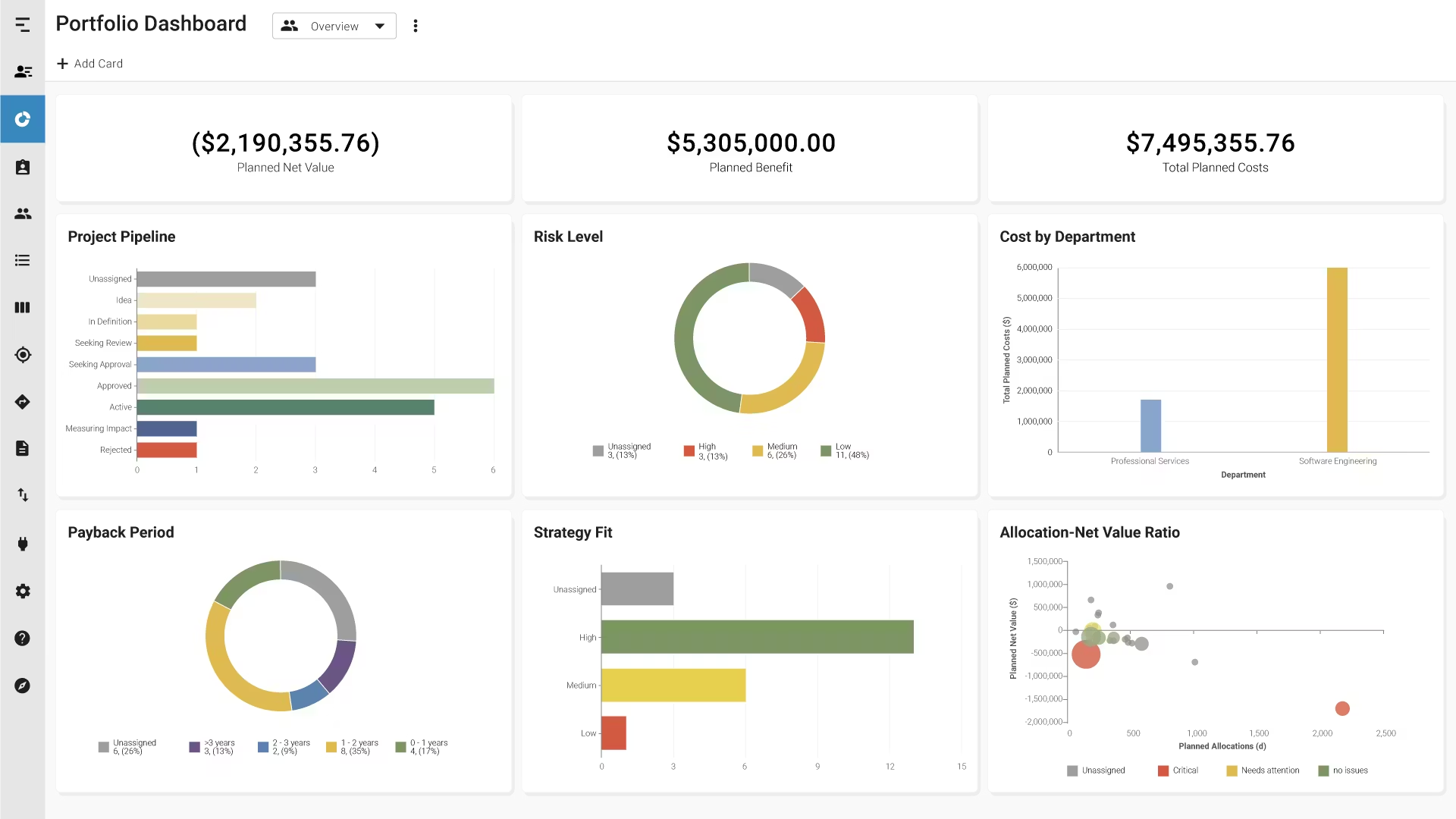
Meisterplan is lean and visual PPM platform focused on resource-based planning and scenario simulation for strategic portfolio decisions. It enables users to create alternative portfolio plans, compare outcomes, and understand how resource availability impacts delivery. As a results, companies can balance demand and capacity effectively.
Best for
Teams that want high-level scenario planning and resource capacity modeling without heavy enterprise complexity.
Key scenario planning features
- What-if scenario comparisons
- Resource capacity heatmaps
- Portfolio prioritization views
Other features
- Roadmaps
- Demand scoring
- Reporting dashboards
Industries
Financial services, energy/utilities, higher education, IT.
Pros and cons
- Pros: Intuitive and visual planning, strong resource management focus.
- Cons: Less detailed on tack execution and deep financial modeling.
Pricing
Resource-based pricing, starting from €600 per 50 users / month.
Kelloo
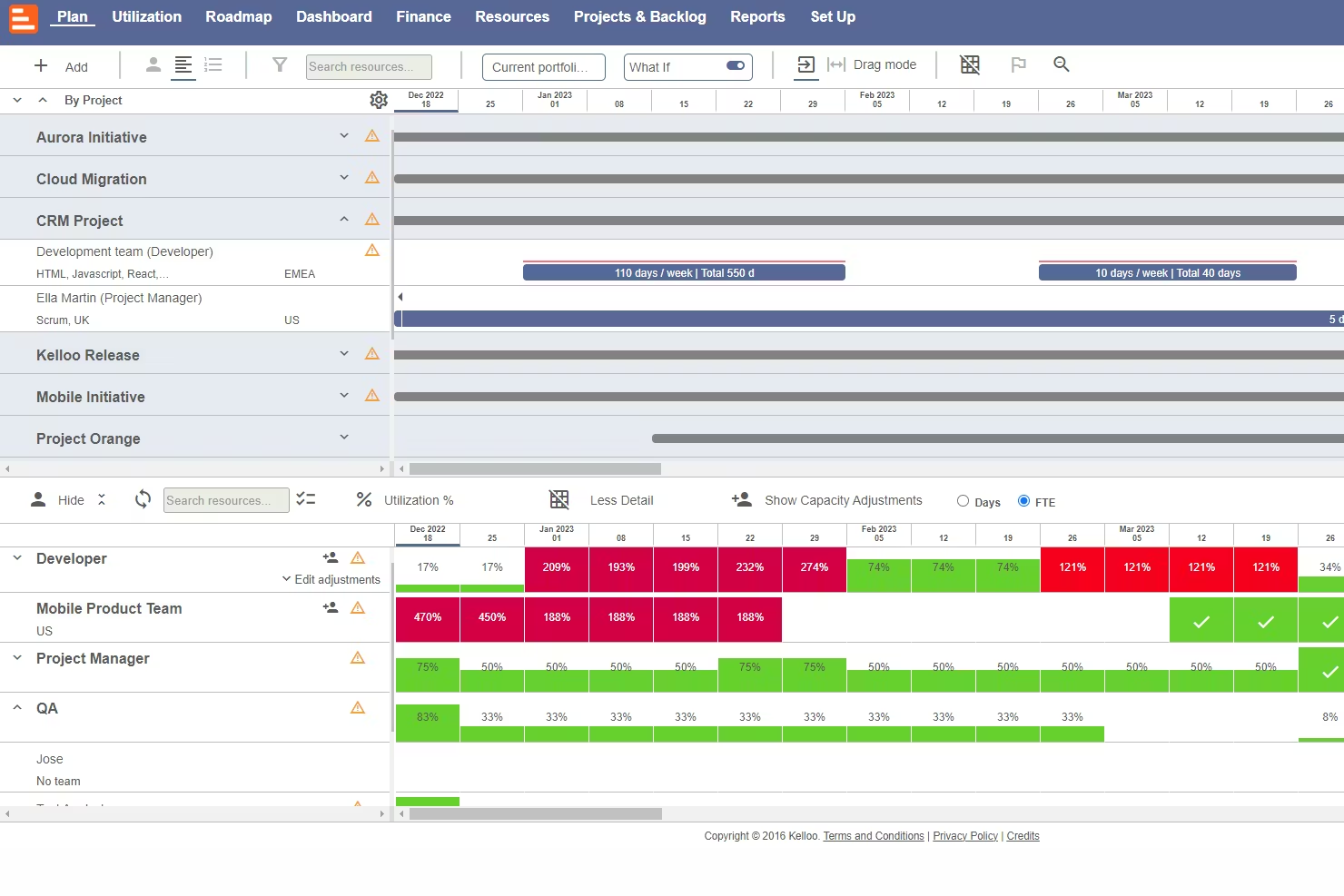
Kelloo is a project and portfolio planning solution. Its scenario planning capabilities empower teams to model changes to projects, resources, and priorities without affecting live plans. It combines scenario modeling with resource forecasting, prioritization, and capacity planning. It visual reports and user-friendly interface make it easy to compare planning options.
Best for
Organizations that need practical Agile scenario and resource planning with visual capacity forecasting.
Key scenario planning features
- Scenario creation
- What-if planning for resources, timing, portfolio alternatives
Other features
- Resource forecasting
- Work planning
- Roadmaps
- Reporting
- Workload views
Industries
IT and software, product management, diverse PMO teams.
Pros and cons
- Pros: Scenario sandboxing, capacity planning, 30-day trial.
- Cons: May lack deep enterprise analytics found in larger PPM tools.
Pricing
Free 30-day trial, full pricing available on request.
Clarity PPM
This is an enterprise PPM platform that combines scenario planning with resource, financial, and performance management across complex portfolios. It offers a wide range of capabilities, including project scheduling, resource and budget management, and portfolio comparison to align work with corporate goals and maintain performance visibility.
Best for
Large organizations with complex budgeting, forecasting, and portfolio management needs.
Key scenario planning features
- Scenario modeling for resource and budget planning
- What-if analysis
- Forecasting
Other features
- Financial oversight
- Resource allocation
- Demand management
- Dashboards
- BI integration
Industries
IT, finance, industries with extensive compliance and governance requirements.
Pros and cons
- Pros: Robust enterprise-level capabilities and PPM features.
- Cons: Steep learning curve, complex implementation, high total cost of ownership.
Pricing
Full pricing available on request.
Productive
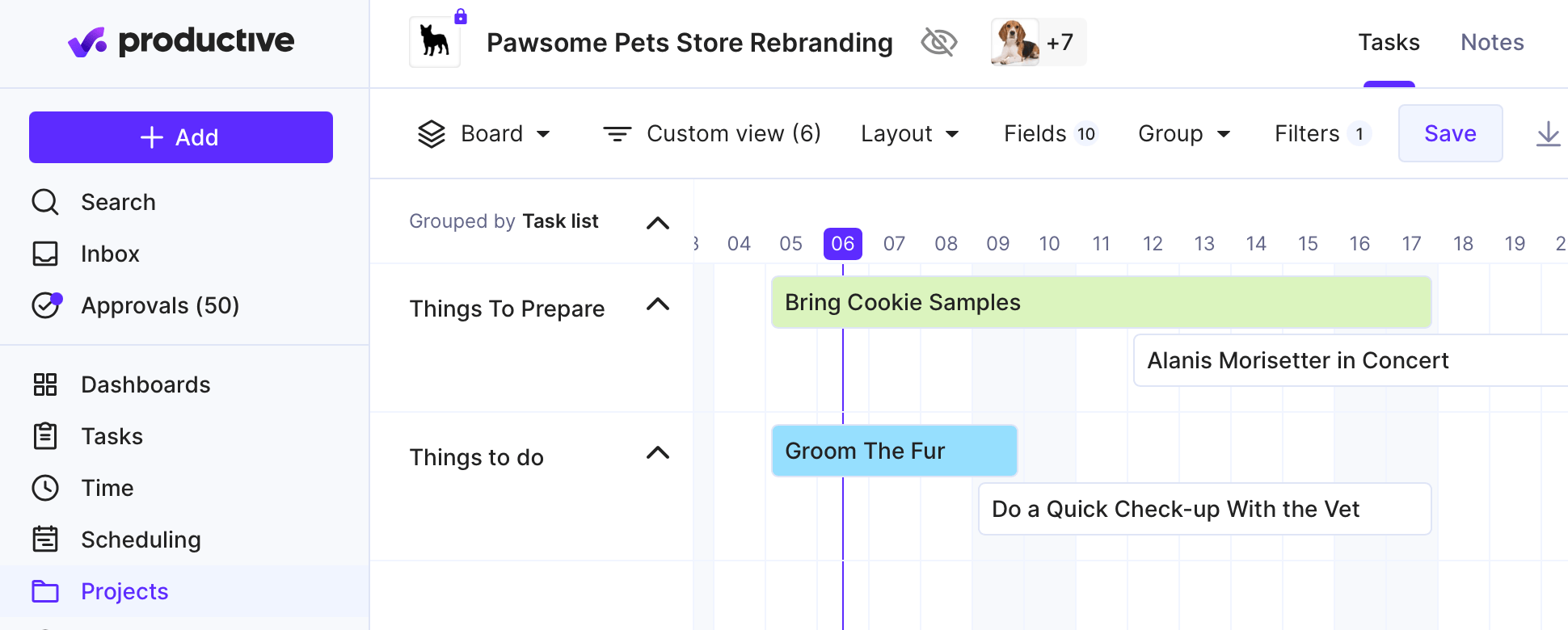
Productive is an all-in-one project and resource management platform that combines project planning, budgeting, time tracking, and forecasting. It enables teams to model future outcomes to adjust staffing, timelines, budget, and scope. Financial forecasting allows companies to prepare for uncertainty and make more informed decisions.
Best for
Small to mid-sized companies that need strong project and resource planning with forecasting and financial management.
Key scenario planning features
- Financial forecasting
- Utilization forecasting
- Scenario modeling
Other features
- Task management
- Time and expense tracking
- Reporting templates
- Invoicing
- CRM capabilities
- Accounting
- Collaboration
Industries
Professional services, creative and marketing agencies, IT, consultancies.
Pros and cons
- Pros: Comprehensive all-in-one tool – project, resource, and financial planning, strong reporting and intuitive dashboards.
- Cons: Scenario planning and forecasting focused on finance and resource utilization, without deep portfolio analysis; limited mobile app functionality.
Pricing
Starting form $9 per user / month; plan with scenario planning and forecasting features $32 per user / month.
Mosaic
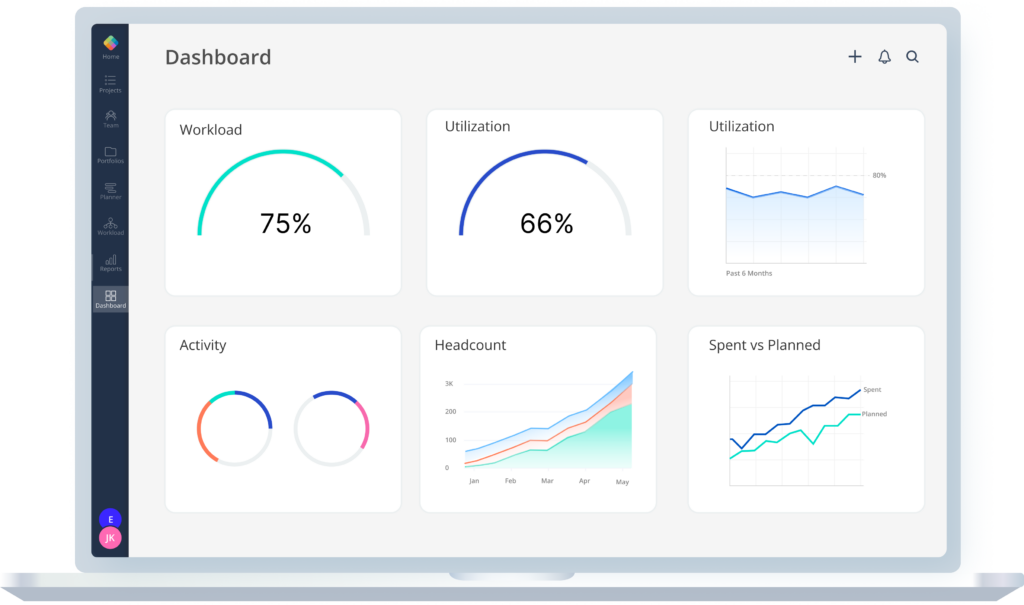
Mosaic is a modern AI-powered planning and resource management platform that combines project planning, capacity forecasting, and collaborative what-if scenario analysis. It allows teams to build multiple scenarios and understand the impact of decisions on resources, workload, and financial planning. It also has intuitive dashboards and automated data integration for more accurate and understandable forecasting.
Best for
Mid-sized and large organizations and cross-functional teams that need integrated project planning, resource forecasting, and scenario analysis.
Key scenario planning features
- What-if scenario modeling
- Real-time forecasting
- Visual impact analysis
Other features
- Resource and capacity planning
- Workload heatmaps
- Utilization tracking
- Time and budget reporting
- Collaboration features
- Integration with financial tools and ERP systems
Industries
Professional services, architecture and engineering, creative agencies, tech and software startups.
Pros and cons
- Pros: Intuitive interface, AI-assisted forecasting, frequent updates.
- Cons: Limited forecasting capabilities; initial setup and deeper customization can take time.
Pricing
Pricing available on request.
Planisware
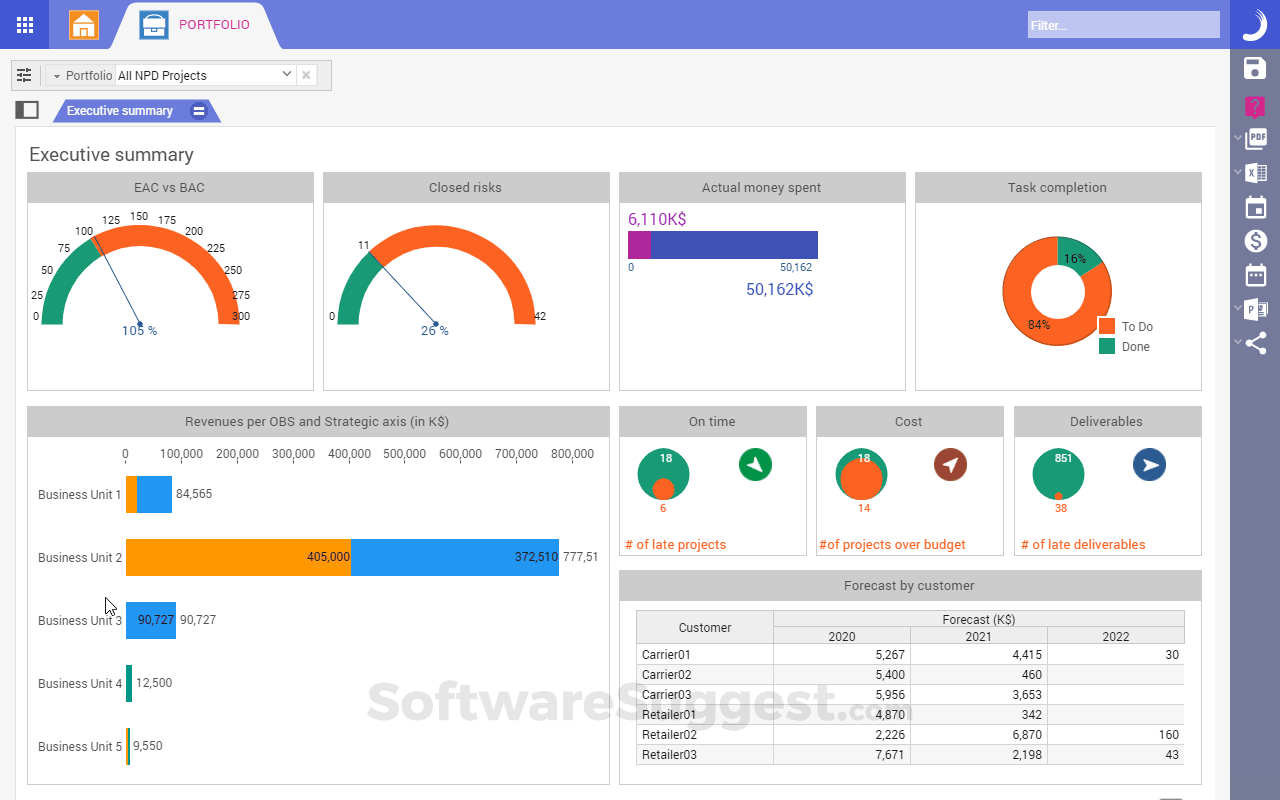
Planisware is an enterprise-level project and portfolio management platform that unites strategic planning with resource, financial, and portfolio execution capabilities. In addition to scenario planning functionality, the tool provides real-time insights into portfolio health and supports resource planning and optimization.
Best for
Large enterprises and PMOs that need strategic oversight, advanced scenario analysis, and integration of planning with execution.
Key scenario planning features
- Scenario modeling for portfolio decisions
- What-if analysis
- Forecasting
Other features
- Demand management
- Roadmap planning
- Financial and budget control
- Resource optimization
- Project execution tracking
- Reporting and dashboards
Industries
Energy and utilities, aerospace and defense, automotive, pharmaceutical, consumer goods, government, and engineering.
Pros and cons
- Pros: Highly scalable; suitable for complex environments; strong integrations.
- Cons: Can be complex to configure; may require longer implementation and training for teams.
Pricing
Detailed pricing available on request.
How to Choose the Right Scenario Planning Tool
Choosing the right scenario planning tool involves more than just finding the one that supports what-if simulations. It should also fit your organization’s workflows, data sources, and decision-making needs. Here are some tips on how to choose the most suitable software solution.
1. Determine your organization’s needs.
Before comparing and analysing different tools, it’s a good idea to review your decision-making needs. What decisions do you need to support? They can be portfolio composition, resource allocation, risk mitigation, etc. You should also think about this tool’s users: is it for executives, portfolio managers, or resource managers? Answering these questions will help you understand your priorities in the tool’s capabilities.
2. Analyze the tool’s features.
Make sure that the tool you’re considering includes the key scenario planning features: What-if Analysis, scenario modeling, forecasting, data visualization, replanning, and integrations. In addition to that, a scenario planning tool for project portfolio management should have features for PPM and resource management: e.g., handling constrained resources, dependencies between projects, providing end-to-end visibility into the entire portfolio.
3. Evaluate the ease of use.
One of the keys to successful adoption of any software tool is its ease of use. Therefore, choose a tool with intuitive interface and navigation, clear visualization and dashboards, role-based access and permissions. Tools that are easier to adopt drive faster value with less resistance.
4. Consider scalability.
Make sure that the tool can grow with your organizations: supports larger portfolios and more users and can handle complex simulations without slowing performance.
5. Analyze vendor support.
Adopting software also means choosing a partner that will support your organization in handling complex processes. So, choose a reliable partner: check if the vendor offers onboarding and training, effective support, and provides continuous updates and feature improvements. Good vendor support helps your team get the most value of the chosen software.
Read more: How to Choose the Right Project Management Software: Selection Guide
Quick Summary
In 2026, the project and portfolio management landscape can no longer ignore scenario planning tools. Portfolios become more and more complex and resource constraints more and more common for business organizations. This makes reliance on static plans and assumptions no longer possible.
AI scenario planning tools allow specialists of different levels to safely test ideals, explore alternatives, and understand the consequences of decisions before making them. These solutions combine scenario analysis, forecasting, and data visibility to reduce uncertainty, prevent bottlenecks and issues, balance resources, and optimize overall portfolio value. Finally, they make the future more predictable and help professionals be prepared for it.
References
- Kathya Cordova-Pozo, Etiënne A.J.A. Rouwette. (2023). Types of scenario planning and their effectiveness: A review of reviews. Futures. Volume 149. Retrieved from: https://www.sciencedirect.com/science/article/pii/S0016328723000575.
Frequently Asked Questions
What is scenario planning software?
The scenario planning tool is software that allows specialists to test different scenarios, analyze their consequences, and choose the best possible course of action. These tools reduce uncertainty and facilitate informed and effective decision-making, which makes them critically important for project and portfolio management.
Why use scenario planning in project management?
In project management, scenario planning tools can be used to anticipate risks, improve decision making, manage uncertainty proactively, and increase delivery predictability.
How do scenario planning tools help companies to make better decisions?
Tools for scenario planning help companies make better decisions by providing an opportunity to simulate different scenarios and analyze their outcomes. So, instead of making decisions blind-folded, leaders can clearly see optimal choices. For example, tools for scenario planning in IT decision-making help leaders evaluate the impact of technology investments, resource constraints, and changing priorities before committing to a course of action. In turn, scenario planning budget forecast tools allow organizations to test different funding levels, cost assumptions, and revenue scenarios. Finally, scenario planning tools for investment portfolios help investors compare investment strategies and decide on the optimal one.
What are the features to look for in a scenario planning tool?
Common scenario planning features include:
- What-if analysis;
- Scenario modeling;
- Forecasting;
- Data visualization;
- Dynamic replanning
- Integration with existing tools
What tools assist in scenario planning?
An example of software with scenario planning capabilities is Epicflow. It’s an AI-driven portfolio and resource management tool with the following scenario planning capabilities: what-if analysis, scenario planning and comparison, and forecasting. In addition to them, it has robust portfolio and resource management features: AI-powered portfolio optimization, resource allocation and capacity planning, budget management, performance analysis, and more.
What are the benefits of using scenario planning tools in 2026?
For modern projects the main benefits of using scenario planning software may be the following:
- Feaster and more confident decision making;
- Flexibility in adaptation to changes;
- Better predictability of the outcomes;
- Reducing uncertainty and risks.
How to choose a scenario planning tool?
To select a proper scenario planning tool for your company, follow the steps suggested below:
- Analyze scenario planning features offered by the software vendor;
- Compare them with your organization’s needs;
- Find out what support and training the vendor provides;
- Test demo versions and involve stakeholders into the evaluation process.
What is the best tool for scenario planning?
There’s no versatile software for forecast scenario planning suitable for every organization – the choice will depend on a number of factors: a company’s size, complexity of projects, industry, required features, etc. The example of an intelligent scenario planning tool is Epicflow: it has robust scenario planning functionality for testing the impact of changes, planning and comparing scenarios, optimizing portfolio performance, improving resource distribution, resolving bottlenecks, and supporting a variety of strategic management decisions.