PMO Resource Management Guide: Processes and Best Practices
 Mykhailo Kulakov
.
February 12, 2026
.
Resource Management
.
32 mins READ
Mykhailo Kulakov
.
February 12, 2026
.
Resource Management
.
32 mins READ

A project management office (PMO) has a lot of responsibilities at any given organization, from portfolio rationalization to performance analytics. One of its crucial functions is resource management because resources, not budget, is the main constraint at most organizations.
In this guide, we’ll go through what PMO resource management is, its main phases, and best practices for successful implementation.
Key takeaways:
- PMO resource management is a high-level process aimed at achieving visibility into company resources and arriving at an optimal resource utilization.
- Its importance lies in its ability to reduce resource overload, mitigate operational risks, and increase throughput.
- Key steps to successful implementation of PMO resource management are achieving visibility, planning, standardization, and ongoing improvement.
What is PMO Resource Management?
Resource management on the level of a project management office is the process aimed at optimizing resource performance. It includes:
- Visualizing the resources your organization has.
- Managing their capacity.
- Allocating the right resources to high-priority projects.
- Monitoring resource performance.
PMO is, as defined by Cleand and Kerzner, is a collection of individuals authorized to act in the generally agreed upon interest of the project[1]. It is responsible for multiple other activities like vetting projects, portfolio rationalization, and portfolio optimization. Resource management is one of the core PMO tasks as resources are the main constraint in every portfolio, and optimizing their usage leads to better portfolio performance.
The key components of PMO-level resource management are:
- Resource mapping. Understanding what resources are available to your organization and what skills they possess.
- Capacity planning. Distributing resources between projects to ensure no key resources become overloaded.
- Skill-based resource allocation. Allocating resources based on the best skill match for the project and available capacity.
- Monitoring. Analyzing resource performance with the aim to find inefficiencies and fix them.
PMO level vs project level resource management
|
PMO resource management |
Project resource management |
|
|
Hierarchy level |
Strategic |
Tactical |
|
Scope |
Portfolio |
Single project |
|
Goals |
Ensure long-term portfolio performance |
Ensure project execution |
Why Resource Management Is a Core Function of the PMO
The biggest problem facing large organizations is the lack of visibility and understanding of their available resources and resource constraints. This typically leads to committing to projects based on available budget and perceived business value, not based on real resource constraints. When a portfolio has too many projects running simultaneously, resources become overloaded and productivity suffers and delays snowball.
Implementing a resource management plan on the PMO level can help your organization achieve:
- Reduced resource overload. Managing your organization’s resources the right way will help you achieve a stable workload that doesn’t leave resources strained.
- Strategic alignment. Assigning resources to the projects with the highest priority will ensure your whole portfolio is aligned with strategic organizational goals.
- Operational risk mitigation. Analyzing future workload and preventing bottlenecks early leads to reduced operational risks.
- Throughput increase. These three factors above contribute to improved productivity across the organization and better due date project delivery.
How PMOs Achieve Resource Management Success
The role of a company’s higher management is to make decisions on the company’s strategic vision, risk tolerance, and the types of projects that can be taken on. The role of project managers is to take tactical decisions to ensure the projects get done on time. Portfolio managers have to bridge those two roles together through analytics, planning, and negotiation.
Here is what they do to ensure company success:
- Provide visibility into an organization’s resource capacity and demands.
- Analyze and optimize resource allocation.
- Formalize and standardize resource management decision making processes.
- Ensure project intake doesn’t happen without a realistic resource allocation plan.
- Establish formal review processes of resource management strategy.
A great resource management approach at the level of project portfolio management can be the difference between organizational chaos and planned stable performance. In the next sections, we’ll explore how to build a successful resource management process in your organization.
PMO Resource Management Process: Key Phases
Resource management in PMO can be broken down into four main stages.
Resource planning
The first phase in the resource management process is resource planning. In this step, you need to form an understanding of resource capacity and business demands for it.
Document the number of work hours available across teams in the organization and make a detailed breakdown of each resource available to you. Document their skills, level of those skills, and their capacity, including capacity spread across different teams. Resource management software will come in handy for doing this.
You should also document current resource demand and demand forecasting projections. Use portfolio management tools to view what projects are currently being executed, what projects are planned in the near future, and what resources they require.
The next step in this phase is understanding project priorities. This allows you to make more informed decisions on allocating scarce resources.
Read more: How to Prioritize Projects: Methods, Criteria & Matrix (A Complete Guide)
Resource allocation
Once you have taken an inventory of your organization’s resources, resource demands, and priorities, you can make resource allocation decisions. The four main decision factors are:
- Availability. Resources should be available at the time, i.e. not on vacation, sick days, or training.
- Capacity. The resources allocated to the project should have enough capacity to complete the required scope of work, otherwise overall productivity will fall.
- Skills matching. The resources should have an adequate skill level for the project. Sometimes, this means specifically using resources with lower skill levels to conserve highly skilled resource availability.
- Group affiliation. In some cases, only resources from one group can be assigned to the project.
Resource allocation software can help you achieve an optimal resource allocation faster and more efficiently.
In some cases, proper resource allocation requires shifting projects around and postponing low-priority projects to execute high-priority ones faster. This is why project portfolio resource management can be more effective than managing resources on the project level. It provides a high level view of the whole portfolio, produces PMO resource forecasting data, and allows C-level management to make decisions on the strategic level.
Resource tracking
After resource allocation decisions are taken, you need to continuously track resource utilization and confirm that your plan performs as intended. On the level of PMO, you will be tracking both resource-related metrics like resource load and resource utilization rate and project-oriented metrics like due date performance.
Read more: 10 PMO KPIs: Essential Metrics to Drive Project Portfolio Performance
Resource-level tracking should always accompany tracking project metrics because project performance is the direct result of resource performance. For instance, delays in project delivery are often caused by a bottleneck in resource capacity, and tracking resource capacity utilization helps find the exact cause of a delay and manage it.
Optimization
Based on the resource performance and your analysis of the core of the problem, optimize the portfolio and adjust your resource management approach. If you note that resources are underperforming and throughput doesn’t increase, investigate and find the cause. Typically, it comes down to one or more of the following reasons:
- Incorrect assessment of resource availability and capacity.
- Underestimated resource demand for a project.
- Project scope creep.
- Too many projects in execution at the same time.
- Addition of new projects to the portfolio without considering resource capacity.
As soon as you detect the root cause of the issue, you can choose from the following steps to optimize resources:
- Revisit project priorities.
- Reduce the number of projects in execution.
- Add resources to large tasks.
- Simulate workload scenarios.
- Balance workloads.
To avoid having to fix the same mistakes in the future, document your findings and solutions, and create company-wide decision-making policies based on them.
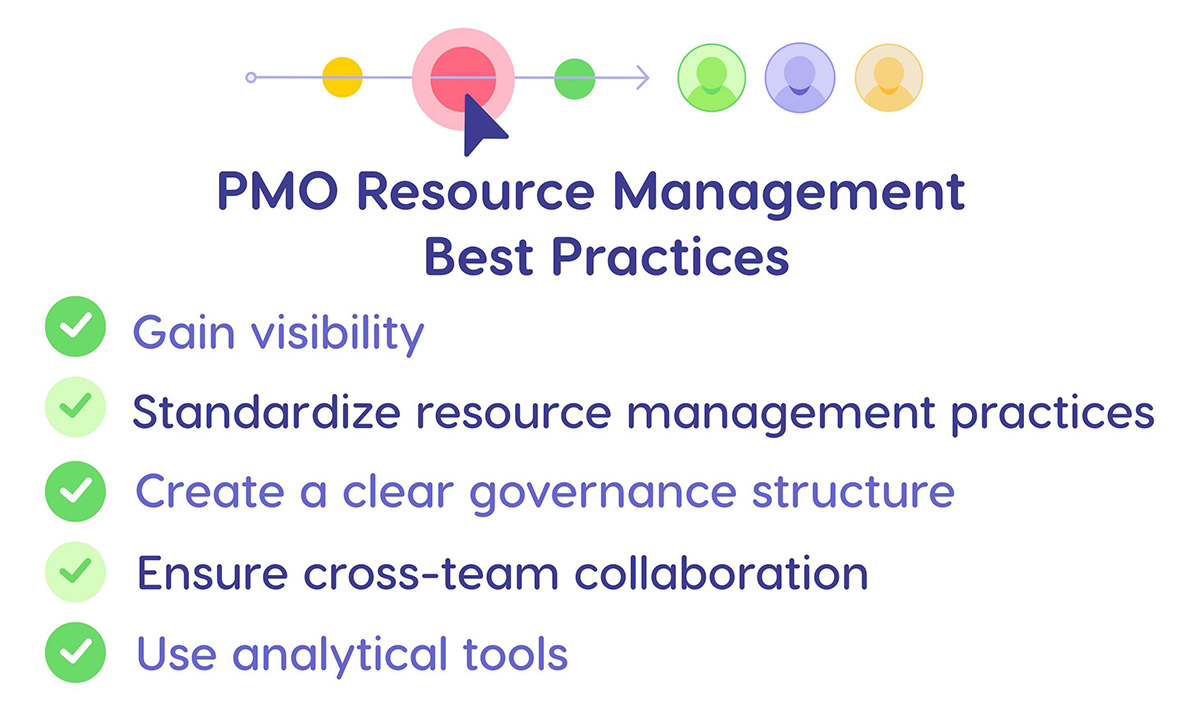
PMO Resource Management Best Practices
There are several long-standing best practices that can ensure resource management success. Here are the most important ones.
Gain visibility
One of the foundational principles of creating a functional PMO resource management plan is having good visibility inside of the organizational resource pool and demand for it. This allows PMOs to build a realistic understanding of limitations the organization faces in terms of resource availability.
The best way of achieving this is using PPM software that can act as a centralized source of truth and aggregate all resource data from different sources in one place.
Standardize resource management practices
A lot of management processes on the PMO level require a high level of standardization to be effective. You should create templates and instructions for:
- Portfolio-wide resource availability assessment.
- Resource demand assessment for projects.
- Resource allocation requests for new projects.
- Resource monitoring.
- Optimization decision making.
Standardized workflows simplify decision making and improve the quality of the decisions. You can always improve the workflow if you find that it consistently leads to poor outcomes.
Create a clear governance structure
Standardization solves the question of how decisions are made in resource management. A clear governance structure defines who makes them.
Create a structure that includes people who have input into making decisions and people who have the final say on each stage of the management process. Over time, you should also add conflict resolution protocols to the governance plan.
Ensure cross-team collaboration
Members of the project management office should be experts in high-level resource management, but they can’t be experts in everything. To alleviate gaps in knowledge, make sure you invite subject matter experts to PMO meetings. These can include:
- Data analytics experts.
- Executives responsible for company strategy.
- Resource managers who can help assess resource demand.
Use analytical tools
While resource management requires a lot of knowledge and expertise, software that can do the heavy lifting for you in ensuring PMO success. PPM tools with strong resource management functionality should:
- Provide visibility into your organization’s resource pool.
- Assist with resource allocation
- Balance resources across projects of the portfolio
- Analyze project resource performance based on roadmap.
- Provide scenario planning capabilities for informed decision making.
You’d be best served with software that can integrate project and resource management data and provide portfolio-wide visibility and analytics. Epicflow is a good choice for PMO-level resource management. Book a call with our team to explore how it can help your organization.
Common PMO Resource Management Challenges
PMO processes are complex and require resource managers to face challenges every day. Let’s explore each PMO resource management challenge and possible solutions to it one by one.
Resource constraints
Resources are the main constraint in portfolio management, not budget. Your organization has a limited number of work hours it can engage for projects, and trying to execute more projects than the available resources allow for will result in nothing but poor productivity.
That’s the main challenge project portfolio resource management has to work against. This includes not only availability of work hours but also resource skills sets at your organization.
Possible solutions
To solve the main issue of resource scarcity, you have two possible solutions:
- Manage the portfolio in a way that resource load remains manageable and postpone projects with lower priority.
- Reorganize work to increase efficiency of available resources
- Hire new resources.
Read more: Hiring Extra Employees vs. Adopting a Resource Management Solution: Сhoosing the Right Investment
Solving skilled labor shortage can take several forms:
- Progressively assigning promising resources to harder tasks to ensure skill growth.
- Engaging employees in training programs.
- Conserving time of skilled resources to divide it among multiple projects without overload.
- Hiring third-party consultants.
Resource allocation conflicts
Project management in a multi-project environment often faces a situation where the same resources are needed for far too many projects. Trying to execute all of the conflicting projects at once will only lead to resource overload, bottlenecks, and reduced productivity.
Possible solutions
The only option to manage competing priorities is implementing a detailed prioritization framework across the portfolio. Having a clear understanding of which projects are more important, whether the importance is measured in financial gain or strategic value, makes it easier to decide what you should focus on first. Eliminate the conflict by postponing projects with lower priority.
Unrealistic deadlines or budgets
Unrealistic project estimates are often an issue that arises on the level of project managers, not PMOs, but it can hurt the larger resource management efforts. When estimates aren’t based in reality, PMOs can greenlight a project only to find out the performance is off by 10-25%, which could have impacted the initial resource allocation decision.
Possible solutions
To fix this, you need to understand the cause first. Investigate the decision-making process that goes into project estimation and find out why an error occurred. The reasons may include:
- Absence of team expertise.
- Lack of senior members in the decision-making process.
- Starting a new project where estimates are more uncertain.
- Caving in to internal stakeholder expectations.
- Following unrealistic client demands.
Then, either improve the decision-making process or decide to create a company-wide policy to add buffers in time or budget to the types of projects that often miss the mark in estimates.
Poor prioritization
Project prioritization practices at your organization can severely change the way you allocate resources. In a multi-project environment with limited resources at your disposal, you will be forced to make decisions on which projects to keep and which to postpone to avoid resource overload.
If the prioritization framework being used doesn’t serve your business well, you’ll end up focusing your precious resources on the projects that provide very little value.
Possible solution
If you suspect this is a problem at your organization, the only thing you can do is address your prioritization workflows and align them with the larger strategy. This can include:
- Introducing prioritization frameworks.
- Increasing the number of people who have a say in this process.
- Creating prioritization documentation.
Scope creep
Even projects that are estimated correctly can increase their resource demand if the scope of the project changes. This often happens either because of incorrect initial assumptions about tasks needed to finish the project or due to stakeholder pressure.
Possible solutions
There are two solutions to this issue, and often you need to implement both of them.
- When starting new projects, clearly define the scope of the project from the beginning and have everyone on board agree on it.
- When fixing already existing scope creep, create a clear process of reevaluating project scope and resource demand. This should include reevaluating the portfolio as a whole as even small changes in resource demand can change the portfolio timeline. Only accept changes in scope after analysis and approval.
Reacting instead of planning
A more strategic PMO resource planning mistake is making decisions as a response to problems that arise instead of planning. Often, this problem arises in less mature project management offices and leads to a chaotic environment.
Measures are taken in the moment, designed to fit the needs at hand, not the bigger picture, and often are poorly documented.
Possible solution
Planning for potential problems is the right solution here. Analyze potential risks and create contingency plans for each risk.
Quality planning often doesn’t happen from the first try, through. The important thing is to document the issues you face, your decisions, and decision making processes that go into them. Hold regular reevaluation sessions to standardize this knowledge and plan better.
PMO Resource Management Maturity Model
PMO maturity is the concept that describes how well-established certain practices are at an organization. The Project Management Institute breaks down PMO resource management maturity into the following five stages[2].
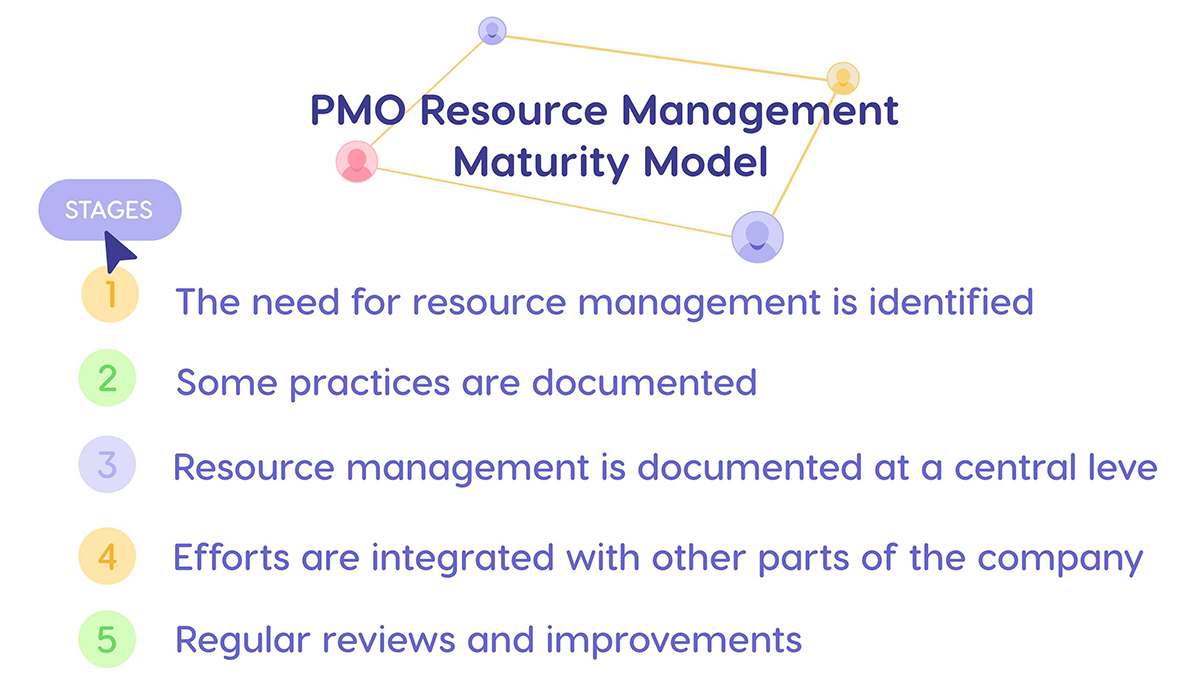
Stage 1: No documentation
At this stage, the organization recognizes the need for managing their resources but lacks any formal documentation. Decisions are made on the spot, to fit a very specific need, and are not extended and standardized to be used in the portfolio as a whole. Knowledge can be lost as it’s tied to people, not processes.
Stage 2: Siloed resource management
Some documentation of resource management processes is beginning to appear, but it’s often siloed and not shared between teams and departments. Another way this stage can manifest is resource management documentation being implemented for large projects, but not universally across the board.
Stage 3: Centralized resource management
Resource management processes are well documented and implemented across the whole organization. Higher management is on board with this documentation.
Stage 4: Integrated resource management
At this stage, the well-documented resource management processes are integrated with other parts of the organizational policy. For resource management, this typically includes HR and project management. Another important aspect of this stage is the addition of measurement practices aimed at assessing resource performance.
Stage 5: Self-improving resource management
The main difference between this stage and the previous one is the establishment of regular review processes aimed at improving resource management documentation. Measurements are taken not only to assess resource performance but also the effectiveness of management processes. Results of this analysis are regularly reviewed and integrated into the resource management approach.
Read more: PMO Maturity Models and Assessment: A Complete Guide
PMO Resource Management Software: How Epicflow Helps PMOs Succeed
PMO resource management can be made much more efficient when organizations use specialized software instead of relying on spreadsheets. Let’s take a look at how Epicflow can simplify your organization’s resource management process.
Visualize resources with Epicflow
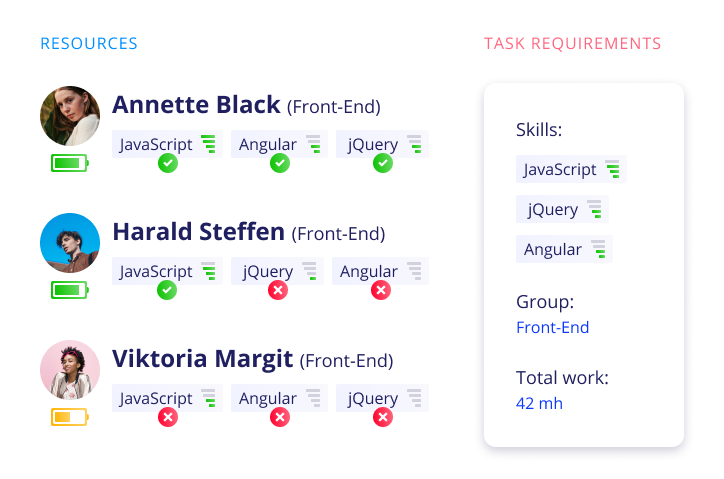
Epicflow can help your project management office have an unobstructed view of resources in each group at your organization. Analyze their capacity across groups, skill levels, and current workload.
Epicflow’s Competence Management feature lets you quickly match talent with the project at hand.
Analyze resource load
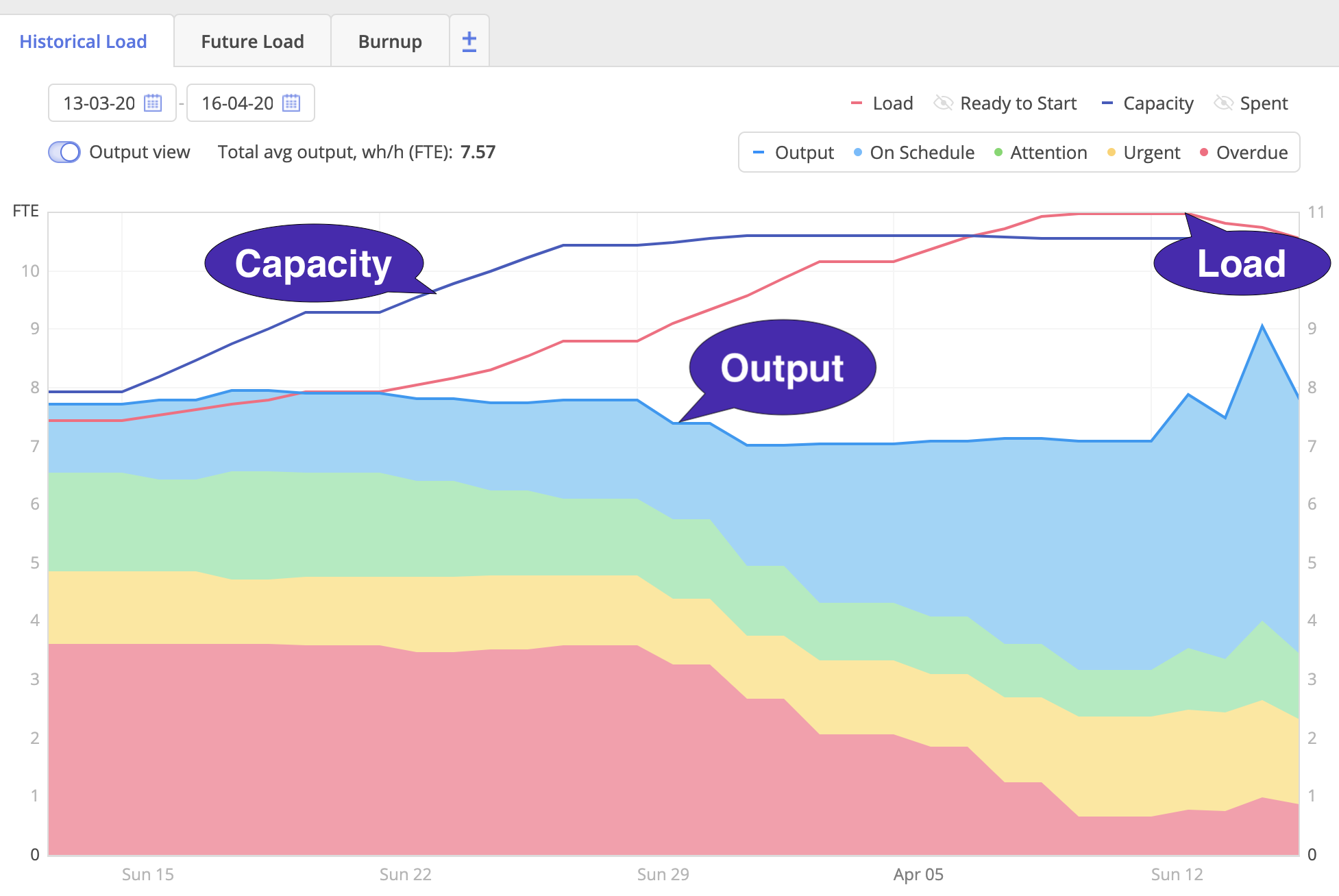
Epicflow’s capacity planning software can help you analyze current and future resource capacity and workload, both for the whole project environment and selected groups. You can find overloaded resources, the reason behind their overload, and rebalance workloads to avoid or eliminate bottlenecks.
Plan scenarios
Scenario planning software provided by Epicflow allows you to explore different scenarios of resource distribution across projects . Upon assessing the results of simulations you can find the optimal solution to resolve bottlenecks or allocate limited resources.
Automatically organize resources with AI
Epicflow Portfolio Optimizer (EPO) is an AI-driven engine useful for analyzing and optimizing your portfolio. It takes in your existing resource constraints and project priority data and rearranges the portfolio to achieve the maximal business value generation with the resources available.
Book a call with the Epicflow team to learn more about how it can help your resource management efforts.
Conclusions
Resource management and the PMO are responsible for creating a high-level understanding of the resources a company has and their capacity. The end goal of resource management is forming a resource utilization plan that leaves no room for under or over utilization, both of which hurt company’s throughput.
To achieve success in resource management at the PMO level, resource management needs to develop maturity in the resource management process. This means going from solving problems as they arise to preemptive problem solving and creating a well-documented and constantly improved company-wide set of decision-making policies.
References
- Cleand D., Kerzner H. (1985). A project management Dictionary of Terms, Van Nostrand Reinhold, New York.
- Pennypacker, J. S., & Grant, K. P. (2002). Project management maturity: an industry-wide assessment. Paper presented at PMI® Research Conference 2002: Frontiers of Project Management Research and Applications, Seattle, Washington. Newtown Square, PA: Project Management Institute.
PMO Resource Management: FAQs
What is the role of PMO in resource management?
The project management office is responsible for high-level resource management decisions. This includes analysis of company-wide resource availability and forming a formal strategy of resource allocation.
How does PMO manage resource conflicts?
Resource conflicts are mainly solved through prioritization. Understanding which projects can bring in more business value with less effort makes deciding which ones to focus resources on easy.
How is resource management different from capacity planning?
Resource management takes a broader view of a company’s resources and deals with resource allocation decisions and performance analytics. PMO resource capacity planning is a more narrow discipline that mainly seeks to match resource demand with capacity.
How does PMO resource management connect with project management processes?
Resource management PMO is integrated into the project management process by formalizing PMO resource allocation requests and analyzing resource performance during project execution.
Which metrics should PMOs track for resource management success?
Apart from standard PPM metrics like ROI or due date performance, PMO has to track resource-specific metrics like resource utilization rate, resource capacity, and planned vs spent time on the project.
What are the best practices for forecasting resource needs in a PMO?
The best way to do this is to use predictive software that can analyze resource load based on projects planned for the next months and resource performance in current projects. To achieve greater accuracy, you need to ensure project resource demands are evaluated correctly.
What is the Best Tool for PMO Resource Management?
The best tool for PMO resource management is one that’s able to provide visibility into company-wide resources and analyze resource performance. Software like Epicflow would be a good choice for PMO needs.