Don’t Just Replace Project Online – Use This Moment to Upgrade How Value Is Delivered
 Ben Rawson
.
Updated
.
Expert Articles
.
4 mins READ
Ben Rawson
.
Updated
.
Expert Articles
.
4 mins READ
For many organisations, the retirement of Microsoft Project Online will look like a straightforward software replacement exercise. The instinct will be to find a similar tool, migrate the data, and carry on much as before.
That may feel like the safest option, but it risks preserving the same limitations that caused poor performance in the first place.
Why Tool Replacement Is Not a Performance Fix
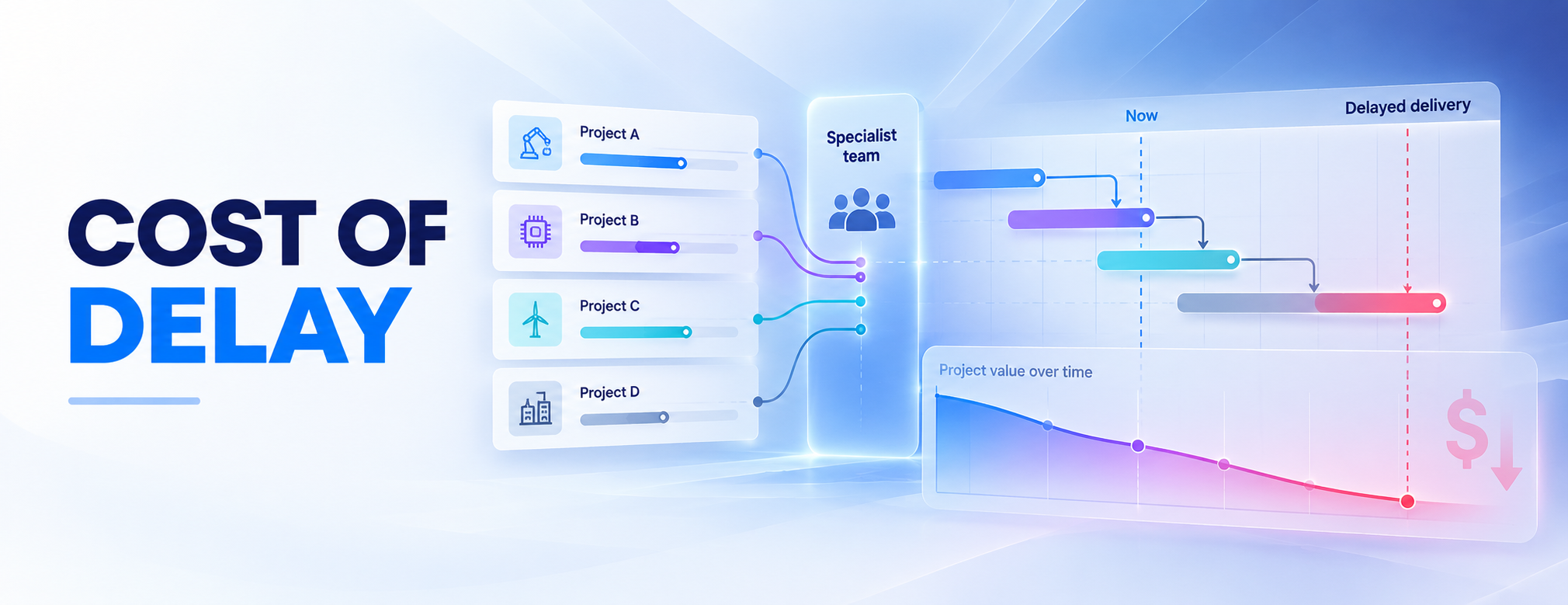
Most organisations do not struggle because they lack project plans, stage gates, or reporting structures. They struggle because too many projects compete for the same constrained resources, priorities shift constantly, and delivery decisions are made in isolation rather than across the portfolio as a whole. Well-run individual projects do not add up to a well-performing portfolio when they are all drawing from the same limited pool of people, skills, and attention.
In that environment, simply improving governance or swapping one scheduling tool for another does not solve the real problem.
Beyond Traditional PMO Models
This is why a growing number of organisations are rethinking who owns portfolio decisions. The traditional PMO operating model was built to administer projects - to standardise process, track progress, and report status. That remains useful, but it is not enough. What many organisations now need is a team whose remit is broader and more commercially focused: a Value Management Office.
A VMO is not a new methodology or a new layer of governance. It is simply the group of people accountable for making sure the organisation's project investments actually deliver value. Where a PMO asks whether projects are on time, on scope, and on budget, a VMO asks harder questions:
- Are we working on the right things?
- Are we sequencing work in the right order?
- Are we using constrained resources where they create the most value?
- Are we maximising return across the portfolio, not just managing progress within individual projects?
These are investment questions, not administrative ones. And they cannot be answered with a Gantt chart and a status report.
A Shift to Value-Focused Decision Making
Epicflow is built for this shift.
Rather than acting as another static planning layer, Epicflow gives a VMO what it needs to operate: visibility across the full portfolio, early warning of future bottlenecks rather than just current ones, prioritisation based on both business importance and real capacity, and the ability to model scenarios before decisions are committed.
In other words, it helps the people responsible for value move beyond administering projects and toward actively shaping how value flows through the system.
So for organisations moving away from Microsoft Project Online, the real opportunity is not just to choose a new tool. It is to modernise how portfolio decisions are made, and to give the teams making those decisions something better to work with.
The organisations that treat Project Online's retirement as a migration project will end up with the same portfolio performance and a new login screen. The ones that treat it as a decision point will end up with something materially better.