13 Best Planview Alternatives for Portfolio and Resource Planning in 2026
 Mykhailo Kulakov
.
Updated
.
Project Portfolio Management
.
75 mins READ
Mykhailo Kulakov
.
Updated
.
Project Portfolio Management
.
75 mins READ

The best Planview alternative depends less on how many Planview features another platform can reproduce and more on what is actually limiting your portfolio. Planview spans strategic portfolio management, project portfolio management, resource planning, collaborative work, agile planning, and professional-services use cases. That breadth is why there is no single one-to-one replacement.
For enterprise strategic portfolio management, Broadcom Clarity, Planisware, and ServiceNow SPM belong on the shortlist. Microsoft-centric PMOs may prefer Microsoft Planner and Project. Jira-heavy enterprises may evaluate Jira Align. Smartsheet, Wrike, monday.com, Celoxis, and Adobe Workfront address different work-management and PMO needs. Kantata is a more natural fit when the operating model is professional services.
But some organizations are solving a different problem: too many projects depend on the same engineers, specialists, approvers, or other scarce capabilities. In that environment, project-by-project planning is not enough. The portfolio may look healthy on a dashboard and still be physically impossible to execute with the people available.
That is the lens of this comparison: don’t choose a Planview alternative by feature count. Choose it by the constraint you actually need to solve. We compare 13 Planview competitors by product line, use case, pricing, and the management problem they are designed to address - from enterprise governance and work coordination to portfolio feasibility under shared-resource constraints.
The framework to keep in mind: Visibility -> Feasibility -> Economics -> Execution. A tool can show you the portfolio without proving the portfolio is executable. The stronger fit is the platform that closes the gap that matters in your operating model.
Key takeaways: top picks by buying situation
| Buying situation / constraint | Options to evaluate | Why they enter the shortlist |
|---|---|---|
| Enterprise SPM, investment governance, and strategic planning | Broadcom Clarity, Planisware, ServiceNow SPM | Built for broad enterprise portfolio governance, investment decisions, roadmaps, financial oversight, and executive planning. |
| Shared-resource capacity is the binding constraint | Epicflow, Meisterplan | Use when the portfolio is limited by finite people/roles, overload, bottlenecks, and the need to test feasible portfolio scenarios. |
| Jira-centric strategy-to-delivery | Jira Align; Epicflow where Jira teams share scarce specialists | Jira Align connects enterprise strategy and agile delivery. Epicflow adds portfolio-level capacity and bottleneck logic while delivery teams can remain in Jira. |
| Microsoft ecosystem is the hard constraint | Microsoft Planner / Project | Natural fit when Microsoft 365 standardization, procurement, Power BI, and familiar planning workflows matter most. |
| Flexible PMO or work management without full SPM weight | Celoxis, Smartsheet, Wrike, monday.com | Useful when the need is intake, dashboards, workload visibility, reporting, and configurable work coordination rather than board-level SPM. |
| Marketing and creative work orchestration | Adobe Workfront | Purpose-built around enterprise work intake, campaign/creative delivery, approvals, resource management, and portfolio oversight. |
| Professional services economics | Kantata | Designed around staffing, utilization, margins, project financials, and client delivery rather than general enterprise SPM. |
Disclosure: Epicflow publishes this guide and is included as one of the alternatives. The comparisons below are conditional: the right choice depends on the product being replaced, the buyer’s operating model, and the constraint the organization needs to solve.
Planview alternatives shortlist at a glance
This is a navigation list, not an overall ranking. Each tool is “best” only for a defined buying situation.
- Epicflow - best purpose-built for complex multi-project portfolios where shared specialist bottlenecks govern delivery feasibility, margin, and portfolio throughput.
- Broadcom Clarity - best for governance-heavy enterprise SPM, investment planning, and financial control.
- Planisware - best for R&D, new product development, and complex enterprise portfolios that need strong scenario, capacity, and financial planning.
- ServiceNow Strategic Portfolio Management - best for enterprises already centered on ServiceNow workflows and data.
- Celoxis - best for PMOs that want broad PPM controls, dashboards, financials, and resource management without adopting a full SPM suite.
- Microsoft Planner / Project - best when Microsoft 365 standardization is a hard constraint.
- Jira Align - best for Jira-heavy enterprise agile organizations connecting strategy, portfolios, programs, value streams, and team delivery.
- Meisterplan - best for lean portfolio and resource planning with visual capacity and what-if scenarios.
- Smartsheet - best for flexible work management and portfolio visibility with spreadsheet-like adoption patterns.
- Adobe Workfront - best for marketing, creative, and enterprise work orchestration.
- Wrike - best for flexible work management, workload/capacity views, and cross-functional reporting.
- monday.com - best for configurable workflows, broad adoption, and lighter portfolio management.
- Kantata - best for professional services organizations managing staffing, utilization, margins, and client delivery.
What is Planview?
Planview is an enterprise portfolio and work-management vendor with a broad product family covering strategic planning, portfolio management, resource and capacity planning, connected work, agile delivery, and adjacent use cases. That breadth matters because a buyer replacing Planview Portfolios is solving a different problem from a team replacing AdaptiveWork, ProjectPlace, AgilePlace, ProjectAdvantage, or ChangePoint.
Planview’s current product family includes Planview Portfolios, AdaptiveWork, PPM Pro, ProjectPlace, AgilePlace, ProjectAdvantage (formerly Sciforma), ChangePoint, Planview Hub, Anvi, and additional products. The practical implication is simple: “Planview competitor” is a relationship, not a single software category. First identify which Planview product or workflow is in scope. Then identify the operational constraint that replacement must solve.
Which Planview product are you replacing?
Product line tells you which market to search. The limiting constraint tells you what to optimize. Use both before building a shortlist.
| Planview product / context | What is being replaced | Likely alternative category | Candidates to evaluate |
|---|---|---|---|
| Planview Portfolios | Strategic portfolio governance, investment planning, demand, capacity, scenarios | Enterprise SPM / portfolio economics | Broadcom Clarity, Planisware, ServiceNow SPM; Epicflow where shared-resource feasibility is the binding issue |
| AdaptiveWork (formerly Clarizen) | Project/work management, collaboration, configurable workflows | PPM / collaborative work management | Celoxis, Smartsheet, Wrike, monday.com, Adobe Workfront |
| PPM Pro | IT PMO, intake, prioritization, planning, reporting | PPM / IT portfolio management | Celoxis, Microsoft ecosystem, ServiceNow SPM; Epicflow for deeper multi-project capacity conflicts |
| ProjectPlace | Team planning, Kanban, Gantt, collaboration | Collaborative work management | Smartsheet, Wrike, monday.com, Microsoft Planner |
| AgilePlace | Kanban, agile flow, value-stream planning | Enterprise agile / value-stream management | Jira Align, IBM Targetprocess / Apptio; A-Dato LYNX in flow-oriented environments |
| ProjectAdvantage (formerly Sciforma) | Project-centric PPM and mature execution controls | Enterprise PPM | Planisware, Broadcom Clarity, Celoxis; Epicflow for bottleneck-first shared-resource orchestration |
| ChangePoint | Professional-services / client-project workflows | PSA / services delivery | Kantata, Certinia, BigTime |
| Planview Hub / Anvi | Integration/value-stream data and AI assistance | Integration / AI layer, not a one-to-one “project tool” replacement | Evaluate as part of the architecture; choose alternatives based on the system of record and decision problem underneath |
Why are companies searching for Planview alternatives?
Companies search for Planview alternatives for familiar software reasons: total cost, implementation effort, administrative overhead, adoption, ecosystem fit, and the desire to replace only one part of a broad platform. Those are legitimate buying triggers, but they do not explain which alternative is right.
The deeper question is usually operational. A PMO can have excellent portfolio visibility and still miss commitments because the same specialist groups are overloaded across multiple projects. A strategy can be approved and funded without being executable. A workload dashboard can show demand without telling leaders which work should move first when demand exceeds capacity.
That creates a useful distinction. Governance problems call for governance platforms. Coordination problems call for work-management platforms. Professional-services problems call for PSA. Capacity problems call for systems that can model the portfolio as a shared-resource system. The wrong category can produce a cleaner interface without changing the actual constraint.
- Total cost of ownership: licenses are only part of the cost. Include configuration, integrations, administration, training, reporting maintenance, and the shadow spreadsheets that survive implementation.
- Suite breadth versus focus: a broad platform can be an advantage when the organization wants one strategic system. It can be unnecessary when the pain is concentrated in one product line or one constrained delivery area.
- Ecosystem fit: a ServiceNow-first, Jira-first, or Microsoft-first enterprise may rationally choose around the existing platform rather than pursue theoretical feature parity.
- Work-management usability: some departments need intake, workflow, dashboards, approvals, and workload views more than enterprise investment governance.
- Resource feasibility: utilization is not the same as portfolio feasibility. When multiple projects depend on the same scarce experts, buyers should test whether the tool can forecast future conflicts, model alternatives, and translate a portfolio decision into executable sequencing.
- Economic prioritization: when capacity is finite, “everything is priority one” is not a plan. The stronger systems help leaders see the value, risk, timing, or financial consequence of allocating the next constrained hour.
Replace or augment Planview? Alternatives that don't require a big-bang migration
You do not have to replace the whole Planview estate to fix a specific portfolio problem. For many enterprises, the migration decision is more useful when split into three models.
| Model | When it fits | Main risk | Example path |
|---|---|---|---|
| Full suite replacement | The enterprise has decided Planview no longer fits the target operating model across strategy, portfolio governance, resource planning, and work management. | High change scope, migration complexity, integration redesign, and stakeholder resistance. | Evaluate Clarity, Planisware, ServiceNow SPM, or a combination only after mapping every Planview product/workflow in use. |
| Replace one Planview product line | The problem is contained: for example collaboration, agile planning, PSA, or a specific PMO workflow. | Accidentally recreating duplicate data and governance between old and new systems. | Replace AdaptiveWork/ProjectPlace with a work platform, or ChangePoint-style services workflows with PSA, while keeping the rest of the architecture stable. |
| Add a focused layer for the constrained part of the portfolio | Planview may remain the enterprise control tower, but one engineering, R&D, delivery, or operations domain needs deeper shared-resource feasibility and bottleneck decisions. | Poor data boundaries or unclear ownership between portfolio governance and execution planning. | Use a capacity-focused platform such as Epicflow for the projects and shared resource pools where scarce specialists determine delivery; keep team delivery tools in place where supported. |
For Epicflow, a credible evaluation path is deliberately bounded: start with one shared resource pool and the projects competing for it, use real project/resource data to expose the constraint, test an alternative sequence or allocation, and measure the time to the first documented planning decision. Epicflow publishes a 30-day trial and a custom demonstration process. Do not turn that into an unsupported claim that implementation is faster than Planview.
What should you compare after you identify the constraint?
A feature checklist is useful only after the buyer has named the problem. Use the following eight dimensions as validation criteria, not as a universal scorecard.
1. Constraint fit
State the hard problem in one sentence: enterprise funding/governance, shared-resource capacity, agile strategy-to-delivery, Microsoft standardization, flexible work management, marketing operations, or professional-services economics. If a product is not built around that problem, extra features are noise.
2. Resource and capacity depth
Test role/skill demand, future overload, availability, cross-project dependencies, bottleneck detection, and what happens when the same scarce people are needed by several projects. Basic workload views and finite-capacity scheduling are not the same capability.
3. Scenario planning that changes a decision
Do not accept a scenario screenshot as proof. Ask: What if Project A starts now? Which project moves? Which resource group overloads? Can the scenario remain separate from the live plan? Can the selected scenario become the operating plan?
4. Economic and financial logic
Match depth to the buyer. An SPM buyer may need investment/funding governance. A PSA buyer may need utilization and margin. A constrained portfolio may need to see which sequence creates more value and how feasible milestone dates change revenue, penalties, invoices, or expected cash timing.
5. Governance, intake, and prioritization
Check demand intake, scoring, approval, strategic alignment, roadmaps, portfolio selection, role permissions, and reporting. This is where broad enterprise suites may legitimately be a better fit than a focused capacity platform.
6. Integration and migration path
Identify the actual systems of record. Few enterprises replace Jira, Microsoft, ERP, finance, identity, and BI simultaneously. Verify supported integrations, sync behavior, data ownership, and whether a focused layer can solve the problem without a big-bang migration.
7. AI as decision support, not decoration
AI agents and assistants are now common. Ask whether AI materially improves overload prediction, scenario generation, prioritization, resource decisions, or portfolio economics. “AI-powered” alone is not a differentiator.
8. Enterprise fit and adoption realism
Validate security, deployment, data residency, auditability, permissions, implementation prerequisites, admin effort, training, and proof-of-value path. Compare like with like: a departmental pilot is not evidence that a full enterprise transformation is faster.
See how Epicflow handles resource capacity planning across concurrent projects.
How we selected these Planview competitors
We selected the 13 alternatives using four filters: category overlap with one or more Planview product lines, fit for a clear buyer use case, fit for a specific limiting constraint, and current evidence from official vendor/product pages. Pricing is shown only where the vendor publishes it or clearly uses quote-based pricing. G2 ratings are included as a directional third-party signal and should be rechecked on the publication date.
The list intentionally mixes direct enterprise SPM competitors with adjacent alternatives because that is how real replacement decisions work. A company replacing Planview Portfolios may need Clarity or Planisware. A company replacing ProjectPlace may need Smartsheet or Wrike. A PMO whose main problem is shared-resource bottlenecks may not need another control tower at all.
The 13 best Planview alternatives and competitors for 2026
The tools below are grouped by the problem they are designed to solve. The numbering is for navigation, not an overall ranking.
Group A: Resource-constrained portfolio execution
Use this group when the portfolio is physically limited by the same scarce specialists being required across too many projects. The test is not “Can I see capacity?” but “Can I build and execute a feasible portfolio under finite capacity?”
1. Epicflow - best when scarce specialist capacity dictates portfolio throughput and delivery feasibility.
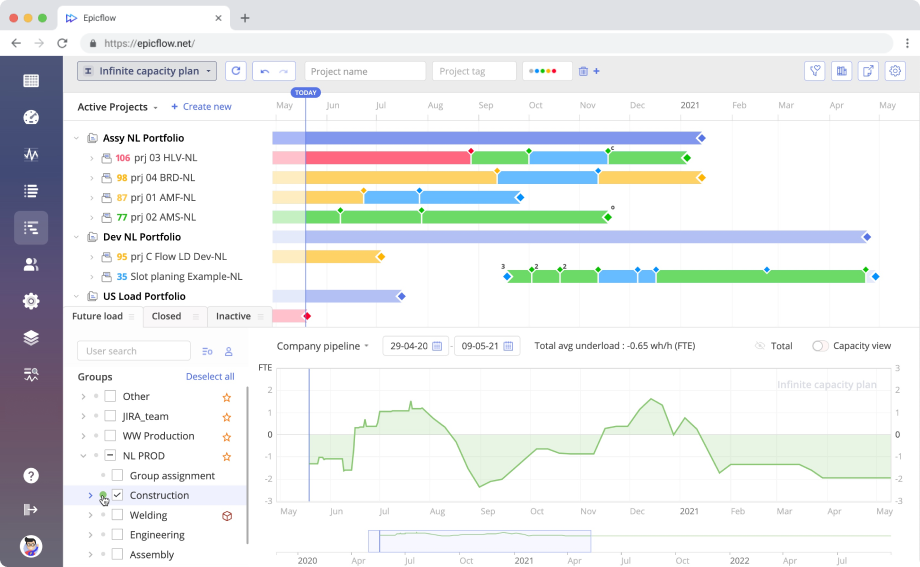
Best for: Enterprise PMOs, COOs, CFOs, and engineering/delivery organizations where shared specialist bottlenecks govern portfolio throughput.
Epicflow replaces passive executive reporting with constraint-based operational governance. It models multi-project demand against finite specialist capacity, surfaces upcoming bottlenecks weeks in advance, and enables scenario testing before changing the live plan. Rather than duplicating Planview's broad administrative footprint, Epicflow operates as a targeted value-engine: treating the portfolio as a single investment constrained by specialist capacity, and linking every sequencing decision directly to delivery dates, margin protection, and cash flow.
Key features
- Future Load & bottleneck forecasting: Predicts demand-capacity gaps across shared specialist pools months before delays occur.
- Risk-free scenario modeling (What-If): Tests alternative start dates, priorities, and capacity reallocations in isolated sandboxes without disrupting live plans.
- AI Portfolio Optimizer (EPO) & Portfolio economics: Sequences work by value per constrained-resource hour and Return on Remaining Investment (RRI) to maximize throughput and financial return.
- Constraint-based multi-project scheduling: Dynamic priority calculation, workload balancing, and automated bottleneck mitigation.
- Ecosystem integration layer: Native connectors for Jira, Microsoft Project, and Oracle Primavera P6; custom enterprise API integration available.
- Predictive financial orchestration: Dynamically links feasible delivery dates to invoice timing, expected cash flow, and predicted bonus/penalty exposure, converting schedule adjustments into real-time economic forecasts.
Pros
- Targeted bottleneck resolution: Solves the core enterprise challenge of competing demands on shared, critical specialists.
- Integrated portfolio economics: Evaluates trade-offs across feasibility, delivery velocity, margin impact, and cash flow timing rather than hours alone.
- Overlay architecture: Operates as a strategic decision layer on top of existing execution tools (Jira, MSP, P6) without forcing team workflow migration.
- Cross-functional alignment: Unifies PMO, Operations, and Finance inside a single closed loop: Capacity → Feasible Dates → Financial Exposure → Execution.
Limitations
- High-complexity focus: is purpose-built for complex multi-project portfolios with shared specialist constraints; lower-complexity, single-project environments will not leverage its full capability.
- Focused orchestration vs. broad SPM: Epicflow focuses is execution feasibility and capacity optimization, not the full breadth of enterprise SPM. Organizations that need deep OKR/strategy governance, stage-gate intake, or broad connected-work capabilities may still require another system alongside it.
Pricing: Growth: EUR 22.5 per person/month billed annually for 20-50 users; EUR 25 monthly. Enterprise pricing is custom.
G2 rating: 4.4/5.
How it compares to Planview: Planview provides broad, top-down Strategic Portfolio Management (SPM) and connected-work governance. Epicflow provides specialized, bottom-up capacity orchestration, answering precisely where the next scarce specialist hour must go, how dates and cash flow shift as a result, and how to execute that optimal sequence across the entire portfolio.
See how Epicflow prioritizes projects under real capacity constraints.
2. Meisterplan - best for lean portfolio resource planning and what-if scenarios
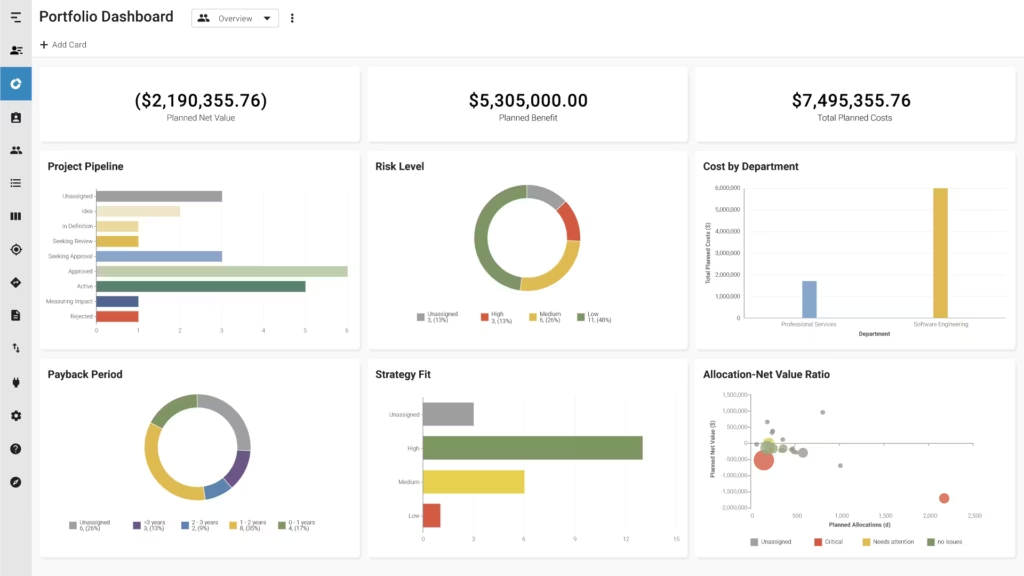
Best for: PMOs that want visual portfolio capacity planning, scenario modelling, prioritization, and a leaner portfolio-planning layer.
Meisterplan is a portfolio and resource-planning platform with a strong visual approach to capacity, priorities, what-if scenarios, and portfolio decisions. It belongs in this article because it addresses the “how much work can our resources actually support?” question more directly than many general work-management tools.
Key features
- Portfolio planning and prioritization with resource-capacity views.
- What-if scenario planning for evaluating portfolio changes before commitment.
- Resource management, skills/roles, capacity, and planning across initiatives.
- Financial-management and portfolio-management capabilities, with integrations and reporting options.
Pros
- Clear capacity-oriented planning model for PMO decision-making.
- Useful for organizations that want to keep many users involved without per-seat pricing as the primary cost driver.
- Good bridge between portfolio prioritization and resource feasibility.
Limitations
- Meisterplan is strongest at portfolio-level resource planning and scenario modelling; organizations that need deep task-level sequencing across highly interdependent engineering schedules may require a more execution-focused layer.
- Enterprise governance, PSA, and broad work-management functionality may require adjacent systems depending on the operating model.
Pricing: Resource-based pricing; users are not the primary pricing unit. Meisterplan offers a 30-day trial; organizations with more than 1,000 resources are directed to custom pricing.
G2 rating: 4.7/5.
How it compares to Planview: Meisterplan can be a more focused choice when the buying problem is portfolio/resource planning rather than the full breadth of Planview’s connected strategy and work portfolio.
How it compares to Epicflow: While Meisterplan delivers high-level, lean portfolio scenario planning, Epicflow provides deep, constraint-first operational governance, converting shared specialist capacity into dynamic priorities, feasible schedules, and downstream financial predictability.
Group B: Enterprise SPM, investment governance, and complex portfolio control
Use this group when the constraint is not just delivery capacity but enterprise-wide investment governance, funding, roadmaps, financial planning, strategic alignment, and executive portfolio control.
3. Broadcom Clarity - best for governance-heavy enterprise SPM
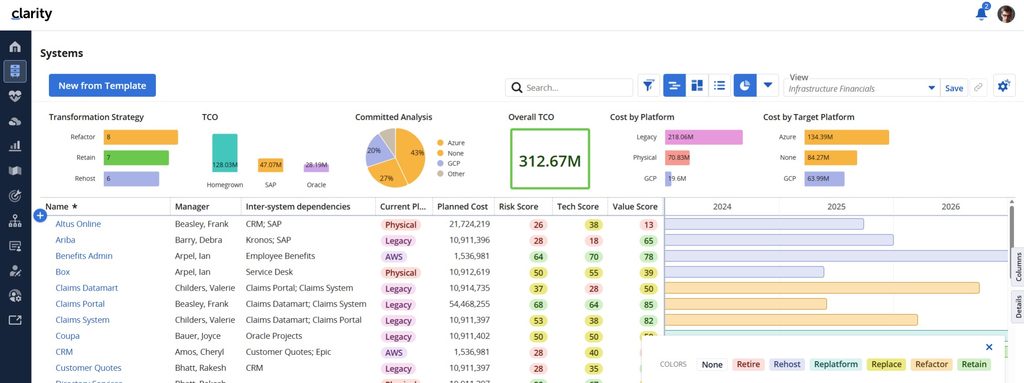
Best for: Large enterprises, EPMOs, finance teams, and strategy organizations managing major investment and transformation portfolios.
Clarity is one of the closest direct alternatives to Planview when the buying case is enterprise strategic portfolio management. It emphasizes investment planning, strategy-to-execution visibility, resource utilization, financial management, and portfolio governance at scale.
Key features
- Strategic portfolio and investment planning.
- Financial management, budgeting, resource planning, and enterprise reporting.
- Roadmaps, portfolio analysis, planning workflows, and ValueOps ecosystem connections.
- AI-supported enterprise planning and analysis capabilities within Broadcom’s current positioning.
Pros
- Strong fit for board/EPMO governance and financial transparency.
- Mature enterprise portfolio controls and investment-management orientation.
- Relevant for organizations comparing Planview as a top-down SPM platform rather than as a team work-management tool.
Limitations
- Clarity is designed for enterprise SPM and can be more complex than necessary for departments that mainly need straightforward workload or collaboration management.
- Resource visibility and allocation are not the same as task-level bottleneck orchestration, so organizations with heavily shared specialist pools should validate that workflow directly.
Pricing: Quote-based.
G2 rating: 3.7/5.
How it compares to Planview: Clarity and Planview overlap heavily in enterprise SPM. The practical comparison is governance model, financial depth, ecosystem, implementation approach, resource-planning fit, and user operating model - not raw feature count.
How it compares to Epicflow: Epicflow enters a different buying situation: constrained multi-project execution rather than broad board-level investment governance.
4. Planisware - best for R&D, NPD, and complex engineering portfolios
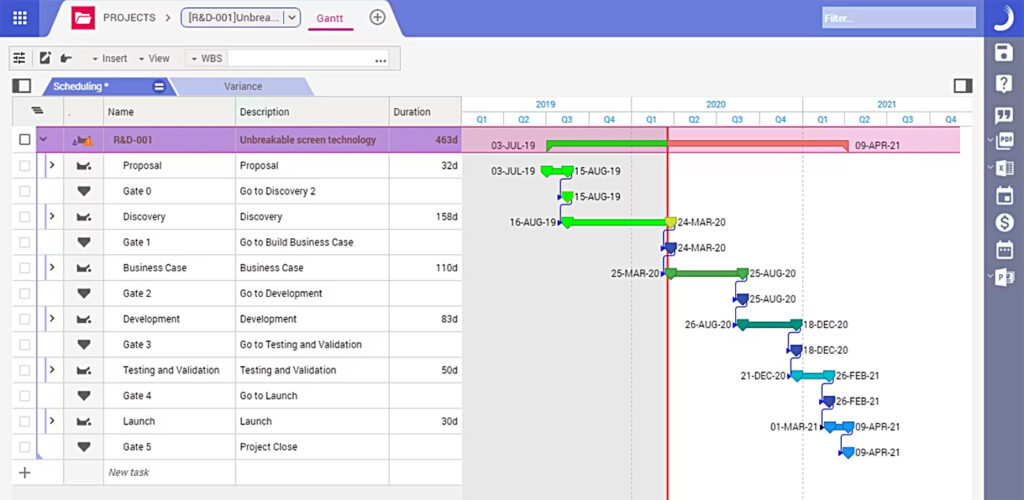
Best for: R&D, product-development, life sciences, automotive, aerospace/defense, high-tech, and other enterprises combining portfolio governance with resource/capacity and financial planning.
Planisware is a heavyweight portfolio-management alternative with particular credibility in R&D and new product development. Its current positioning combines portfolio and idea governance, business cases, budgets, scenario modelling, resource capacity, bottleneck visibility, and AI-supported portfolio optimization. That makes it a closer direct Planview competitor than many generic work-management tools.
Key features
- Strategic portfolio planning, business cases, idea/initiative governance, and roadmaps.
- Scenario analysis and what-if planning against budget and resource constraints.
- Resource capacity planning and bottleneck visibility.
- Financial planning, portfolio optimization, and industry-oriented R&D/NPD capabilities.
Pros
- Strong fit for sophisticated R&D and product portfolios.
- Combines strategic portfolio control with credible capacity and financial planning.
- Relevant alternative when the buyer wants one enterprise portfolio platform rather than a lightweight work layer.
Limitations
- Planisware is an enterprise-grade platform, so implementation and configuration can require significant setup, governance design, and specialist services.
- Its breadth can be more than necessary when the primary requirement is task-level bottleneck orchestration across mixed delivery portfolios.
Pricing: Quote-based / contact sales.
G2 rating: 4.0/5.
How it compares to Planview: Planview has a broad product family spanning strategic portfolio management and connected work. Planisware presents a more unified enterprise portfolio story with particular strength in R&D/NPD and complex industry portfolios.
How it compares to Epicflow: Against heavyweight SPM platforms like Planisware, Epicflow acts as a targeted capacity engine, focusing exclusively on shared-resource flow, capacity-feasible sequencing, and the real-time financial economics of cross-project delays.
5. ServiceNow Strategic Portfolio Management - best for ServiceNow-centered enterprises
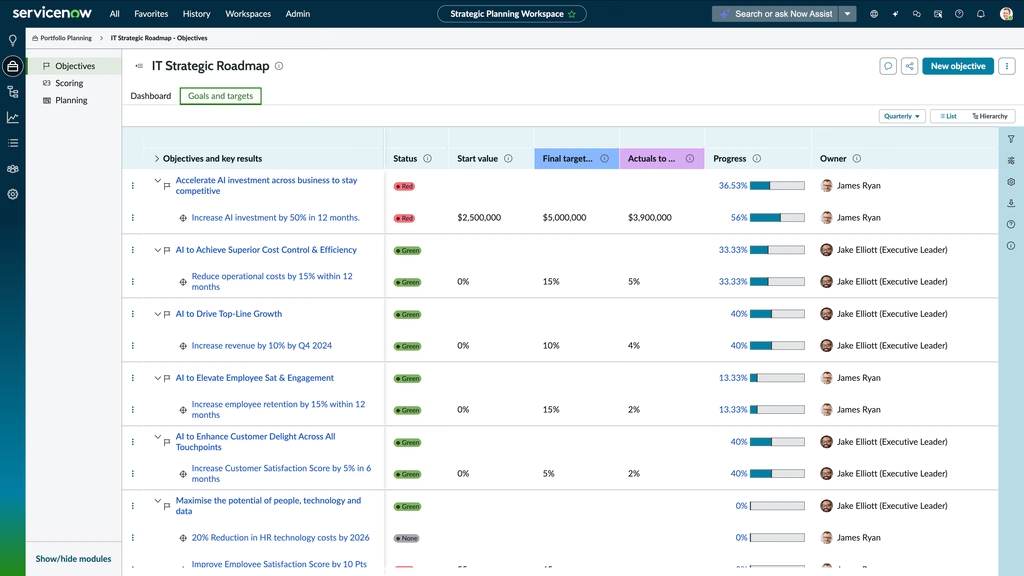
Best for: IT, digital transformation, enterprise service, and business-change PMOs that already use ServiceNow as a strategic platform.
ServiceNow SPM is most compelling when the enterprise wants strategic planning, demand, roadmaps, portfolio execution, financial planning, and resource decisions connected to the broader ServiceNow workflow and data model. It is less a point solution and more an extension of an existing enterprise platform.
Key features
- Strategic planning, roadmaps, demand and portfolio management.
- Project/program execution and financial planning.
- Resource management and optimization inside the ServiceNow operating model.
- AI-assisted planning and insight features connected to enterprise workflows.
Pros
- Strong architecture fit where ServiceNow is already core infrastructure.
- Can connect portfolio decisions to adjacent IT/service workflows and enterprise data.
- Credible direct competitor when Planview is being used primarily for enterprise planning and digital-change portfolios.
Limitations
- ServiceNow SPM delivers the most value in organizations already standardized on the ServiceNow platform; companies outside that ecosystem may face greater integration and administration overhead.
- Organizations that need deep multi-project bottleneck detection and finite-capacity sequencing across shared specialists should validate those scenarios with their own portfolio data.
Pricing: Quote-based.
G2 rating: 4.1/5.
How it compares to Planview: ServiceNow SPM can be the natural alternative when platform consolidation around ServiceNow is the constraint. Planview remains a dedicated SPM/connected-work ecosystem. The decision is often architecture-first.
How it compares to Epicflow: Epicflow is not an enterprise-platform consolidation play. It is a focused answer when scarce shared capacity and feasible delivery sequencing are the decision point.
Group C: Ecosystem and agile strategy-to-delivery alternatives
Use this group when the organization’s existing delivery ecosystem - Microsoft 365 or Jira/Atlassian - is the strongest constraint on the replacement decision.
6. Microsoft Planner / Project - best for Microsoft-centric PMOs
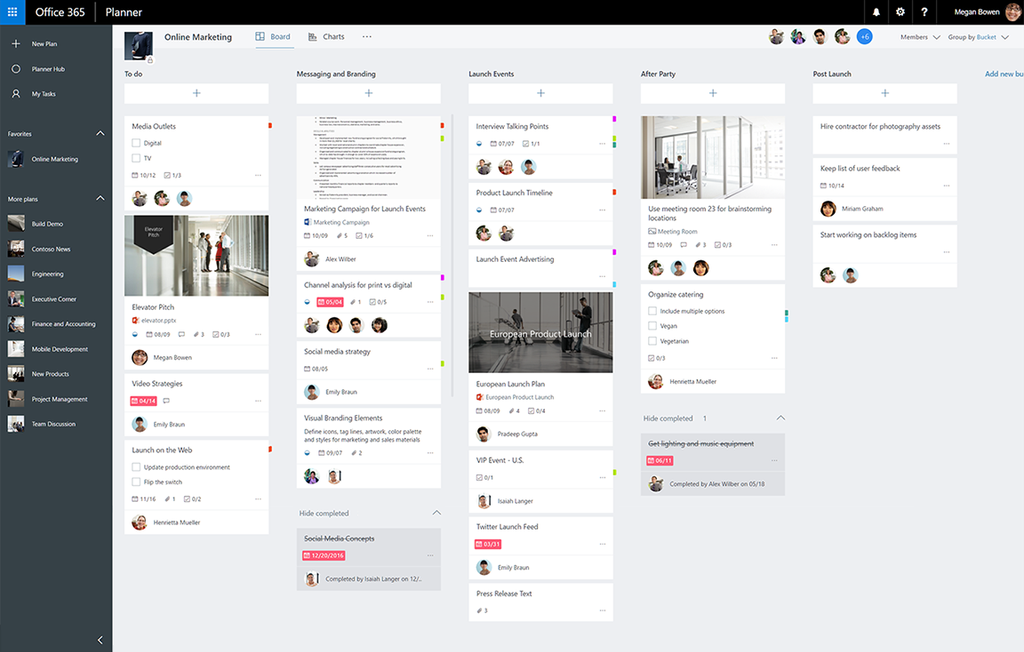
Best for: Organizations standardized on Microsoft 365, Teams, Power BI, Power Platform, and Microsoft project-planning tools.
Microsoft is often the most pragmatic Planview alternative when ecosystem standardization matters more than choosing a dedicated SPM suite. Planner premium capabilities and the Project lineage provide scheduling, dependencies, critical-path and resource-management functionality, while Power BI and Power Platform can support reporting and workflow extensions.
Key features
- Microsoft Planner with premium project-management capabilities.
- Dependencies, timelines, critical path, resource-management features, and familiar Microsoft 365 collaboration.
- Integration with Teams and adjacent Microsoft reporting/automation services.
- Planner and Project Plan 3 as the current commercial path for many existing Project customers.
Pros
- Familiar procurement, identity, collaboration, and reporting ecosystem for Microsoft-standardized companies.
- Public pricing is easier to benchmark than many enterprise SPM suites.
- Can be a lower-disruption option when the hard constraint is staying inside Microsoft.
Limitations
- Microsoft Project and Planner are not a one-to-one replacement for a broad enterprise SPM suite; governance, portfolio reporting, and investment-management workflows may require additional Microsoft components or third-party tools.
- Cross-portfolio capacity optimization is less specialized than in dedicated resource-planning platforms and may require additional architecture.
- Project Online retires on September 30, 2026, so organizations that still depend on it need a migration path. The retirement does not apply to Project desktop, Project Server Subscription Edition, or Planner.
Pricing: Planner and Project Plan 3: USD 30/user/month (published price; subscription terms apply). Other Planner plans are available.
G2 rating: 4.0/5.
How it compares to Planview: Microsoft is primarily an ecosystem choice. Planview is a purpose-built enterprise SPM/connected-work platform. If Microsoft 365 standardization is non-negotiable, evaluate whether the organization can build the portfolio controls it needs on top of that ecosystem.
How it compares to Epicflow: Epicflow extends Microsoft Project by replacing timeline-only scheduling with portfolio-wide constraint intelligence, ensuring scarce specialist capacity dictates feasible completion dates.
7. Jira Align - best for Jira-heavy enterprise agile portfolios
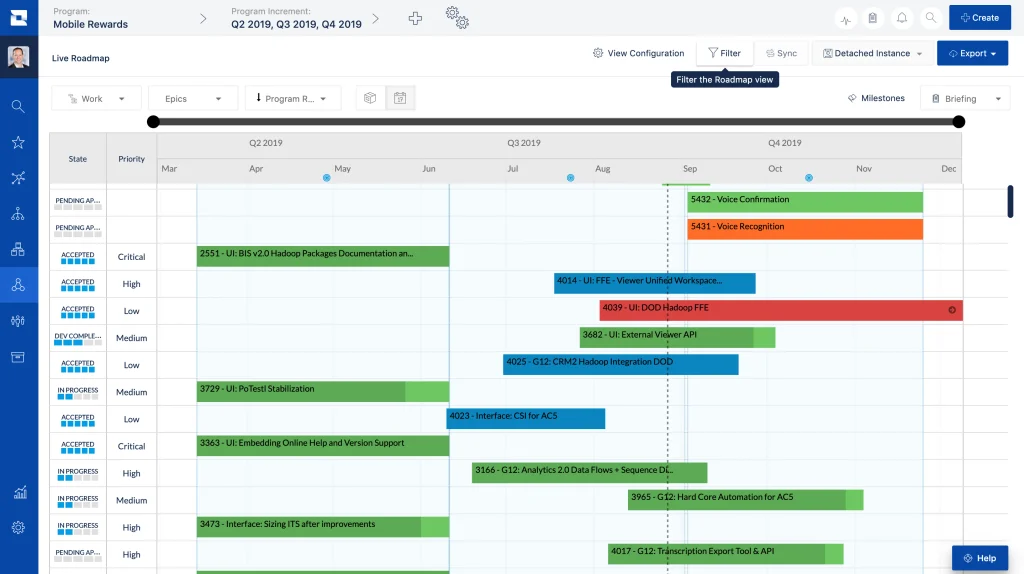
Best for: CIOs, EPMOs, product/transformation leaders, and large agile organizations connecting enterprise strategy, portfolios, programs, value streams, and Jira-based team delivery.
Jira Align is a strategy-to-execution platform for enterprise agile planning. It belongs on the shortlist when the organization already runs delivery in Jira and needs portfolio, program, value-stream, dependency, and strategic alignment above the team layer.
Key features
- Enterprise strategy and portfolio alignment tied to agile execution.
- Portfolio/program planning, dependencies, value streams, objectives, and progress visibility.
- Strong connection to Jira-centered software and digital delivery environments.
- Cross-level roll-up from team delivery to enterprise plans.
Pros
- Natural fit for Jira-heavy enterprises and scaled agile operating models.
- Strong strategy-to-team alignment for digital/product portfolios.
- More contextually relevant than generic PPM tools when value streams and agile program structures are the core model.
Limitations
- Jira Align is built around agile and value-stream operating models, which can make it a weaker fit for manufacturing, engineering, or projectized portfolios that use mixed delivery methods.
- Resource planning is not centered on detailed bottleneck optimization across scarce specialists shared by many projects.
Pricing: Enterprise / Atlassian strategy offering; contact sales for current packaging and pricing.
G2 rating: 4.1/5.
How it compares to Planview: Jira Align can be a stronger fit when the primary requirement is enterprise agile strategy-to-delivery. Planview spans a broader SPM and connected-work product family.
How it compares to Epicflow: Epicflow operates as a strategic overlay to execution tools like Jira: agile teams maintain their native workflows while portfolio leaders gain top-down visibility into shared specialist capacity, upcoming bottlenecks, and value-based priorities.
Group D: Broad PMO and work-management alternatives
Use this group when the organization needs clearer intake, dashboards, project controls, workflows, reporting, collaboration, and workload visibility without the full scope of enterprise SPM.
8. Celoxis - best for broad PMO controls without full SPM suite overhead
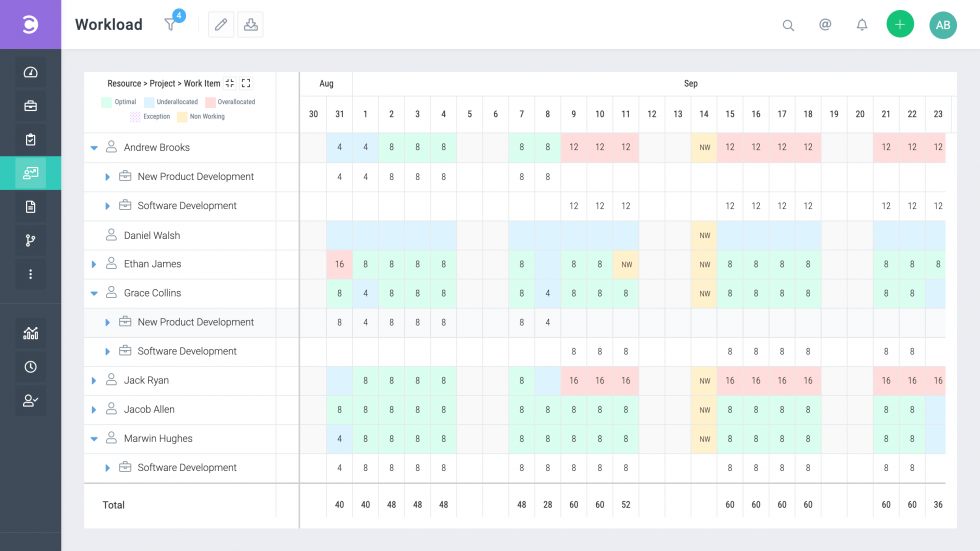
Best for: Mid-market and enterprise PMOs that want centralized project/portfolio controls, dashboards, financials, resource management, and reporting in a comparatively focused platform.
Celoxis sits between lightweight work management and heavyweight enterprise SPM. It offers broad PMO capabilities - portfolios, projects, resources, custom KPIs, financials, workflows, and reporting - and is a practical alternative when the buyer wants a dedicated PMO system rather than an enterprise strategy suite.
Key features
- Portfolio dashboards, project controls, resource management, financials, and custom KPIs.
- Reporting, workflow, time tracking, and PMO standardization capabilities.
- AI-assisted and conversational support features in the current product positioning.
- Public multi-tier pricing with enterprise options.
Pros
- Broad PPM coverage for a dedicated PMO use case.
- Clear public pricing and a straightforward way to scope a pilot/evaluation.
- Useful when the constraint is PMO visibility/control rather than enterprise-wide SPM governance.
Limitations
- Celoxis is a broad PMO platform rather than a specialized constraint-optimization system, so complex engineering portfolios should validate multi-project bottleneck and sequencing depth with their own data.
- Organizations that need the full breadth of enterprise SPM, board-level strategy governance, or investment-management workflows may require a heavier platform.
Pricing: Core USD 10, Essentials USD 25, Professional USD 35, Business USD 45 per standard user/month billed annually; five full-access users minimum on standard plans; Enterprise custom.
G2 rating: 4.6/5.
How it compares to Planview: Celoxis may be more focused for a PMO that wants broad PPM controls without Planview’s full enterprise suite scope. Planview is stronger when the buyer wants strategic portfolio governance across a wider enterprise planning model.
How it compares to Epicflow: Epicflow is the more specialized option when cross-project bottlenecks and finite shared capacity are the central management problem.
9. Smartsheet - best for flexible work management and scalable portfolio visibility
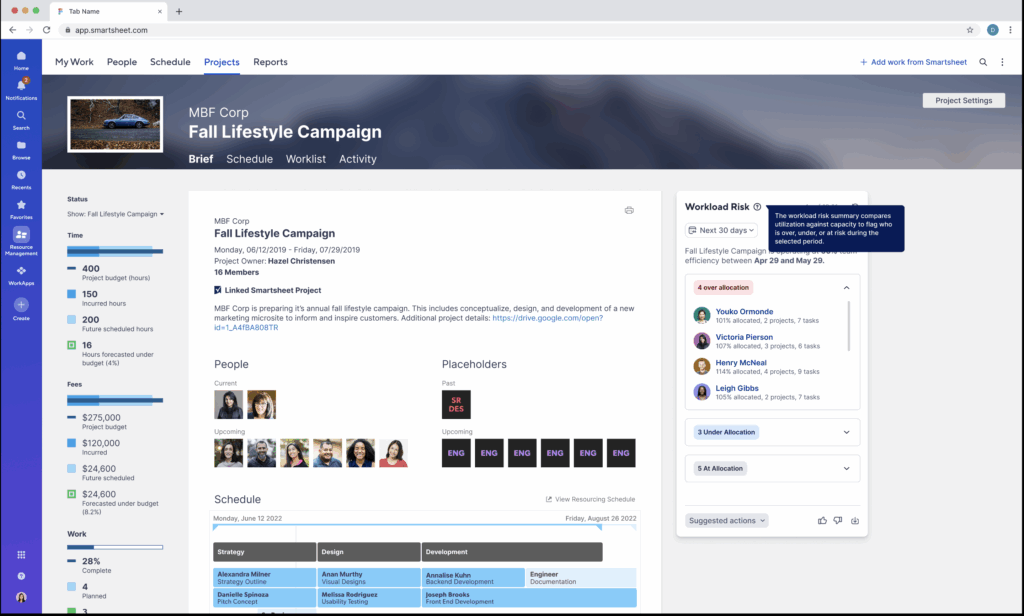
Best for: Departments and PMOs that value flexible sheets, workflows, dashboards, automation, resource views, and fast cross-functional adoption.
Smartsheet has moved well beyond spreadsheet-like task tracking. Its enterprise offering now includes portfolio-oriented capabilities and scenario planning, while Resource Management extends staffing and capacity use cases. It is a credible Planview alternative when flexibility, broad business adoption, and configurable work management matter more than dedicated enterprise SPM depth.
Key features
- Flexible project/work tracking, dashboards, automation, forms, and reporting.
- Portfolio and scenario-planning capabilities in enterprise offerings.
- Resource Management for capacity, utilization, and staffing-related workflows.
- Large ecosystem of integrations and broad non-technical business adoption.
Pros
- Accessible operating model for many business teams.
- Strong configuration flexibility for PMO standards, intake, and reporting.
- Can scale from team workflows to broader portfolio visibility.
Limitations
- Advanced portfolio and resource-management depth depends on packaging and add-ons, so the full architecture can cost more than the base work-management seat suggests.
- Smartsheet does not specialize in finite-capacity multi-project sequencing or bottleneck economics across shared specialist pools.
Pricing: Public per-user plans are available; Enterprise and Advanced Work Management use custom pricing. Resource Management may be packaged separately depending on plan.
G2 rating: 4.4/5.
How it compares to Planview: Smartsheet is often a stronger fit when the constraint is usability, configurable work management, and portfolio visibility across business teams. Planview is a stronger dedicated SPM option for heavier investment/governance needs.
How it compares to Epicflow: Epicflow operates as a predictive portfolio value engine, converting shared specialist constraints into capacity-feasible schedules, priced delay risks, and optimized financial returns per constrained hour.
10. Adobe Workfront - best for marketing and creative work orchestration
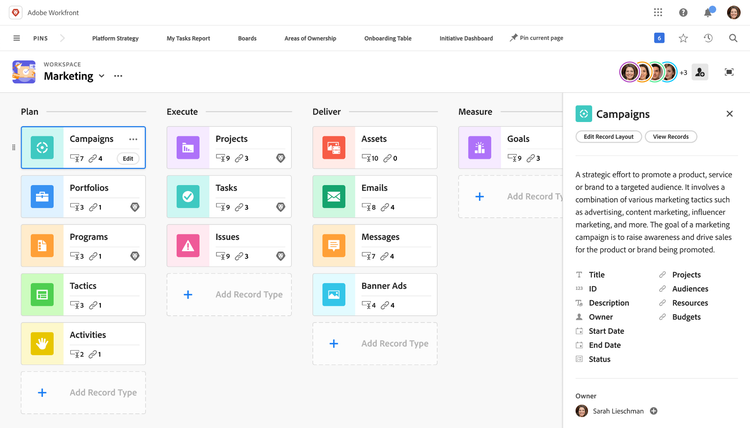
Best for: Marketing operations, creative services, campaign organizations, and enterprises coordinating high-volume knowledge-work intake, approvals, resources, and portfolios.
Adobe Workfront is strongest where portfolio management is inseparable from enterprise work orchestration, particularly in marketing and creative operations. It combines intake, planning, approvals, resource management, financial/work data, and portfolio capabilities, with deeper value for organizations using the Adobe ecosystem.
Key features
- Enterprise work intake, planning, approvals, workflows, and portfolio management.
- Resource-management capabilities across teams and work.
- Financial and portfolio features in higher-tier packaging.
- Adobe ecosystem fit for marketing and creative operations.
Pros
- Strong specialization for marketing/creative work systems.
- Good fit when governance needs to live close to creative workflows and approvals.
- Enterprise-scale work-management orientation.
Limitations
- Workfront is oriented strongly toward marketing, creative, and enterprise work orchestration, so it is less naturally aligned with engineering-style shared-resource bottleneck management.
- Portfolio and resource-management capabilities vary by package, and a full enterprise deployment may require multiple modules and a sales-led implementation.
Pricing: Quote-based across Select, Prime, and Ultimate packages; confirm current packaging with Adobe.
G2 rating: 4.1/5.
How it compares to Planview: Workfront is a stronger alternative when Planview is being used for enterprise work orchestration, especially marketing and creative delivery. Planview has broader SPM positioning across strategic portfolios and connected work.
How it compares to Epicflow: Epicflow focuses on constrained-resource portfolio orchestration rather than marketing/creative workflow management.
11. Wrike - best for flexible work management with workload and capacity views
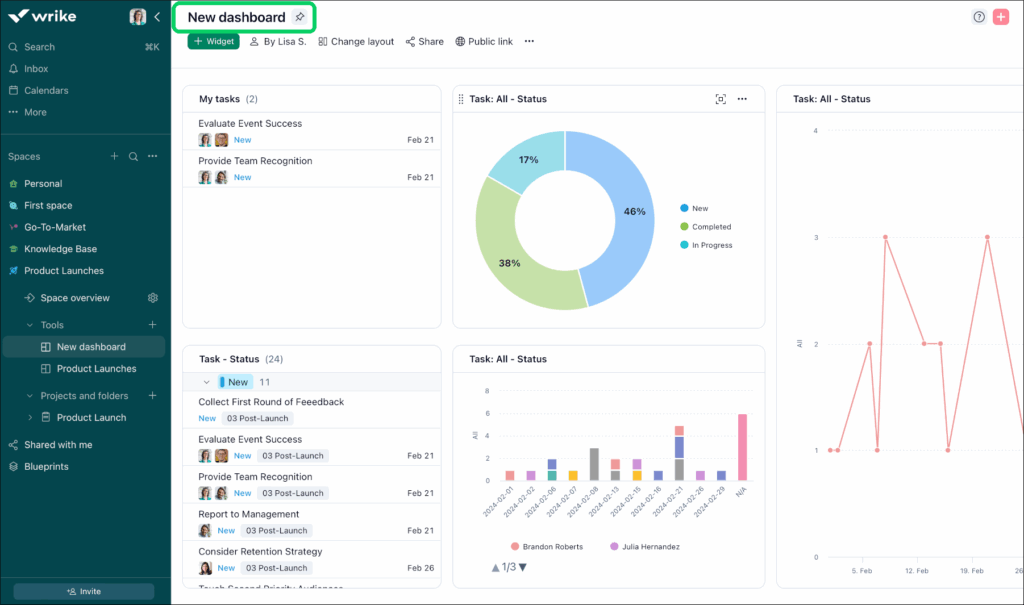
Best for: Cross-functional teams and PMOs that need configurable work management, dashboards, intake, reporting, and workload/capacity visibility.
Wrike is a broad work-management platform with project/portfolio views, automations, dashboards, workload functionality, and higher-tier resource/capacity capabilities. It is relevant when the Planview replacement problem is adoption and operational coordination rather than enterprise investment governance.
Key features
- Project and portfolio views, dashboards, Gantt, workflows, forms, automation, and reporting.
- Workload, bookings, job roles, and resource-management capabilities.
- Advanced resource/capacity planning and budgeting in higher-tier offerings.
- Cross-functional work-management orientation.
Pros
- Flexible for multiple departments and operational workflows.
- Strong reporting and workload visibility for work-management use cases.
- Public pricing on core plans.
Limitations
- Enterprise SPM, investment governance, and deep portfolio-financial management are not the center of Wrike’s product model.
- Advanced resource and capacity-planning capabilities depend on the relevant higher-tier package.
Pricing: Business: USD 25/user/month. Advanced enterprise/Pinnacle packages use custom pricing; confirm current seat minimums and billing terms.
G2 rating: 4.2/5.
How it compares to Planview: Wrike is more natural when the buyer prioritizes flexible work execution and adoption. Planview is more purpose-built for enterprise strategic portfolio governance and complex investment planning.
How it compares to Epicflow: Epicflow goes deeper when resource management means cross-project bottleneck forecasting and capacity-aware sequencing rather than workload visibility alone.
12. monday.com - best for configurable workflows and broad business adoption
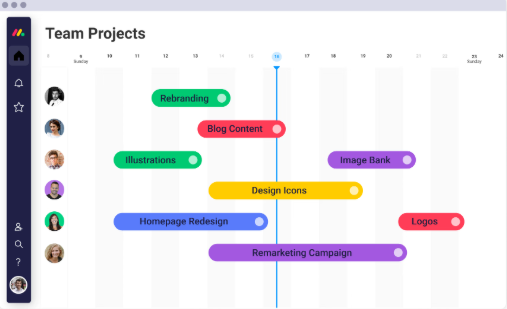
Best for: Business teams and departments that need visual workflows, dashboards, automations, portfolio views, and a platform that non-specialist users can configure quickly.
monday.com is a flexible work platform rather than a direct like-for-like enterprise SPM replacement. It belongs in the comparison because many Planview buyers do not actually need full SPM: they need standardized intake, transparent work, workflow automation, workload views, and department-level portfolio oversight.
Key features
- Boards, timelines, Gantt, dashboards, automation, forms, and workload views.
- Portfolio-management and resource-optimization capabilities in enterprise positioning.
- AI-enabled work features and configurable business workflows.
- Broad adoption across non-technical departments.
Pros
- High configurability for diverse business workflows.
- Good fit where user adoption and workflow flexibility are the main constraint.
- Public pricing for core plans plus enterprise options.
Limitations
- monday.com is not a dedicated enterprise SPM or portfolio-finance platform, so organizations with complex investment governance may need additional systems.
- Workload views and automation do not provide the same depth as finite-capacity multi-project orchestration across heavily shared specialist pools.
- Portfolio depth and advanced planning capabilities vary by monday.com product and subscription tier.
Pricing: Public paid plans start from approximately USD 9/seat/month billed annually on the current pricing page; Enterprise is custom. Confirm the exact Work Management tier before publication.
G2 rating: 4.7/5.
How it compares to Planview: monday.com is the more natural alternative when the constraint is adoption and configurable work coordination. Planview is the stronger dedicated SPM choice for strategic investment and enterprise portfolio governance.
How it compares to Epicflow: Epicflow is more relevant when the portfolio is blocked by scarce people and the organization needs capacity-feasible sequencing rather than configurable boards.
Group E: Professional services alternatives
Use this group when the operating model is client delivery and the hard metrics are utilization, staffing, project economics, margins, time/expense, and revenue - not generic enterprise SPM.
13. Kantata - best for professional services automation
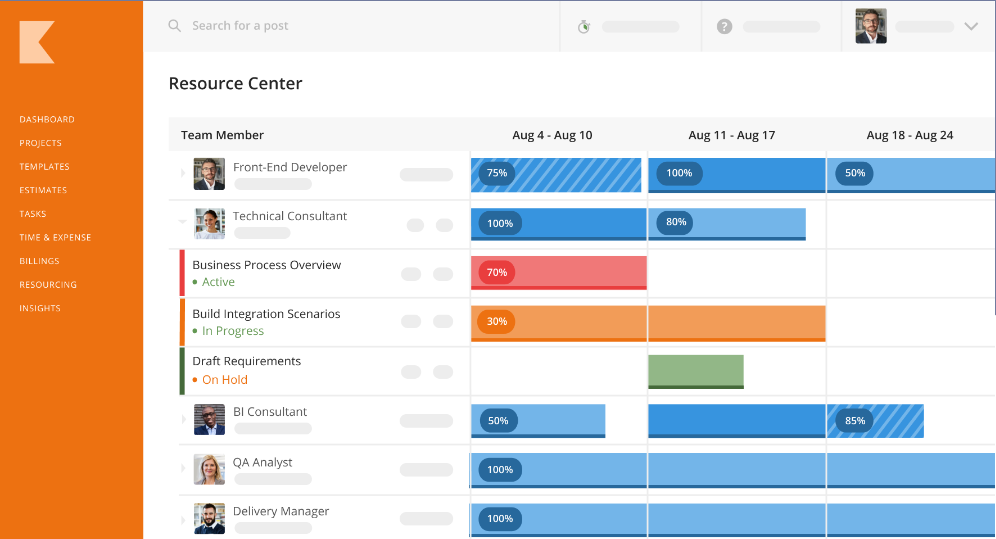
Best for: Consulting, agency, technology-services, and other professional-services organizations that need resource staffing, utilization, margins, project financials, and client-delivery workflows.
Kantata is a PSA platform, so its center of gravity is different from Planview’s enterprise SPM story. It is relevant when a company is replacing Planview/ChangePoint-style professional-services workflows or when consulting-firm queries are really asking for a services operating system rather than another broad PPM platform.
Key features
- Resource staffing, skills/availability, utilization, and capacity planning.
- Project financials, margins, time/expense, and demand forecasting.
- Professional-services workflows from pipeline/demand to delivery and economics.
- Integrations with CRM, finance, and delivery systems depending on architecture.
Pros
- Purpose-built for professional-services economics.
- Connects staffing decisions with utilization and margin - metrics general PPM tools often treat as secondary.
- Good fit for consulting and services firms where client-project profitability is the core operating model.
Limitations
- Kantata is purpose-built for professional services rather than enterprise SPM across unrelated business units.
- Its resource model focuses on staffing, utilization, and client-project economics rather than deep engineering multi-project bottleneck orchestration.
- Pricing is tailored rather than publicly standardized, so procurement requires a scoped quote.
Pricing: Tailored / quote-based.
G2 rating: 4.2/5.
How it compares to Planview: Kantata can be the better replacement when the Planview use case is PSA/client-delivery economics. Planview is broader for enterprise strategic portfolio governance.
How it compares to Epicflow: Epicflow should only enter a consulting-firm shortlist when the key pain is shared specialist capacity across client projects; it should not be positioned as a PSA billing replacement.
Planview alternatives compared: quick comparison table
Use this table to narrow the field by the constraint you need to solve. Then validate the shortlisted products with real portfolio data and ugly scenarios.
| Tool | Best when... | Primary constraint solved | Pricing note | G2 |
|---|---|---|---|---|
| Epicflow | Shared specialists determine portfolio delivery | Finite-capacity feasibility, bottlenecks, sequencing | EUR 22.5 annual Growth; Enterprise custom | 4.4 |
| Broadcom Clarity | EPMO needs enterprise investment governance | Strategy, funding, financial/portfolio control | Quote-based | 3.7 |
| Planisware | R&D/NPD/engineering needs deep enterprise portfolio control | Portfolio scenarios, capacity, financial planning | Quote-based | 4.0 |
| ServiceNow SPM | ServiceNow is already the enterprise platform | Platform consolidation around SPM + workflow | Quote-based | 4.1 |
| Celoxis | PMO needs broad controls without full SPM suite | PPM visibility, financials, reporting, resources | USD 10-45 standard user/mo + Enterprise | 4.6 |
| Microsoft Planner / Project | Microsoft 365 standardization is non-negotiable | Ecosystem fit and familiar project planning | Plan 3 USD 30/user/mo | 4.0 |
| Jira Align | Jira-heavy enterprise needs strategy-to-agile delivery | Enterprise agile/value-stream alignment | Contact sales | 4.1 |
| Meisterplan | PMO wants lean resource/capacity portfolio planning | Portfolio capacity and what-if scenarios | Resource-based; custom at large scale | 4.7 |
| Smartsheet | Business teams need flexible work/portfolio visibility | Adoption, workflow, configurable portfolio reporting | Public + custom enterprise tiers | 4.4 |
| Adobe Workfront | Marketing/creative work is the operating model | Work intake, approvals, creative/marketing orchestration | Quote-based | 4.1 |
| Wrike | Cross-functional work management is the constraint | Work coordination, workload, reporting | Business USD 25; advanced custom | 4.2 |
| monday.com | Fast configurable workflows matter most | Adoption and flexible business workflows | Public plans + Enterprise custom | 4.7 |
| Kantata | Professional-services economics drive the choice | Utilization, staffing, margin, client delivery | Tailored quote | 4.2 |
Planview alternatives by use case
Best Planview alternatives for strategic portfolio management
Start with Broadcom Clarity, Planisware, and ServiceNow SPM when the buying committee needs strategy, investment planning, roadmaps, funding/financial governance, scenario analysis, and enterprise-wide portfolio control. The choice is not which product has the longest list; it is which governance model and ecosystem best match the enterprise. Epicflow belongs in this conversation when the strategic plan must be grounded in finite-capacity execution, especially when shared resources, milestone economics, and delivery timing determine whether the portfolio can realize the strategy.
Best Planview alternatives for resource and capacity planning
Epicflow and Meisterplan are the most relevant starting points when the problem is finite capacity rather than general portfolio governance. Meisterplan is strong for lean portfolio/resource planning and what-if scenarios. Epicflow is the sharper fit when many interdependent projects compete for the same specialists and leaders need bottleneck prediction, priority-driven multi-project sequencing, and an executable plan. If all you need is workload visibility, lighter tools such as Smartsheet, Wrike, monday.com, or Microsoft Planner may be sufficient.
Best Planview alternatives for Jira users
Jira Align is the direct enterprise agile choice when the goal is connecting strategy, portfolios, programs, value streams, and Jira-based team delivery. Epicflow is relevant when Jira teams should keep their daily tooling but portfolio/resource leaders need a capacity layer above them to resolve conflicts across projects. Tempo/Structure PPM can also be evaluated for Jira-centered portfolio use cases; verify the exact module and current packaging before publication.
Best Planview alternatives for consulting and professional services firms
Kantata, Certinia, and BigTime belong on a services-first shortlist because utilization, staffing, time/expense, margin, billing/commercial workflows, and client delivery are core requirements. Planview ChangePoint belongs in the Planview product context rather than the independent alternatives list. Epicflow should only enter this shortlist when the consulting firm’s primary pain is shared specialist capacity across many client projects; it should not be sold as a PSA billing or accounting replacement.
Best Planview alternatives for Microsoft 365 organizations
Microsoft Planner / Project is the obvious ecosystem-first option, with OnePlan worth evaluating when the organization wants an additional strategic/portfolio layer over Microsoft work management. Project Online retires on September 30, 2026, so migration decisions should be based on current Planner and supported Microsoft paths rather than treating Project Online as the future-state platform. If the problem is specifically cross-project bottlenecks, a specialist layer may still be needed.
Best Planview alternatives for engineering, R&D, and manufacturing portfolios
Planisware and Epicflow solve different parts of this buying problem. Planisware is a heavyweight enterprise choice for R&D/NPD governance, business cases, portfolio scenarios, capacity, and financial planning. Epicflow is the focused choice when mixed projects share engineers and specialists, and the PMO needs to decide what can actually run, which bottleneck matters, and which sequence creates more value from the capacity available. In high-stakes delivery environments, test both the executive portfolio model and the execution physics.
Best Planview alternatives for fast implementation or a bounded pilot
Do not turn “implementation speed” into an unsupported leaderboard. Instead compare proof paths. Celoxis offers clear public plans and can be evaluated as a focused PMO platform. Smartsheet and monday.com can be trialed for work-management workflows. Epicflow publishes a 30-day trial and can scope a proof around one shared resource pool and the projects competing for it. Measure time to the first useful planning decision, not time to create a demo account.
Planview vs Epicflow: when to switch, when to keep Planview, and when to add a focused layer
Planview and Epicflow overlap in portfolio/resource planning, but they compete from different centers of gravity. Planview leads from enterprise strategy, governance, and connected work; Epicflow leads from resource-constrained portfolio economics, where priorities must be converted into a feasible sequence that improves value and delivery.
| Decision question | Planview is the more natural fit when... | Epicflow is the more natural fit when... |
|---|---|---|
| What is the operating center? | Enterprise strategy, investment governance, portfolio planning, and connected work across a broad product family. | Multi-project delivery where shared specialists and bottlenecks determine what can actually finish. |
| What is the core resource question? | How do demand, skills, capacity, and investments align across the enterprise? | Which scarce hour should go to which work, what will move if priorities change, and can the portfolio be executed with available capacity? |
| What is the scenario question? | Which investment/portfolio scenario best supports strategic plans and enterprise trade-offs? | Which resource/priority scenario is feasible, which bottleneck moves, and what does the selected sequence do to delivery timing? |
| What financial view matters? | Broad financial and investment governance as part of SPM. | The economic consequence of feasible delivery: predicted bonus/penalty and profit plus milestone-linked invoice / expected-cash timing. |
| What happens after the decision? | Work continues through Planview’s connected product environment and integrations. | The selected capacity-aware scenario becomes the schedule/priority logic used to guide daily execution. |
| Do we need a full replacement? | Yes, if Planview itself is the enterprise platform being reconsidered. | Not necessarily. Epicflow can be evaluated as a focused capacity layer alongside supported existing delivery tools when the constraint is localized. |
The practical rule: keep Planview in the lead when breadth of strategic portfolio governance is the problem to solve. Make Epicflow a primary alternative when the enterprise already knows what it wants to do but needs to decide what can actually run, where scarce capacity creates the most value, and how that choice changes delivery and financial outcomes. Depending on the operating model, Epicflow can be evaluated as a focused replacement or as an additional portfolio-execution layer alongside existing systems.
CFO question for the Epicflow scenario: Which feasible portfolio sequence creates the most value and the most favorable expected cash timing from the capacity we actually have?
Planview vs Planisware in brief
Planview and Planisware are both heavyweight enterprise portfolio platforms, but their product stories have different centers of gravity. Planview presents a broad family spanning strategic portfolio management, connected work, agile/value-stream capabilities, and multiple acquired product lines. Planisware is especially prominent in R&D, new product development, and complex industrial portfolios, combining business cases, portfolio scenarios, budgets, resources, and capacity. For a long-term enterprise selection, compare the target operating model, industry fit, integration architecture, financial governance, resource planning, implementation scope, and whether the enterprise prefers a broad product family or a more unified portfolio-management center.
Other Planview competitors worth knowing
The 13 tools above cover the highest-priority replacement scenarios in this article, but the wider market includes several relevant options:
- Triskell Software for enterprise PPM/SPM and portfolio governance.
- OnePlan for strategic portfolio management, particularly in Microsoft-centered environments.
- A-Dato LYNX for flow-oriented, CCPM/hybrid, WIP and portfolio-release use cases.
- IBM Targetprocess / Apptio for enterprise agile, value-stream, and investment/portfolio contexts.
- Oracle Primavera for capital-intensive planning, scheduling, engineering/construction, and project controls.
- Cora PPM and Prism PPM for enterprise project/portfolio-management use cases.
- Asana and ClickUp for collaborative work-management scenarios where enterprise SPM depth is not the primary requirement.
Do not add these names simply to make the list longer. Add a tool only if the page can explain the Planview product/use case it overlaps with and the buyer constraint that makes it relevant.
How to choose the ideal Planview alternative
Name the limiting constraint before you name a vendor.
Write a one-sentence problem statement. “We need a cheaper PPM tool” is weak. “Our portfolio is governed, but eight programs share the same engineering groups and our promised dates are not capacity-feasible” is actionable.
Identify the Planview product and workflow actually in scope.
Map Portfolios, AdaptiveWork, PPM Pro, ProjectPlace, AgilePlace, ProjectAdvantage, ChangePoint, Hub, integrations, and reporting dependencies. A vague “replace Planview” project is likely to over-scope the migration.
Choose the right market category.
SPM, enterprise agile, work management, resource/capacity planning, marketing operations, and PSA solve different problems. Compare peers first, then consider adjacent tools only when they solve the actual constraint better.
Run ugly scenarios, not polished demos.
Ask vendors to model overload, priority changes, a key expert going unavailable, a major project being inserted, a contractual milestone slipping, a budget cut, or a portfolio decision that helps one project but harms three others. The system should make the trade-off visible.
Test the migration boundary.
Can you replace one product line? Keep Jira/Microsoft delivery workflows? Add a focused layer? Or does the operating model genuinely require a full suite replacement? Compare change scope as carefully as software capability.
Measure decision quality and operating value.
Track time to the first reliable portfolio decision, reduction in unresolved capacity conflicts, forecast stability, adoption by the intended roles, reporting/admin effort, and whether management can see the economic consequence of a priority choice. Avoid vanity measures such as number of configured fields.
Find out whether Epicflow fits your portfolio.
Conclusion
The 13 Planview alternatives in this guide are not interchangeable, because they are not solving the same management problem. Broadcom Clarity, Planisware, and ServiceNow SPM belong in enterprise strategic-portfolio conversations. Jira Align belongs in scaled agile strategy-to-delivery. Microsoft is an ecosystem decision. Smartsheet, Wrike, monday.com, Celoxis, and Workfront solve different work-management and PMO needs. Kantata is a services operating model. Meisterplan and Epicflow move the conversation toward portfolio capacity.
The useful buying question is therefore not “Which software is most like Planview?” It is “Which constraint is preventing this portfolio from performing, and which system is built to solve it?” If the answer is shared specialist capacity across many competing projects, the comparison should move from visibility to feasibility, economics, and execution. That is the operating problem Epicflow is designed to solve - not as a smaller Planview, but as a different portfolio-management model built around finite capacity.
FAQs
What are the best alternatives to Planview?
The best Planview alternatives depend on what you are replacing and the constraint you need to solve. Broadcom Clarity, Planisware, and ServiceNow SPM fit enterprise strategic portfolio management. Epicflow and Meisterplan fit resource/capacity-focused portfolios. Jira Align fits enterprise agile/Jira environments. Microsoft Planner/Project fits Microsoft-centric PMOs. Smartsheet, Celoxis, Wrike, monday.com, and Workfront fit different work-management needs, while Kantata fits professional services.
Who are Planview competitors?
Planview competitors include Broadcom Clarity, Planisware, ServiceNow SPM, Epicflow, Meisterplan, Jira Align, Microsoft Planner/Project, Celoxis, Smartsheet, Adobe Workfront, Wrike, monday.com, and Kantata. Other relevant names include Triskell, OnePlan, A-Dato LYNX, IBM Targetprocess / Apptio, Oracle Primavera, Cora PPM, and Prism PPM. Directness depends on which Planview product and use case are in scope.
What kind of company is Planview, and which organizations use it?
Planview is an enterprise software vendor focused on strategic portfolio management, project portfolio management, connected work, agile/value-stream planning, and related planning/delivery use cases. Its product family is aimed primarily at organizations managing complex portfolios, programs, resources, and enterprise work. When citing specific customers, use current Planview case studies rather than generic web lists.
How much does Planview cost?
Planview does not publish a simple universal price for the enterprise product family. Pricing is generally sales-led and depends on product, users/roles, modules, implementation, integrations, and support scope. Compare total cost of ownership rather than seat price alone.
Is Sciforma a Planview alternative?
Not as an independent vendor anymore. Planview acquired Sciforma and now presents the product as Planview ProjectAdvantage, formerly Sciforma. Keep Sciforma in product-history/context sections, but do not count it as an independent Planview competitor.
Is Clarizen now Planview?
Yes. Planview acquired Clarizen in 2021 and currently markets AdaptiveWork as formerly Clarizen. If you are searching for Clarizen alternatives, compare against the current AdaptiveWork product, packaging, integrations, and roadmap.
What is the difference between Planview and Planisware?
Both are heavyweight enterprise portfolio platforms. Planview spans a broad product family across strategic portfolio management, connected work, agile/value-stream capabilities, and acquired product lines. Planisware is particularly strong in R&D/NPD and complex industrial portfolios. Compare operating model, financial governance, capacity depth, industry fit, integrations, and implementation scope.
Are there any free Planview alternatives?
Some work-management products offer free or freemium plans, but free tiers are rarely equivalent to enterprise PPM/SPM, strategic investment governance, advanced resource planning, portfolio financials, or enterprise security/administration. Use free plans to test team-level workflow fit, not as proof of enterprise replacement capability.
What is the best Planview alternative for Jira users?
Jira Align is the most direct enterprise agile choice when you need strategy, portfolios, programs, value streams, and Jira-based team delivery in one Atlassian-centered model. Epicflow is relevant when teams should remain in Jira but portfolio leaders need cross-project capacity and bottleneck planning above them. Tempo/Structure PPM may also be worth evaluating for Jira-centric portfolio needs.
What is the difference between Planview and Broadcom Clarity?
Both compete in enterprise SPM/PPM. Planview offers a broad connected product family; Clarity emphasizes strategic investments, financial transparency, resource utilization, and portfolio governance within Broadcom ValueOps. The better fit depends on governance model, ecosystem, financial requirements, integration architecture, and how resources are planned.
What is the best Planview alternative for resource management?
If resource management means multi-project capacity planning, bottleneck detection, what-if analysis, and feasible sequencing across shared specialist pools, Epicflow and Meisterplan are the most relevant starting points in this guide. If you only need workload views or simple staffing, Smartsheet, Wrike, monday.com, Microsoft Planner, or Celoxis may be enough. Define the depth of the resource problem before choosing.
Can I replace only part of Planview?
Yes. Three common models are full suite replacement, replacing one Planview product line, or adding a focused layer for a specific constraint. A PMO can, for example, keep enterprise governance or team delivery tools while adding a capacity-focused system for the division where shared specialists determine delivery. The key is clear data ownership and integration boundaries.