What Is Resource Planning? Definition, Importance & How to Do It
 Victoria Sokolova
.
March 27, 2026
.
Resource Management
.
37 mins READ
Victoria Sokolova
.
March 27, 2026
.
Resource Management
.
37 mins READ

Resource planning helps PMOs, project managers, and executives allocate different resources from people to budgets across multiple projects in a way that maximizes resource efficiency and minimizes waste. It is essential for organizations of any scale, however, for a multi-project environment, resource planning is a cornerstone of success.
In this article, we’ll review the following points:
- Meaning and importance of resource planning;
- Benefits that your business can get with resource planning;
- The most essential metrics in resource planning;
- What common challenges are and how to address them;
- What tools you need to increase the effectiveness of resource planning;
And finally, you’ll be able to create your own resource plan with detailed recommendations. Let’s get started.
What Is Resource Planning in Project Management?
According to the article, the resource planning definition says that it is an essential process of defining available resources, their efficient allocation, and optimization. Also, it includes predicting and forecasting the team’s capacity during project execution. Resource planning ensures that the project has everything it needs to deliver a product or service on time and within budget.
Let’s consider the following resource planning example. A construction company has two projects running simultaneously: they need to build two houses at the same time. Before starting work on these projects, they perform resource planning to make sure that they will have enough resources (human and material) to achieve the intended results, avoid overloads and delays. For example, they can schedule workers across both projects in advance, book materials and equipment, and create a plan for how they will be used and when.
Often, common types of resources are divided into the following groups:
- Human resources: skilled labor, stakeholders, managers, and other people involved in the process; this category also involves human skills, knowledge, and expertise important for project execution.
- Technological resources: equipment, software, hardware, infrastructure — all the technologies a project needs to deliver services or goods.
- Information resources: knowledge bases, databases, guides, and other documentation important for fast and effective decision-making.
- Financial resources: budget and all other expenditures — paying salaries, taxes, investing in extra initiatives, like training programs;
- Time resources: project duration and delivery deadlines.
- Material resources: physical items needed for a project, e.g., fabric for sewing clothes, wood for furniture or paper for book publishing;
- Place and accommodation: offices, laboratories, inventories, and other physical places that are important for project execution.
- External resources: it can be hiring external specialists to support projects, partnerships and collaboration with other companies or even the government.
In simple English, resource planning is aligning available resources with business needs in that way, which would be better for the company’s strategy.
Read more: People Aren’t Resources! Or Are They?
Essential Components of Resource Planning
For effective resource planning, organizations need to consider several points to ensure that resources are allocated wisely. Let’s take a closer look at the 6 core components of resource planning:
1. Resource identification.
First of all, before starting the resource planning process, you need to know what resources are available to work with and whether you need to attract more.
2. Resource allocation.
One more necessary point of resource planning in project management is to allocate the resources to specific tasks or projects based on requirements, skills, or expertise.
3. Capacity management.
Capacity planning is essential in resource planning because it refers to the amount of work that resources can realistically handle. Overload leads to errors and equipment breakdown, and for human resources, it means overwhelming and burnout.
4. Scheduling and timeline alignment.
Project resource planning ensures that the availability of resources will be aligned with all projects’ timelines, taking into account project interdependencies.
5. Monitoring and tracking.
Real-time monitoring of resource usage and tracking it during project execution helps to detect and prevent bottlenecks as early as possible.
6. Flexibility and reallocation.
Proper resource planning in project management helps cope with uncertainties, for example, changing requirements and priorities. Resource planning allows you to quickly adapt with less stress and losses.
How Does Resource Planning Work?
At its core, resource planning meaning involves aligning what a project needs with what a company has available. It’s both a strategic process, because planning in advance helps to avoid problems during execution, and a tactical activity, because you need to adapt as work progresses. Here’s how strategic resource planning works.
1. Forecasting resource demand.
While doing resource planning, you need to estimate how much of each resource will be required and for how long. For this purpose, you can use project management forecasting software tools, which become extremely helpful in multi-project resource management. Accurate forecasting helps companies prevent last-minute hiring, bottlenecks, and delays.
2. Identifying capacity gaps.
This point of resource planning involves comparing forecasted demand to current resource availability. It highlights potential resource shortages or periods of overload for teams. This step helps managers make proactive decisions (e.g., reallocating resources, rescheduling projects) to prevent potential issues.
3. Allocating resources and balancing workloads.
The next important step of resource planning in project management is to assign resources in a way that maximizes efficiency and prevents overload, e.g., in line with their availability, capacity, competences, and experience. One of the goals of resource planning is to balance workloads, so every team member, equipment, software, or infrastructure is used optimally.
4. Scheduling resources.
Proper resource scheduling is essential in resource planning because it ensures that resources are available when they are actually needed, not too early to waste them, and not too late to delay projects.
5. Monitoring resource performance and utilization.
When performing resource planning, it’s important to understand that projects are extremely dynamic. Real-time monitoring helps track whether resources are being utilized efficiently, whether they have balanced workloads, and whether changes are required.
6. Adjusting and reallocating as needed.
Resource planning is a continuous process. All unexpected changes require flexibility and quick adaptation. Proper resource planning in project management allows organizations to adjust resource allocation in response to project changes and, at the same time, keep teams productive and projects on track.
Read more: Tracking Performance: Switching from Project to Resource Level
Why Resource Planning Is Important
The biggest pain of any organization is that resources are always limited, and that is why the importance of resource planning is extremely high.
52% of responders of PMO Outlook Report 2023 said that they are struggling while managing projects to assign the right resources to the right projects at the right time. 27% reported failure because of a lack of resources to meet project demands.
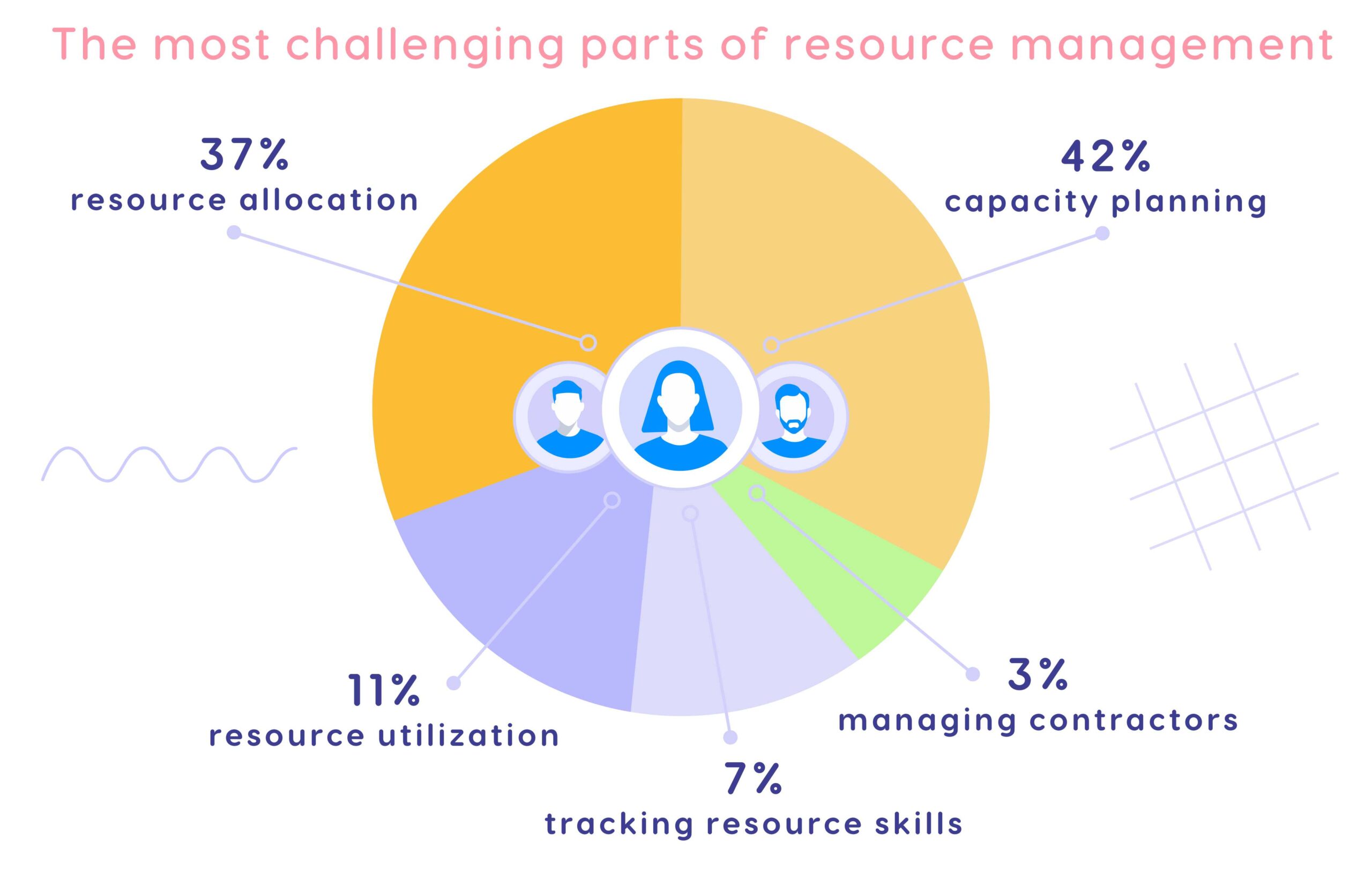
From there, we can see how immeasurable the importance of resource planning in project management is. When resource planning is done right, it helps to:
- Increase the efficiency of available resources: They are neither overloaded nor idle; the need for last-minute hiring or purchasing extra resources is minimized.
- Avoid resource shortages: Resource planning shows you potential resource gaps, which helps you make timely adjustments and prevent them before they occur.
- Preventing people from overload and burnout: Resource planning ensures balanced workloads thanks to bridging demand with capacity in advance.
- Deliver projects on time: Resource planning ensures proper staffing of concurrent projects, minimizes the risk of delays caused by resource shortages, and prevents bottlenecks, which in turn contribute to the timely delivery of projects.
- Avoid cost overrun: Efficient utilization of the available resources and absence of delays minimizes the risk of budget overruns caused by improper resource management.
- Deliver more with less: Resource planning gives a chance to utilize the potential of available resources to the full, increasing their productivity without overloading them, which allows companies to deliver more projects with the same resources.
If a lack of resources reduces your projects’ performance, we are here to solve your problem. With the right resource management tool, you will find proper solutions to boost the projects’ success rates. Book a call with our experts and explore the abilities of Epicflow.
Read more: Why Do You Need a Resource Management Solution to Boost Employee Productivity?
How to Create a Resource Plan: Key Steps In the Resource Planning Process
What is a resource plan? A resource plan is a document or schedule that outlines all project resource needs, from people to equipment and facilities, when the project needs these resources, and how they will be used to achieve strategic goals. Let’s take a detailed look at the 6 steps of creating a resource plan.
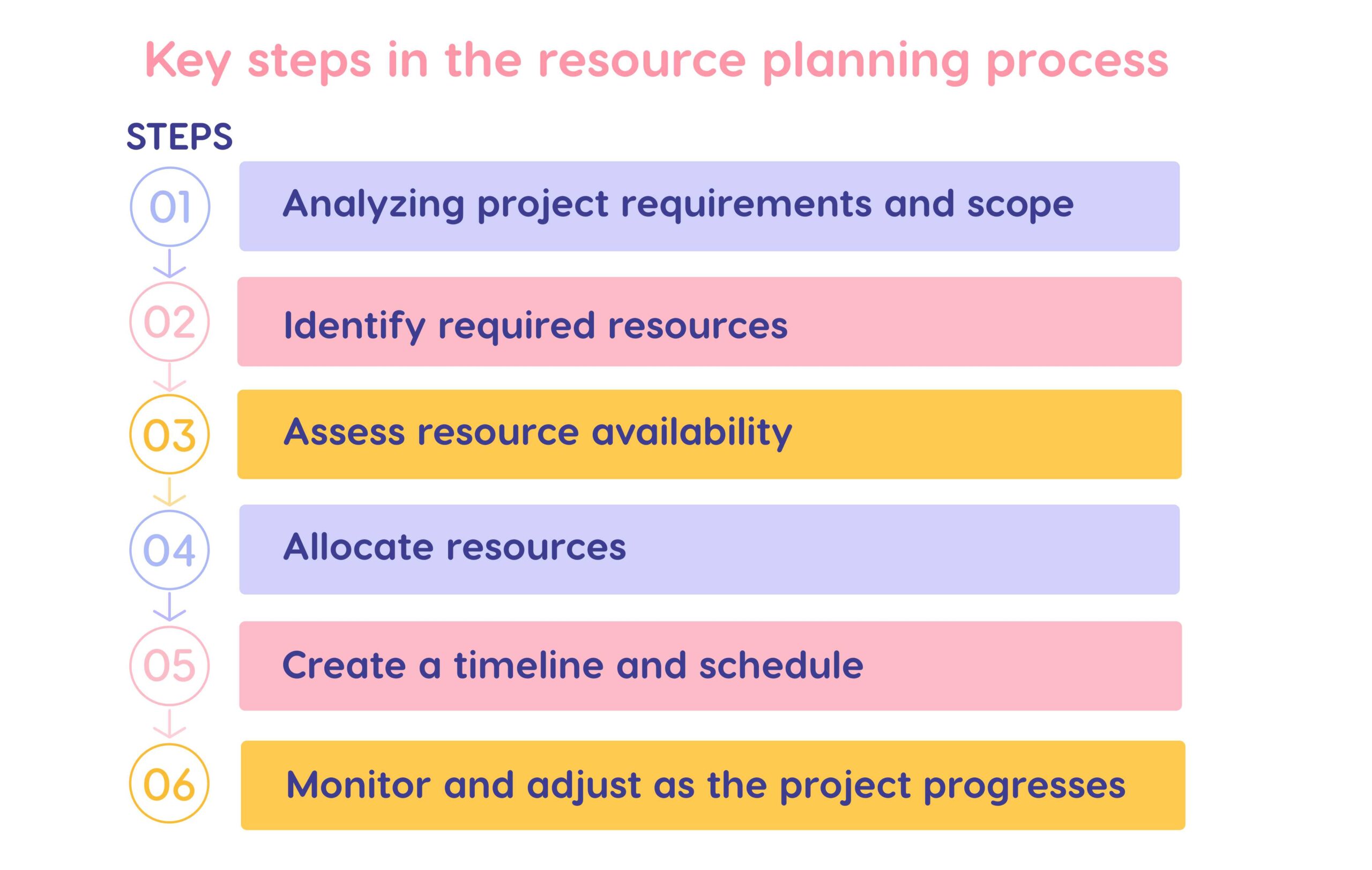
Step 1: Analyzing project requirements and scope.
Your first step in creating a project resource plan is to clearly understand the requirements and vision of project success. There you need to:
- Identify the project’s boundaries to avoid scope creep.
- Define project objectives, deliverables, and success criteria.
- Identify stakeholders, their requirements and expectations.
Step 2: Identify required resources.
At this point of creating a resource plan, we need to make a list of all needed resources. It can be a tricky task to do, especially in a multi-project environment, but by using resource planning software, it may become easier, because it allows you to plan and manage human, time, and material resources divided across multiple projects simultaneously.
Step 3: Assess resource availability.
Then you need to compare project needs with available resources, and this step of creating a project resource management plan will highlight shortages or conflicts. So, here you must:
- Check current workloads and staff to avoid overloading.
- Identify skill gaps and plan for hire or training.
- Check the availability of equipment..
Step 4: Allocate resources.
Now it’s time to match resources with tasks and projects. To make it in the most efficient way, you should first prioritize projects that require resources most. For example, you can select projects with the highest business value or those that will help the organization deliver the most important business objectives. The second important point is assigning resources based on their skills, capacity, and availability.
Step 5: Create a timeline and schedule.
To make sure that the needed resources are available at the right time, you can schedule them. To schedule resources, you should map them against project milestones and coordinate dependencies of tasks in a way that delays in one don’t affect the others. However, in multi-project environments with a shared resource pool can become mission impossible. In this case, it’s better to leverage an advanced resource management software that assists with resource allocation and scheduling.
Step 6: Monitor and adjust as the project progresses.
Changes in resource planning are unavoidable, and managing them effectively and regularly is essential when you have to handle multiple projects with a shared resource pool. How to do that?
- Track real-time data on resource utilization, schedule progress, and budget consumption.
- Adjust when changes appear.
- Use software tools to predict bottlenecks and tackle them head-on.
Benefits of Effective Resource Planning
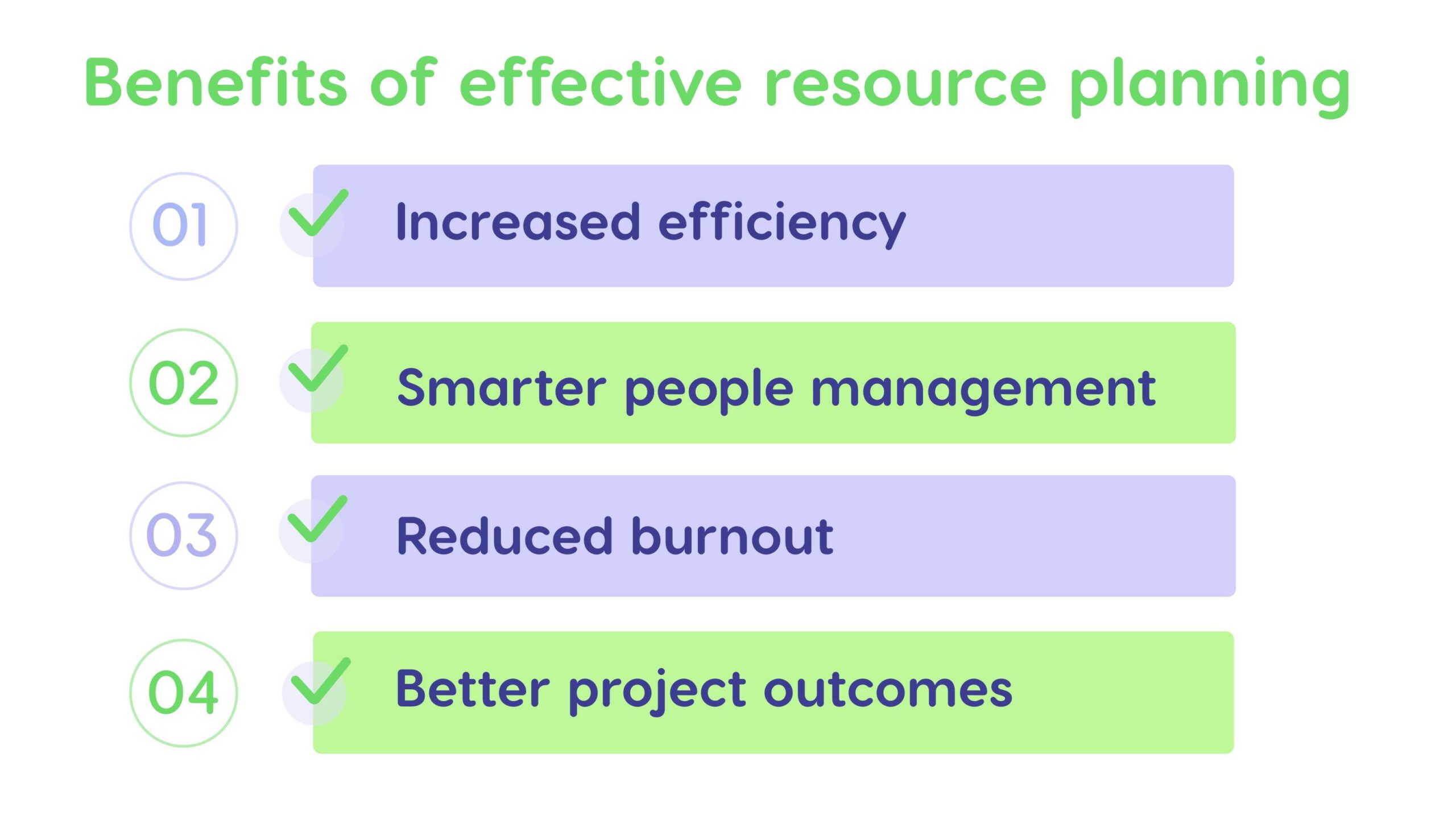
1. Increased efficiency.
When you allocate the right resources to the right projects, they work more efficiently, decreasing the risk of missed deadlines and the need for hiring extra employees. Smart resource planning in project management increases efficiency and contributes to saving costs, setting realistic timings, and improving client satisfaction.
2. Smarter people management.
Wise resource planning gives you an understanding of the availability of team members, their workload, and skills, allowing you to quickly spot and fill gaps in projects. You will be sure that the right people are working on the right tasks and projects and finishing them at the right time.
3. Reduced burnout.
Effective resource planning also minimizes the risk of burnout among team members since they won’t have excessive workloads. Resource planning contributes to balancing workloads, which in turn prevents team members from overloads, stress, and burnout as well as prevents bottlenecks in the workflow.
4. Better project outcomes.
Proper resource planning increases the possibility of delivering projects on time and within budget, which will keep clients and customers satisfied. Each successfully delivered project improves the company’s reputation and allows it to expand into new markets and attract new potential customers and clients.
How Does Resource Planning Benefit Different Industries?
1. IT & software development.
Rapid technology shifts and the development of artificial intelligence (AI) make the IT industry an extremely competitive field, and without proper resource planning, companies will hardly deliver their projects on time.
As a result, IT employees are under constant pressure of deadlines, and don’t understand how to get the work done. Proper resource planning combined with forecasting and using predictive software helps staff IT projects with the required people, balance their workloads, and deliver their work on time.
Read More: How Epicflow Helped Bridge the Software Development Process with Project Portfolio Management
2. Pharmaceutical.
In the pharmaceutical industry, resource planning plays a critical role because projects involve long R&D cycles and strict approval processes where one mistake can ruin a perfectly built chain. They often operate several laboratories, equipment, so a proper resource planning process is vital for avoiding bottlenecks and delays. It ensures that projects will be delivered on time and resources won’t be wasted.
3. Manufacturing.
Managing huge infrastructures involves operating a lot of machines, tools, and software. To ensure smooth and efficient work, synchronize all workers with machines, material flow, and avoid supply chain disruptions, you can use predictive software for resource planning that will reduce costs and risk of delays and help allocate the right resources to the right positions at the right time.
Read More: Managing Risks in Manufacturing Projects: Essentials and Best Practices
4. Telecommunications.
Telecom is a field with extremely complex infrastructure and software. From 5G rollouts to modernizing operational support systems (OSS) and business support systems (BSS) — all of them need a detailed and thoughtful resource planning and management. Such complex projects require various types of resources for different purposes. It might be people, technologies, infrastructure, and physical materials like fiber cables or cell towers. Without proper resource planning, they can face resource shortages and project delays.
A perfect example of effective project management and resource planning can be Epicflow’s collaboration with a Dutch telecom company TKF.
Jan Willem Tromp, researcher & co-founder of Epicflow: “When I was invited to the R&D department of the cable manufacturing company, the situation was as follows:
- There were 50 new product development projects and 22 engineers working on them;
- They had a list of activities/deliveries per project in Excel;
- Almost none of the projects were delivered on time, and most projects had cost overruns;
- About 25 new products were delivered per year.
With the help of Epicflow:
- The number of delivered projects increased from 25 to 48 in the first year.
- Lead time was reduced to 3-4 months, while previously it was 12-18.
- Big projects were dropped into tasks, which contributed to the increase in delivery by 200% in 3 years.
If you are looking for the right resource management planning tool, request a call with our experts to know how collaboration with Epicflow will help you increase the efficiency of your existing resources to deliver multiple projects successfully.
Read More: How KPN Improved Production with Epicflow
5. Public sector & government projects.
These projects face challenges with large portfolios of diverse projects (defence, infrastructure, public services). They often operate under limited budgets, where every expense must be justified and monitored. Also, in this area, you have to deal with strict regulations and rules, while every movement must be transparent. In this situation, by using advanced resource planning tools, government projects can balance competing priorities and utilize available resource intelligently.
Read More: Why Smarter Delivery Beats Bigger Spend: Experiment at the Dutch Ministry of Defense
Common Challenges in Resource Planning
When creating a resource plan, you might face several challenges.
1. Limited visibility across multiple projects.
In a multi-project environment, it can be extremely difficult to make a centralized resource plan. It often leads to wrong priorities and resource conflicts, as employees work on different projects simultaneously.
The solution here can be:
- Using centralized dashboards that contain all required data about projects and available resources;
- Standardization of reporting across all projects, so teams use the same tools, documents, patterns;
- Choose a resource planner that offers insights into resources across the whole project portfolio.
2. Inaccurate forecasting and bottlenecks.
While working with resource planning for multiple projects simultaneously, managers can make decisions based on assumptions and guesswork, but not on reliable data. It also leads to overloaded employees, missed deadlines, and wasted resources.
To effectively handle inaccurate forecasting and bottlenecks during resource planning:
- Use forecasting based on projects’ historical data, but not your own conclusions;
- Apply tools equipped with predictive analytics that help to forecast accurately and avoid bottlenecks;
- Regularly compare what was planned with actual results to make changes and improvements;
3. Resource conflicts.
Human and material resources can be assigned to multiple projects at the same time. This results in resource conflicts that create delays and can lead to team members’ burnout.
To deal with this problem during the resource planning process in project management, you can:
- Create a shared resource calendar that is visible across all teams;
- Prioritize projects that are critical for achieving your company’s strategic goals;
- Allocate resources based on their capacity and availability.
4. Lack of real-time updates.
Having relevant resource data at hand is critical for developing effective resource management plans. Otherwise, it will be impossible to perform accurate resource forecasting and make effective decisions. Also, you won’t be able to allocate resources effectively across projects and avoid resource conflicts. Finally, it will be difficult to respond to changes properly, which is critically important for dynamic multi-project environments.
The solution here can be adopting resource management software with the following capabilities:
- Predictive analytics;
- Scenario simulation;
- Real-time data visibility and monitoring.
5. Poor communication.
Poor communication can reduce the efficiency of the resource planning processes. First, it leads to inconsistency and silos between departments, which leads to blurred priorities and poor resource planning. Also, without proper coordination, there can be a risk of wasting resources on lower-priority work. Thirdly, it lowers team members’ morale and can lead to their burnout, disengagement, and reduced productivity.
How to address this problem:
- Ensure a single source of truth — it can be a robust resource management software used by team members and stakeholders;
- Schedule weekly meetings to align changes and resolve bottlenecks, if any;
- Encourage team members to report changes and issues early.
Best Practices for Successful Resource Planning
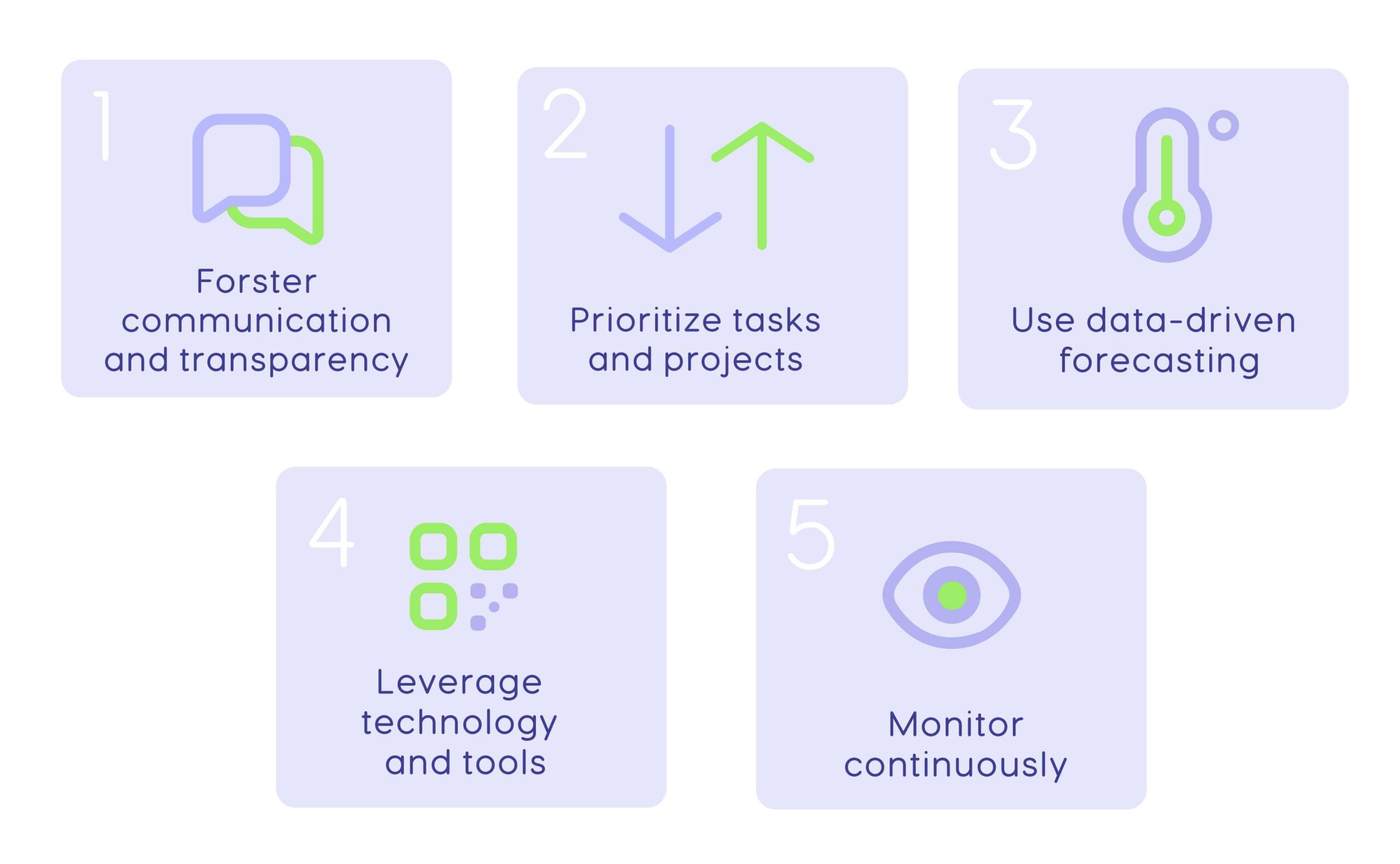
1. Forster communication and transparency.
To be successful for all the projects that are critical to your company, business resource planning needs to be transparent. Even the most well-built plan can collapse if stakeholders aren’t familiar with it and have their own expectations of project outcomes.
- Use a single source of truth for all teams and stakeholders.
- Communicate regularly with stakeholders and the team to make sure that everyone is on the same page.
2. Prioritize tasks and projects.
Different projects have different importance and value for a business organization. Consequently, projects with lower value can be postponed to free up resources’ capacity for the most essential ones. Allocating resources to the most valuable projects is the key to their efficient utilization and achieving desired project outcomes. Finally, prioritization of projects reduces resource conflicts and allows for developing a realistic and achievable resource plan. How to do it?
- Use prioritization frameworks and criteria relevant to your organization to select the most important projects.
- When selecting projects, take resource capacity into account.
- Use portfolio management tools that provide capabilities for managing multiple projects and their resources.
3. Use data-driven forecasting.
To make resource planning in project management more effective, you should make accurate forecasts. You can rely your forecasts on historical data and previous experience. But the most accurate forecasts will be performed with AI-driven tools — they can not only analyze huge amounts of data but also play scenarios that you can use for informed decision-making.
4. Leverage technology and tools.
Nowadays, there are plenty of resource planner tools that provide capabilities for effective resource capacity planning, resource allocation, performance analysis, and decision-making. The advanced tools offer automation, data-based insights, and multiple integrations with other services.
- Use resource planning software that helps to manage resources across multiple projects effectively;
- Automate repetitive work and free high-level specialists for more critical tasks to increase efficiency among projects.
5. Monitor continuously.
Resource planning in project management isn’t something you “set and forget”. The scope of work and requirements change, bottlenecks appear, and without monitoring and adjusting, it is impossible to stay on track.
- Monitor resource performance and workloads to make sure that people aren’t overloaded, and there will be no bottlenecks in the workflow.
- Upon detecting a bottleneck, use scenario analysis to find out the best way to resolve it.
Resource Planning Tools
When organizations run several projects simultaneously, traditional tools often lack functions to enable effective management of projects, let alone their shared resources. That is why Epicflow stands out as a solution that unites both areas that are critical for successful project delivery and achieving desired business outcomes. It is a multi-project resource management solution designed to help companies optimize and manage resources across multiple parallel projects, helping businesses deliver more with the same capacity.
How does Epicflow help in planning resources?
- AI-driven capacity planning software predicts resource bottlenecks before they occur. It gives managers time to change resource plans and avoid problems.
- Running “What-if” scenario simulation helps you decide how to allocate resources properly so every project has the resources it needs. Also, it helps managers resolve bottlenecks in the most effective way.
- Workload management ensures that no employee is overloaded. It is essential for preventing burnout and increasing overall efficiency.
Benefits of using Epicflow
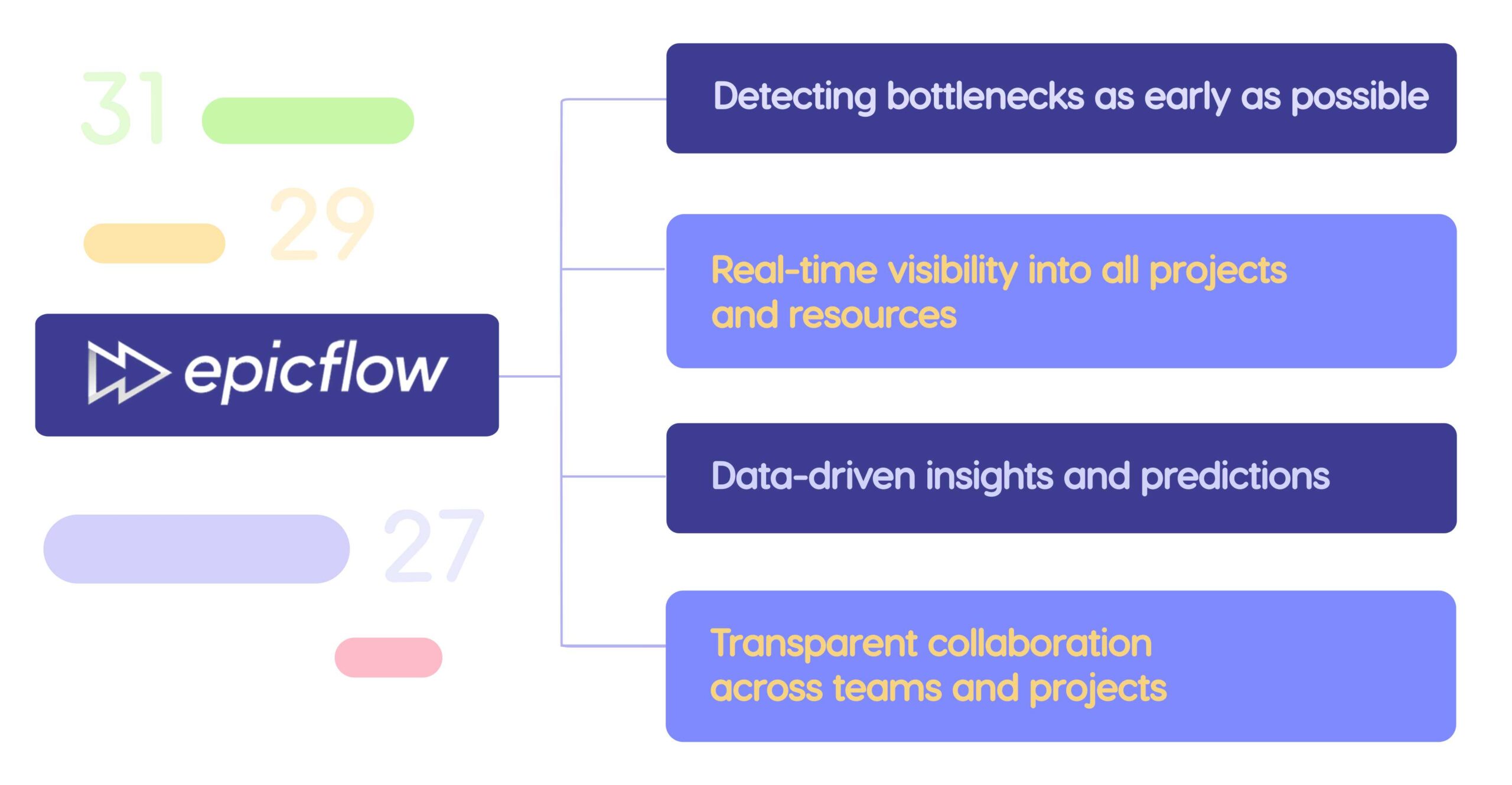
- By detecting bottlenecks as early as possible, you’ll be able to complete more projects without hiring extra employees.
- Managers can get real-time visibility into all projects and resources.
- Data-driven insights and predictions provide opportunities for accurate resource planning in project management.
- Transparent collaboration across multiple teams and managing numerous projects simultaneously with Epicflow ensures high quality of work and allows the company to meet tight deadlines and deliver value to customers.
Conclusion
The resource planning process in project management is a cornerstone for project success, especially in a multi-project environment. It ensures that all projects are staffed with required resources and a company can deliver these projects on time and within budget. Wise resource planning brings significant advantages to project delivery:
- It helps to balance employees’ workloads, in turn, decreasing the risk of burnout.
- It allows you to allocate resources smarter, quickly identify and fill resource gaps in projects.
- By increasing efficiency, it also improves clients’ satisfaction, saves costs, and reduces lead time.
- It increases the chances to deliver the project on time within budget, improving project performance and a company’s reputation.
If you need to implement an effective resource planner into your workflows, contact our experts to investigate how Epicflow can plan, allocate, and optimize resources involved in your multiple projects.
Frequently Asked Questions
1. What are the key components of resource planning?
- resource identification and allocation;
- capacity management;
- resource scheduling and constant monitoring;
- open and transparent communication between stakeholders and team members;
- flexibility while facing challenges.
2. What are the benefits of resource planning?
- increased efficiency and productivity;
- balanced workloads that prevent team members’ burnout;
- saving costs;
- higher customer satisfaction;
- scalability.
3. How can small businesses make resource planning work successfully?
4. Which industries depend most heavily on resource planning?
5. What is an example of resource planning in practice?
Our resource planning in project management example will be as follows. Imagine a software development company running multiple simultaneous projects. Before starting a new project, they need to assess the availability and capacity of existing resources. This review demonstrates that UX designers don’t have available capacity for a new initiative; starting a new project will lead to overloading the design team. Also, it’s the new project’s business value that matters here — if it has high value, a company can adjust priorities and reschedule current projects with lower business value. As soon as the right priorities are set, the company can allocate resources to the highest-priority projects, taking their capacity into account. This approach will help them deliver the most important projects on time and prevent people from overload.