How Project Management Tools Can Improve Business Performance in 2026
 Victoria Sokolova
.
Updated
.
Digital Transformation
.
18 mins READ
Victoria Sokolova
.
Updated
.
Digital Transformation
.
18 mins READ

No one would argue that high-performing business is the goal of every executive leader. However, with present-day high competition and ever-evolving requirements, this can be easier said than done.
What steps will lead your company to become a high-performing organization? And what is the role of project management tools in achieving this goal? Read the article to find out.
Key takeaways:
- Business performance indicates a company's effectiveness in achieving its goals.
- Companies with high business performance have engaged and motivated employees, deliver high-quality products or services, have high revenues and satisfied customers, and are able to grow their market share.
- The factors improving business performance are: engaged employees, data-driven decision-making, streamlining workflows and eliminating inefficiencies, effective risk management, improving operational efficiency, and leveraging technologies.
- Adopting project management software helps improve business performance in project-based organizations by increasing productivity, optimizing resource utilization, supporting informed decision making, and helping manage risks.
What Is Business Performance?
Business performance indicates how effectively a company achieves its objectives with resources available. It involves financial and non-financial indicators, e.g., a company’s productivity, profitability, customer satisfaction, and others. High-performing companies are characterized by high revenues, productive and engaged employees, high-quality products or services, satisfied clients, and growing or at least maintaining market share. If we talk about project-based companies, we cannot assess their performance only by completing their project successfully. So, the indicators of high business performance will be the same for them.
So, how can companies improve their business performance? Let’s consider the essential prerequisites.
Essential Steps to Improve Business Performance

Increasing employee engagement
Employee engagement is the key to high productivity. Engaged and motivated people are more likely to generate innovative ideas, support organizational mission and goals, and stay with the company for the long term.
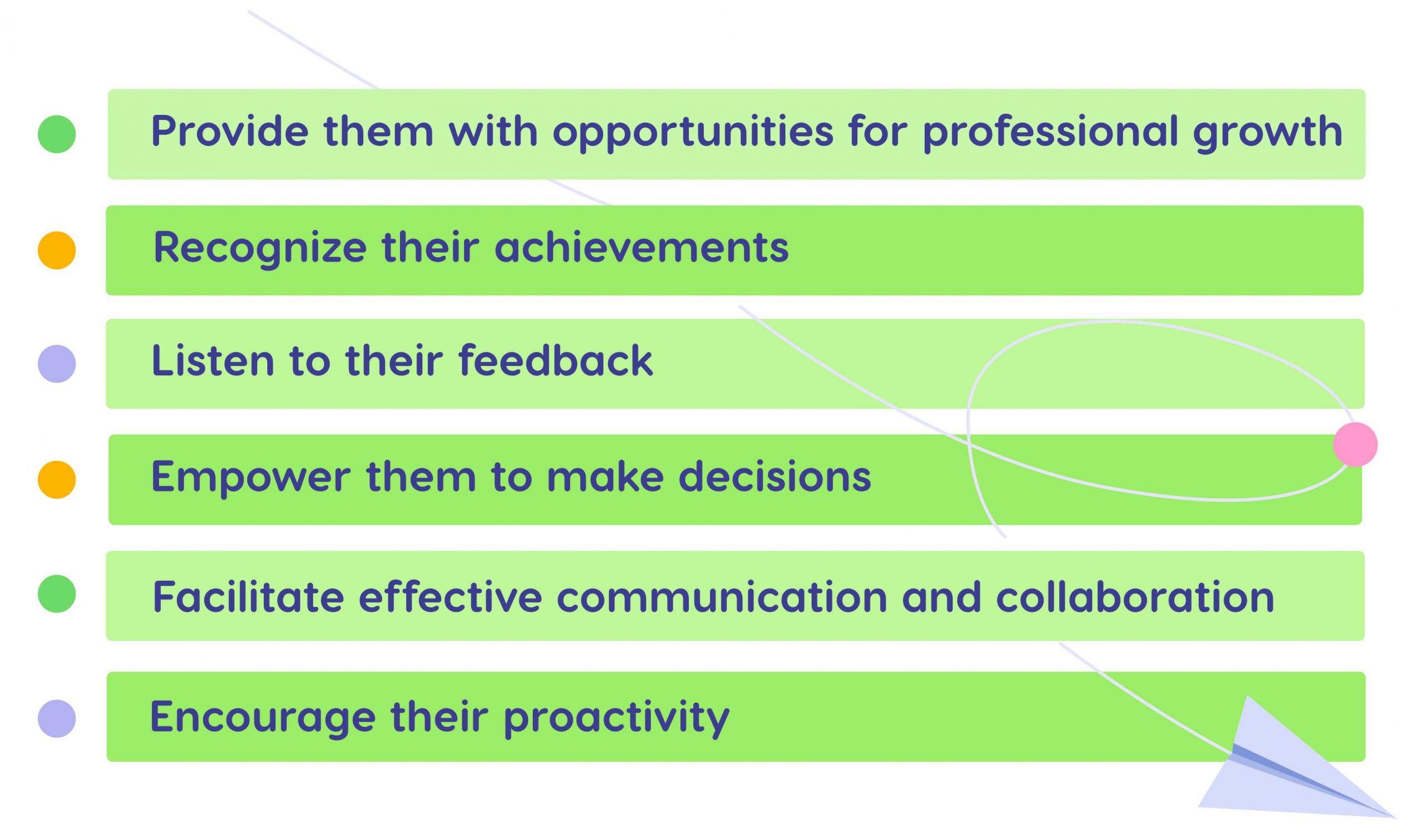
How can you foster your employees’ engagement?
- Provide them with opportunities for professional growth;
- Recognize their achievements;
- Listen to their feedback;
- Empower them to make decisions;
- Facilitate effective communication and collaboration
- Encourage their proactivity.
Your effort will be repaid a hundredfold: high engagement means reduced turnover, increased productivity and profitability plus improved business performance.
Implementing data-driven decision-making
Making ineffective decisions is one of the reasons for poor performance. On the contrary, with a data-driven approach to decision-making, the company’s management can base their actions on insights derived from accurate and real-time information, not just assumptions. Business organizations can apply the data-driven approach to make decisions regarding customer needs, market trends, addressing risks, dealing with internal processes, etc. A data-driven approach will help you make more informed and confident decisions that will directly impact business performance.
Read more: 5 Essential Questions About Data-Driven Project Management
Eliminating inefficiencies and bottlenecks
Removing inefficiencies and bottlenecks within processes is crucial for increasing productivity and streamlining processes within a business organization. That’s why it’s critically important to regularly monitor the flow of processes with the aim of detecting inefficiencies, waste of resources, and bottlenecks that slow down operations or cause redundancy. This will also facilitate more reasonable utilization of resources (human, material, financial); they will be allocated to really important areas and not wasted for redundant processes that won’t contribute to desired business outcomes.
Improving operational efficiency
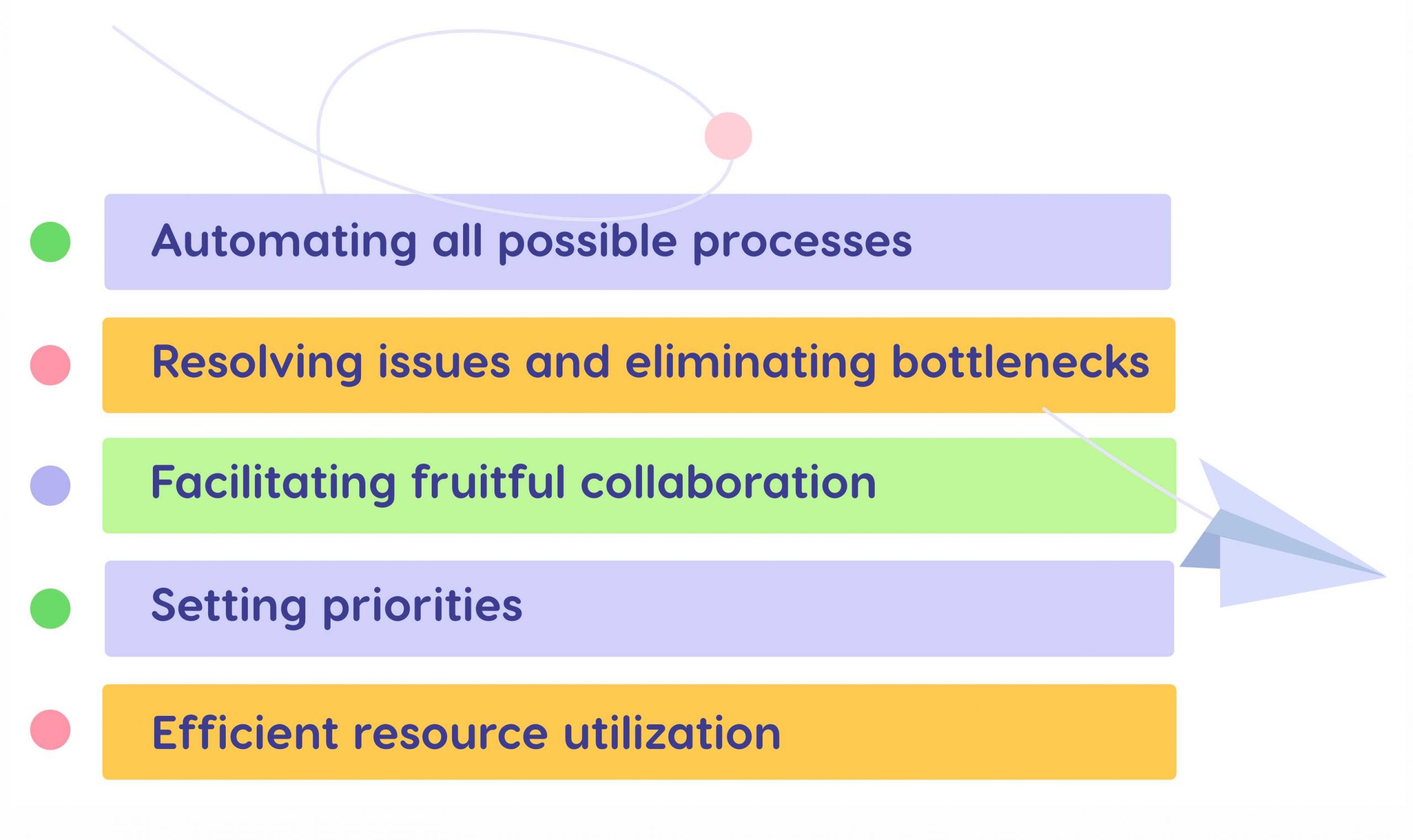
Operational efficiency refers to gaining maximum outputs with minimum inputs. This can be achieved through the following measures:
- Automating all possible processes;
- Resolving issues and eliminating bottlenecks;
- Facilitating fruitful collaboration;
- Setting priorities;
- Efficient resource utilization.
As a result, improved operational efficiency will contribute to increased revenue, customer satisfaction, and competitiveness, which in turn will increase business performance.
Read more: How to Improve Operational Efficiency in Project-Based Organizations
Effective risk management
Risk is part and parcel of any business; it is associated not only with negative events but opportunities as well. The risk management process involves the identification of possible threats, prioritization of risks depending on their severity and likelihood, and allocation of necessary resources for addressing them. A proactive approach to risk management can help you mitigate the negative impact of risks and take advantage of opportunities they may offer. As a result, you can reduce potential losses, enhance stability, and facilitate high business performance.
Leveraging technology
At present, technology plays a critical role in optimizing business processes, increasing their efficiency, and achieving high business performance. For example, companies tend to implement advanced tools like automation software, project and management systems, customer relationship management (CRM) platforms, etc., which make it possible to streamline workflows, make them more effective, and reduce lead time. Artificial intelligence and machine learning can assist business organizations in predicting trends, personalizing customer interactions, making more effective decisions, etc.
Read more: AI in Project Management: Benefits, Use Cases, and Future Trends [2026]
In project-based organizations, leveraging the right project and resource management tools can make a difference in the whole organization’s business performance. Let’s take a look at their capabilities in more detail.
How Project Management Software Improves Business Performance: Epicflow Example

Project management software has capabilities that greatly contribute to improving business performance: it can streamline workflows, improve collaboration, increase the effectiveness of resource and risk management, and more.
We’ll review the opportunities PM tools provide and complement them with the examples of corresponding functionality of Epicflow, a multi-project resource management solution with AI capabilities. It helps businesses running multiple projects in various industries effectively plan and execute all their projects, increase the efficiency of shared resources, and improve project outcomes.
1. Optimization of project planning and scheduling for timely delivery.
Project management tools facilitate the creation of detailed and effective project plans and schedules. This helps managers establish realistic timelines and allocate resources more effectively. When leveraging tools equipped with predictive analytics, you can also anticipate possible risks and adjust plans and schedules accordingly. For example, Epicflow’s scenario analysis allows you to assess project feasibility and predict possible threats before starting a project. This approach contributes to smooth project flow and timely project delivery as well as minimizes the possibility of cost overruns, which in turn improves a company’s business performance
2. Intelligent resource management for efficient resource utilization.
Effective management of resources involved in projects running in a company is the key to maintaining its high business performance, especially when it comes to limited resources involved in multiple projects. Project management solutions provide various tools for managing resources: timesheets, capacity planning software, resource utilization metrics, etc.
Wise resource management and achieving resource efficiency across multiple projects are the main focuses of Epicflow’s approach. That’s why it offers the following resource management capabilities:
- Providing resource visibility;
- Allocating resources based on their skills, availability, capacity, and attributes;
- Forecasting resource capacity and workload;
- Balancing people’s workloads and mitigating bottlenecks;
- Proving performance analysis tools.
Therefore, Epicflow’s approach ensures that all projects running in a company are staffed with required resources; they have balanced workloads, and their productivity is high. In turn, this contributes to the efficient utilization of available resources, reduces project delays, and ultimately improves business outcomes.
3. Scenario analysis for decision-making.
Project management software with predictive capabilities will help you optimize decision-making. Let’s consider Epicflow’s example to understand how it works. Its scenario analysis feature helps organizations simulate various project scenarios and analyze their impact on resources, deadlines, and costs. This capability allows businesses to identify potential project management risks and prepare the most effective mitigation strategies. This data-driven approach helps avoid disruptions, keep all projects in the environment on the right track, and, what is most important, make effective management decisions that contribute to achieving desired business outcomes.
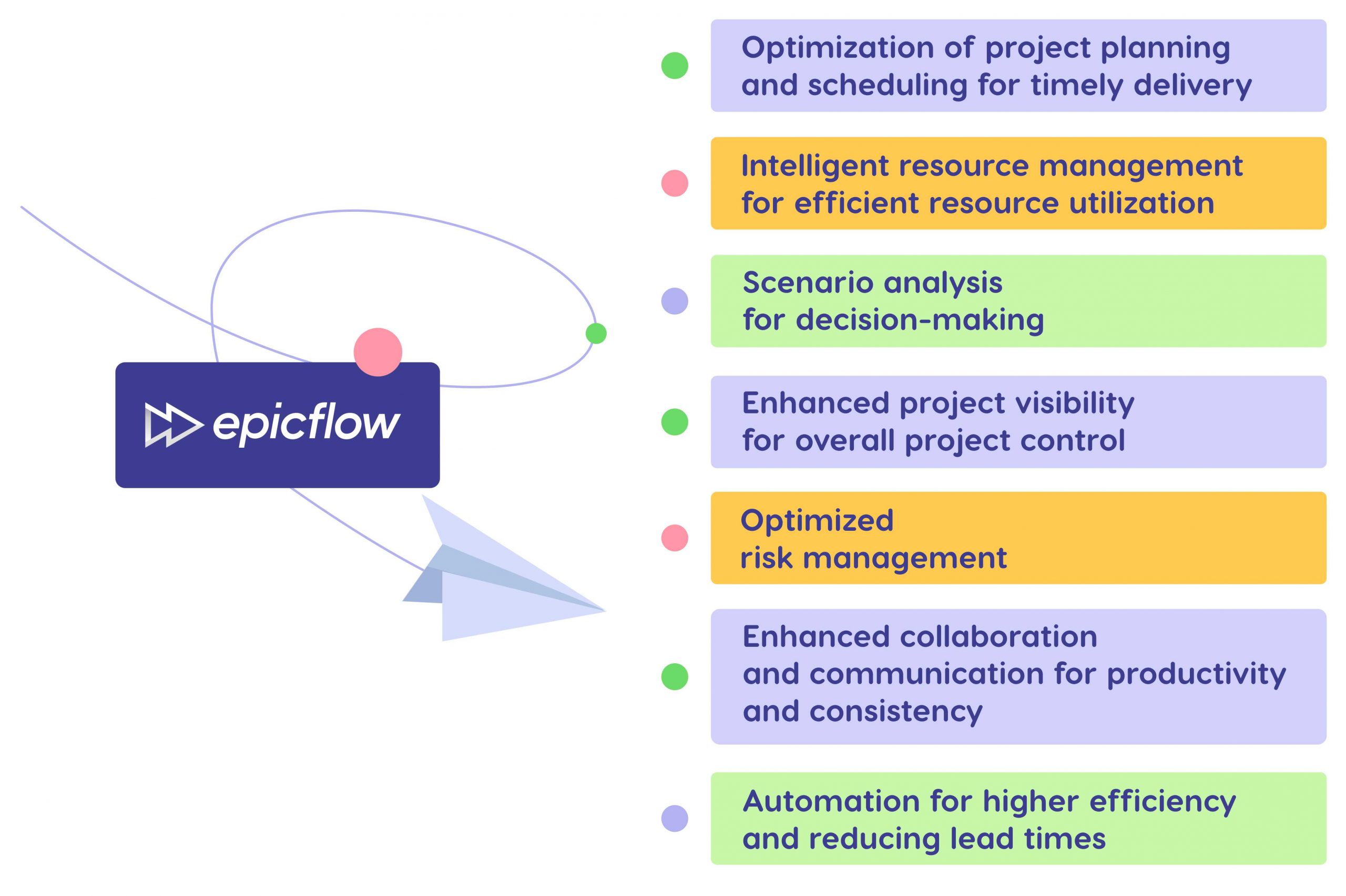
4. Enhanced project visibility for overall project control.
PM software has a variety of instruments to visualize the progress and performance of projects and resources. They may have dashboards, heatmaps, Gantt Charts, and other visual tools that facilitate accountability and help monitor the status of projects.
As for Epicflow, it provides real-time visibility into project and resource progress and performance, which allows project managers to monitor progress and changes and spot any arising bottlenecks. In addition, this transparency serves as a single source of truth for all project stakeholders: they always get up-to-date information, which reduces the risk of miscommunication and delays. This helps streamline workflows across multiple projects and timely detect and fix issues before they turn into major problems.
5. Optimized risk management.
Advanced project management tools can include risk management features, which enable business organizations to identify potential risks early and prepare contingency plans.
In Epicflow, risk management is facilitated by its predictive capabilities: you can forecast possible risks related to projects and resources plus test different scenarios to come up with the most effective risk mitigation strategy. Proactive risk management reduces the likelihood of project delays and/or budget overruns and projects will face fewer disruptions, which in turn supports higher business performance.
6. Enhanced collaboration and communication for productivity and consistency.
PM tools optimize communication and collaboration between project participants: they serve as platforms where teams can work together, share updates, and resolve issues in real time. Epicflow is no exception: for example, it provides a single source of truth for every project participant and visibility into all real-time data on project- and resource-related processes. This approach reduces silos between teams and departments working on projects and makes sure that all project stakeholders are on the same page and regularly updated on project statuses. Fruitful collaboration and effective communication streamline work on projects and increase the chances of achieving desired project and business outcomes.
7. Automation for higher efficiency and reducing lead times.
Project management software often has capabilities that automate repetitive tasks, e.g., updating task statuses, generating reports, sending notifications, collecting and analyzing data, etc. In addition to these capabilities, Epicflow has automatic prioritization: it sets priorities across multiple projects for every team member so that they always know what tasks matter most for the moment. Also, Epicflow’s resource allocation advisor can automatically find an employee who is a perfect match for completing a task. Therefore, automation not only helps reduce manual work and free up team members’ time for performing high-value activities but also performs complex data analytics in seconds and comes up with useful insights. Automation contributes to greater productivity, reduces the likelihood of errors, optimizes decision-making, and improves business performance.
Thus, adopting project management tools like Epicflow into the project management process facilitates enhancing business performance thanks to increased productivity, optimization of resource use, enabling a data-driven approach to project planning and execution, effective risk management, and enhanced project control. Contact our specialists to learn more about Epicflow's capabilities to streamline resource management across multiple projects and make your organization a high-performing business.
Conclusions
Strong business performance doesn’t happen by chance; it’s the result of purposeful efforts on increasing employee engagement, improving operational efficiency, data-driven decision making, and the ability to deliver value to the customers. Organizations that focus on these factors have more opportunities for growth, revenue increase, and gaining competitive advantage.
To achieve high business performance, companies should also improve the way they manage projects, resources, and workflows. And this is where modern project management software becomes particularly valuable. Software like Epicflow helps business organizations increase productivity, optimize resource utilization, improve project performance, and deliver business value.
Frequently Asked Questions
What is business performance for project-based organizations?
Business performance shows how effectively a company achieves its goals. In project-based organization, this refers to project success rates, profitability, resource utilization, operational efficiency, customer satisfaction, and the ability to deliver projects on time and within budget.
What is an example of business performance?
A project-based organization may demonstrate strong business performance if it consistently delivers projects on time, within budget, and according to quality standards and at the same time utilizes available resources most efficiently.
Why should organizations improve business performance?
Improving business performance allows organizations to remain competitive, increase profitability, deliver higher-quality products and services, and respond effectively to market changes.
What technologies help improve business performance in project-based organizations?
Technologies such as project management software, resource management tools, data analytics platforms, and diverse AI tools help organizations improve business performance. These solutions provide better visibility into operations, support informed decision making, and help optimize project execution.
Why are project management tools important for companies in 2026?
In 2026, companies face increasing project complexity, resource constraints, and rapid market changes. Project management tools help organizations manage multiple projects and shared resources more effectively, make faster and more informed decisions, improve collaboration and processes.
How can project management tools improve business performance?
Project management tools improve business performance thanks to improving project governance, providing better visibility into projects, optimizing resource allocation, supporting data-driven decision making, and reducing operational inefficiencies. They also help organizations monitor progress, identify risks, and ensure that projects are aligned with business goals.
Can project management software increase productivity?
Yes, project management software can significantly increase productivity. It automates routine tasks, improves collaboration, and provides real-time insights into project progress. This allows project teams to focus on high-value work instead of administrative activities.
Why is data important for improving business performance?
Data plays a critical role in improving business performance because it allows managers to analyze project progress, identify bottlenecks, and make informed decisions. Data-driven insights help organizations optimize processes and reduce risks.
What type of companies benefit most from project management tools?
Project-based organizations benefit most from project management tools. Industries like IT, engineering, construction, consulting, and manufacturing rely on these tools to coordinate multiple projects, manage resources, and maintain operational efficiency.